Transcript of the full episode.
Why You Should Start Your Habit Reset NOW
What if instead of waiting until January 1st to make some changes in your life, you started right now?
Not because there's anything wrong with you
Not because you need to reinvent yourself or become some radically different person
Because maybe you've spent so much time dealing with the chaos, the trauma, the drama, and grieve that somewhere along the way you stopped taking care of yourself in the way that maybe you once did, or the way that you wished you always could have or would have
Perhaps you've lost some of your structure
Or maybe you're exhausted, like all the time. Maybe you're having trouble staying focused, Getting motivated or following through on the things that you say that you're gonna do for yourself
Or maybe you've just gotten into the habit of putting your life on hold, waiting for something outside of you to change
And y'all, with the holidays coming Maybe some part of you is already thinking, "Can't we just skip ahead to January?"
But what if these next couple months could be an opportunity to actually cultivate something different?
Not necessarily in your circumstances, although with what I'm getting ready to share with you, changing practices, i- it's almost bound to happen as a byproduct, But really what I-- my focus is on today is changing the way that you're experiencing your life
Beyond The High Road: Healing Parental Alienation
So you are listening to the Beyond the High Road podcast with Shelby Milford, episode number 214. Welcome to Beyond the High Road, a podcast dedicated to healing your heart and life following the grief of alienation. I'm your host, Shelby Milford, a twice certified life coach specializing in post-traumatic growth. If you're experiencing the effects of alienation and you're ready to heal, then this show is my love letter to you.
Stay tuned.
How These 16 Practices Changed EVERYTHING After Parental Alienation
So with the time change, you guys, and the shorter days, at least in the Northern Hemisphere, and also, of course, the holidays coming right around the corner I thought that this would be a perfect opportunity to talk about something that's
become a really important part of my life
And that's the habits and the practices that I have developed over the course of some years, right? That have not only fundamentally changed how I feel physically
But also how I experience myself and the world around me
These are things that, of course, alongside the mind management tools that I teach here and of with my clients, these things have helped me to become somebody who feels grounded, purposed, purposeful Energized, organized
Well, mostly organized. And much more anchored in who I am as a mom and as a human, as a woman, as a business owner, And they've helped me develop a sense of authority in my own life
And y'all, I didn't obviously did not wake up one morning and suddenly become this person that I am today. These practices have developed over time, right? If you guys have listened to any of the our earlier episodes, I am night and day difference, completely different person than who I was, um, when I was living in the house on the hill or even before that, 10 years ago, eight years ago, six years ago even.
Many of the practices that I use daily are so automatic now that I barely even think about them. In fact, I had to sit down earlier this week and write out my day to identify all of the patterns, like the daily m- my routines, because I take them for granted almost because I s- I do them all the time.
. -
Others, there's a few of them that are still works in progress, you know, and you'll hear about those too
But here's what I really, really want to help you to understand the way that I approached Developing these
habits has been every bit as transformative as the habits themselves
And that is because I think one of the biggest reasons is because I didn't go into doing them expecting perfection
I went into creating these habits knowing that there would be days where I wouldn't follow through. Days that I'd, fall short of what I actually intended. Days that I would have to experiment, adjust, or start again, move to the next day, And rather than using those experiences as evidence that I wasn't disciplined enough, which I used to say to myself all the time, or that there was something wrong with me
I just started treating those times that I fell short as information, as data
And that shift, you guys, helped me develop something much more valuable than a perfectly executed routine
It helped me to develop a different relationship with myself .
The Science Behind Identity-Oriented Practices
So today, I'm going to share 16 of the practices that have made the biggest difference, I think, in my life.
And I've organized those 16 into four different categories, containers. And I want you to look at them as I'm presenting them to you as like a buffet, as a platter that you can pick off of
And also just know that what I'm sharing with you today obviously is what has worked for me. Especially more so than like other episodes that I've done, this is really a matter of personal preference, but I am going to back almost every, uh, practice that I give you outlined today, I'm gonna back it with science or some sort of data.
To tell you why it's significant,
you know, why I think it's a meaningful change. Um, but Some of these items may resonate with you, Others may not. you may even come up with some on your own, or hear some of mine and wanna tweak them.
That's what I encourage you to do, , and rather than trying to turn your life upside down, I'd love for you to think about just choosing a handful of practices, that support the kind of person that you want to become. And there's a science to this, and I'll share it with you in just a little bit, okay?
because that's the distinction we're gonna explore today. It's the difference between outcome-oriented practices and identity-oriented practices. And today, we're mostly gonna be talking about the latter, Practices that become part of the, the baseline of who you are So that they're no longer effort on your part or no longer cause friction in your life, but they're just who you are. They're your default setting
The items that I outlined here, I made sure that the ones I included were-- are sustainable, but still stretch you a little bit or possibly could stretch you. And I-- if you're making your own up, then I want for, for you to keep that in mind. Sustainable, but not something so out of reach that you can't keep it up.
and at the end, I wanna come back to something that I think is the secret sauce To go on top of all of this,
It's what happens when you intentionally choose to do things that require, um, effort, a little bit of effort, a little bit of discomfort, even when you don't particularly feel like doing the thing, especially when you don't particularly feel like doing the thing, okay? Because that, pushing yourself a little bit, has implications far beyond whether you stick to a new routine or not
And for me, what I think was really helpful when incorporating these into my life, and this is what I wanna offer you, all of the practices I intentionally included today are ones that in conjunction with one another, even just a handful like I'm saying, provided my body my system with predictability and safety on many different levels, Layers. when your nervous system, and the same can go for you 'cause a lot of, especially in the beginning, the ones that I'm gonna outline is about regulation, right? When your nervous system feels safe, then it frees up your brain
To explore and create like humans are supposed to do, how we're meant to do.
Section 1: Practices to Regulate Your Nervous System & Body
So we're gonna start with the foundation, I will warn you right now, these first ones may seem obvious, and they may seem boring. Please stick with me. I encourage you, I'm urging you to stick with me here because they get more, uh, interesting and deeper and focus on evolvement the further that we get into the episode.
Okay? But first things first, especially coming from trauma, the, the, the, this category is about regulating your system. these practices will support anybody no matter where they're at in life.
Good Posture
The first one is your posture, having good posture. I know you guys. Just stick with me. We're, I know we're talking about healing from alienation, and I'm telling you to sit up straight, but please just hear me out. Okay? Having good posture is directly related to reducing fatigue, your energy levels.
Okay? Due to alignment, how your body's aligned, and the body not having to work so hard to compensate. It also Sitting up straight, having good posture out in public, it's just, it goes, there's-- it's the gift that keeps on giving, I tell you. I just feel better overall. If we're not gonna talk about, like, any empirical data here, I feel so much better when I'm sitting up and shoulders are down and I'm in alignment, when I'm sitting, when I'm standing, when I'm talking, when I'm moving through my, world, It is good for your core. for digestion, right? It helps you to digest, which also will help your energy levels and all of your hormone levels as well. It's also proven in research, good posture, to boost your self-esteem, improve your concentration, and also lower stress levels. Having good posture,
It affects so many different areas actually, and it seems like the simplest little thing to do. But if I ever notice that I'm slouching, which the, I go through, like, ups and downs with this. I, I was taught from a very early age, like this was a baseline thing for me because of just how my mom ran the house, okay?
That was like one of the things her, one of her, hmm. So I've always pretty much had it, but there have been times, especially like when I was, um, going through, uh, the clinical, long clinical depression where I didn't. I let go of all of that, and not having good posture and having good posture.
It changes the interactions that you have with people, and not that we really care about how other people are viewing us. That's not the first priority anyway, is like how you appear. also, it is just part of life, you know, that people are going to make a first judgment. And when you're standing tall, you-- First off, it takes years off your life to do it, but it also commands respect.
So I think it's, like I said, it's the gift that keeps on giving. When you slouch, like, I've already can in almost immediately, um, feel an energy shift, right? And when I sit up straight, I feel more able to present. Does that make sense?
Sleep Consistency
Also in this category is your sleep consistency.
You guys know how obsessed I am. If you've been listening for a while, you know I am sleep quality obsessed. Not about just getting sleep, you know? But quality sleep. There was a time where I paid for three different sleep apps, and especially like during COVID when I had nothing, we'd all have really had nothing else to do.
I would wake up, and I still wake up every morning. Then I compare all three of the apps, which was a little excessive, honestly. But today I wake up and the first thing I do, one of the first things I do, is look at my sleep app to see how I slept the night before. Yes, I pay attention to how I feel first and foremost, but I do like to know those numbers sleep consistency, going to bed at the same time, waking up at relatively the same time for both of those, right? Within an hour. I mean, really, I like to dial it in even more, even on the weekends, you guys.
It reduces, all the data's out there to reduce risk of disease, heart disease, metabolic disorders, those that have, regular
Sleep start and wake time, end time, um, have shown to live longer. also, of course, your circadian rhythm becomes regulated, right? You train... It's basically training your internal clock, and therefore causes melatonin and cortisol to release efficiently, like when they're supposed to.
So cortisol is supposed to raise in the mornings, and if you are having trouble sleeping at night and end up staying up late watching TV or something because, you're wide awake, it could be because your cortisol-- It-- Regardless, your cortisol is going to s-surge at some point in the day, And you really ideally want that to happen in the morning, and healthy levels of cortisol, right? We're not talking about going into stress response, putting yourself in stress response every morning. But starting it off right, and I'm gonna talk about this more in a minute about how you can kickstart that, but one of the ways is by staying true to your sleep schedule. It'll-- Your melatonin gets produced once it's dark outside and cortisol in the morning.
Also, sleep times, sleep schedule puts you in a state of restorative sleep, more consistently and for more time. So basically, getting into your deep sleep and your REM sleep, super important. That's why I love the sleep app 'cause I know when I've hit how long my deep sleep and my REM sleep is.
It's all really important for your body to renew, regenerate, And that will help your cognitive function, regular sleep times will sharpen your focus, your memory, your reaction times, and your daily energy levels.
Your mood. It regulates your neurotransmitters like serotonin, dopamine, Which will help you to naturally lower stress and anxiety, also the risk of depression, boosting emotional resilience.
These are like non-negotiables, if you ask me, for your own health, self-love, self-care, quality of life, okay? Especially coming from what we have, but really for every human.
Breathing
All right, so next on the list of regulating your body is breathing, meditation. I'm gonna talk about two different kinds of breathing, but y'all can figure this out for yourself. Just go and look up if you have a hard time, um...
Well, there's two different breathing techniques that I'm gonna talk about right here very briefly but I do wanna tell you that these have changed the way that I operate on a daily basis, and they either raise my fitness level or lower my stress level, depending on which one I'm using, okay?
And meditation can be kind of looped into this because I feel like meditation, I-- well, at least for me anyway, I am always focusing on my breath. I think that's, uh, the basic practice of almost any meditation
I talk all the time about, exhaling longer than your inhales and actually holding for a few counts in between your inhale and your exhale, which will trigger your vagus nerve and cause you to relax, right? This is one of my... I do this all the time throughout the day. If I am feeling, over, like a little an-anxious or, overstimulated or anything like that, irritated, I do breathing to calm my nervous system, So there's two different kinds, and n- Yoga Nidra is the one that I actually wanna highlight as far as if for you, if you have been having trouble sleeping, if you've been super activated, feeling anxious, or maybe it's a low-grade anxiety that just kind of is like a blanket over all of your days. Yoga Nidra,
This was one of the things that my teacher taught me when I was in yoga training is In no- yoga nidra, you're basically just bringing awareness to the different part of your limbs and down into your legs.
It's like a relaxation practice that will help you to fall asleep at night. I have tons of ways, tons of different exercises for that. But for today, yoga nidra, you can a- you can do four, seven, eight breaths. So you breathe in for four, hold for seven, exhale for eight. That will calm your nervous system and put your body in a state of relaxation.
a-a-another thing that you can do is a deep nasal inhale, and then a brief s- s- last sip of air through your nose, right? And then followed by an exhale, long exhale, and a sigh. Okay, I don't wanna spend too much time here 'cause I've got so many more of these to do, but the other breathing will help to raise your HRV, which your heart rate variability, and it's...
also creates heat inside of your body, which supports a healthy metabolism and gives you energy, really g- energizes you, and a lot of other things. There is a video, so that I don't take all the time up here talking about breathing, that I'm going to link, and it was actually by David Bayer.
Um, I, I gotta find it. It's a great one that gives variations of both of what I'm talking about here. But it basically, it's Tummo Breathing is the kind, Tummo-like Breathing, T-U-M-M-O Breathing. So they're t- the kind that I do is a less aggressive version of traditional Tummo Breathing, 'cause that can feel like hyperventilation and that you're gonna pass out, so don't do that.
But it's really great for if you have fitness goals or you want to become, feel more alert throughout your day. Check out the video I'm gonna give to you so that way I don't have to go through all that, okay?
Morning Sunlight & Movement
The next thing is morning sunlight. I adopted this from Huberman some years ago, and I love it because if I-- this actually s- getting outside, and this will give you so much energy over a period of time.
It-- You'll get it the, that day that you do it, the first day that you do it, and but you'll continue to get it if you have everything else in line too. That is going outside in the first hour after you wake up. I don't care if it's cloudy out. I mean, obviously, if it's raining, you gotta improvise. But getting outside in the sunlight, filtered sunlight is fine.
You don't have to be soaking up rays like I like to do. But you wanna be out for 10 minutes minimum time,. I like to add that with a very brisk walk. Forward motion, Will help you to basically kickstart your metabolism in the morning.
It also, again, assists your circ- circadian rhythm by seeing the sunlight first thing in the morning. It's like the on switch for your body. There have been times where, um, even recently, where I couldn't get outside because of, like, clients early in the morning, and I notice such a difference when I don't do it first thing.
I have a harder time falling asleep at night. I m- maybe get a little bit more frustrated during the day, and the reason why is because it signals going outside and getting into motion outside, not just standing there, um, like, waiting to get, drink your coffee, you know, but really getting into motion will signal your cortisol
to begin pulsing, Early instead of later in the afternoon like I just talked about with the other. It increases the neurotransmitters like dopamine, like serotonin even too, enhancing, again, daytime energy and your mood.
It also supports your metabolism and vitamin D synthesis.
Making Habits Automatic for Long Term Success
So I wanna stop right now while I'm saying this to tell you that All of these habits, you wanna make them Context independent, meaning that you want to perf-- be able to perform them on default no matter what's going on, where you are, under whatever the conditions are.
Kind of like showering every day or brushing your teeth or washing your face Taking your dog out driving to work. You do those things on default without having to spend any extra en-energy because your body has allotted for that, right? It knows it expects the routines, And so it's-- A lot of people, the reason why people fail at, like, the, the New Year's resolutions and what have you, is because they don't ever-- they don't fully incorporate the, the new practices into who they are as their identity, and so every time they have to go to the gym, It's friction.
It's like all of this resistance because it's pushing against the identity that you're still inhabiting, right? And so you want to make the practices, part of your routine so that they become your baseline, and so that it's just who you are to do these things. It's just without exception.
This is just who I am, But I, still wanna stress too that it's okay if you don't do them at first because your body is learning. The reason I wanna say this is because people think, "Oh, not another habit," or, "Not another fucking practice I have to do. I have no time already."
But everything I'm talking about will support time management, will support energy levels, productivity levels, all of the above. Support your healthy, , processing of emotions, like fully processing emotions and not tolerating or numbing away from them.
Of all the things, the mind management, which is so important, you guys, I talk about this every week, right? But of all the things, this is what will change your life. Like, for, it will move the needle more than anything else if you just stay true.
And again, you do not have to do all of these things. Obviously, I'm listing 16 of these. But choose a handful. And so you wanna choose, practices that you know will together,
contribute to the person that you are and that you're becoming,
Goal Oriented vs. Identity Oriented Habits & ADHD
for You
ADHD-ers out there like me, um, let's say you wanna start training for something, right? Or like, I'm gonna talk about me. Whenever I started habits or like a new regimen, routine in the past, it's because I've been so sick of where my life was, and I wanted this big change, and I also liked the idea of starting things new for my ADHD brain.
And so I wanted to do it all at once, which isn't a problem because that's what I'm encouraging you to do. But with goal-oriented habits, it can backfire on you because like let's say I wanted to train for, a triathlon, And at the same time, I wanted to make more money or get a raise at my job, right? buy a new car at the same time. Maybe, for you, you wanna add on that you wanted to become a public speaker, a paid public speaker places. All of those at once, i- it's gonna be really difficult because your PFC, your prefrontal cortex only has so much energy, like a finite amount of energy that it, it can spend every day.
It's got like a budget, if you will. And after that, you peter out, right? And so if you were trying to incorporate all of these new habits in unrelated areas of your life, it's gonna cause overload.
It's gonna cause breakdown, burnout, what have you. You set yourself up for failure, and that's why a lot of the times those, New Year's resolutions, they fail, right? It has nothing to do with your discipline if it's th- that this is you in the past and you failed on doing anything. I used to always say, um, Oh, I'm not gonna...
I don't set New Year's resolutions 'cause I'm just gonna disappoint myself. I'm setting myself up for failure." And that was really an excuse out of bettering myself, but I didn't. I was being naive back then, you know? I mean, it's okay that I was there. It's just, it is what it is. Lots of people I know, still feel like that, right?
But it's that you have to take the right mindset when you're going to do it. Identity-related goals, who you're becoming, are structurally tied
To one single, like wide reaching, overarching identity shift, right? And the data confirms like immense success rates in doing it that way, in identity related practices, habits, adopting them, i've shared with you like how I quit smoking, right? At the same time that I quit smoking, I just like let it go.
I don't know when the date was that I stopped smoking because I did, it just became part of my identity. I knew that I wanted to do that, but I was just became the person who doesn't smoke, and I've talked about this before. I-- At the same time that I did that, I also was the person who stopped drinking my feelings, right?
Drinking alcohol to solve the problems of the world, my own problems because it never did, right? It never solved anything, um, except for just numbed me and had me tolerate the current state of my life, which only prolonged the current misery of my life, right? Um, at the same time as I stopped those two habits, I also became organized in my home and in my life.
I became regulated in my nervous system, and I became a coach, a grief and post-traumatic g- growth coach all in all of that. Attended two different schools. All of it happened. I, I adopted everything at once. And that works because it all fit into this one identity. I am the person who takes care of my body and loves my child no matter how far she is away from me or when I see her.
I am a coach that helps other people. It all fit into who I was becoming, So the reason this, this is important, you guys, is the neuroimaging, shows that when behaviors align with your self-concept, your identity, they require far less cognitive, conscious cognitive control,
far less energy. Meaning the basal ganglia will take over fast automaticity. Automating the new healthy whatever lifestyle routines, whatever it is. In anywhere of a time span of like 18 days, you can de- develop a habit, an automatic habit in 18 days is the, in the research is what it shows. All the way up to it can take up to 250 some days to establish a habit, by default, but it's usually like 60, 65, something like that days on average.
Segment 2: Boost Your Energy w/ Movement, Exercise, & Nutrition
So now we're gonna go into second segment, in this container, we're talking about things that are gonna support your energy levels, along with the regulating, practices that I talked about in the first segment. This is...
NEAT
yes, this will raise and support your energy levels, and the first one that I have listed here is NEAT, which is basically non-exercise activity thermogenesis,
when you're not sleeping, when you're not eating, when you're not working out at the gym, right, actually purposing yourself to working out, it's the ways that your body burns energy on the off times, during that time, you keeping your body in movement as much as possible, parking your car at the back of the parking lot, the farthest spot, right?
Or somewhere further than you would normally park it, uh, in a well-lit parking lot, obviously. Um, or taking the stairs instead of the elevator, getting your steps in basically, or, uh, bobbing your leg, you know, when you sit, things like that, moving yourself more than just sitting s- stationary, right? When I'm not w- talking with you guys here on the podcast or with clients, um, sometimes even with clients I do it, I have a standing desk that I stand at, while I'm doing my work, while I'm doing research, when I'm preparing for this, when I was writing my list out of all the, the habits that I do on an everyday basis.
Right now, I've got a walking pad that's sitting right next to me that I use sometimes when I watch TV, um, early in the evening. Any time that I would normally be sitting, like in another life, you know what I'm saying? I try to incorporate movement, Vacuuming, vacuuming your house, sweeping, I take w- little baby walks after I eat a big meal. Y- I mean, usually a couple times a day I'll just take a walk to the mailboxes and back. It's just spen- expending energy, keeping your body moving on the off times will help your body create heat, which burns calories. And now it's not about losing weight always.
It isn't for me. It's about efficiency for the body and my energy levels and my glucose levels and all of that. it supports your metabolism, calorie burn. Um, sleep quality also helps with Second in this segment is exercise. .
Regular & Specific Exercise Training
, separate from the walking that I just talked about, the NEAT, at least one high-intensity interval training session per week. This is all relative, subjective for you, depending on where you are activity level.
One session per week. That could be in the swimming pool if you have injuries. It could be using an arm thing if you've got injuries in your, on your legs. You could use a recumbent bike or a stationary bike. So many ways that you can increase, like get interval training and, modify exercises and activity so that it's doable for you, so that you're not putting your body at risk, but also to keep your energy levels high and your body regulated, getting more sleep, and what have you.
So at least one interval training a week. I really hit probably more than I should. I-- two is better than, one, but n- it should be no more than two. Sometimes I get more, and I shouldn't, but I do because I love it, and I know. Um, most people think I'm crazy, but it is what it is. And then you want two to three weight-bearing workouts a week, You want to try to push your VO2 max between the HIIT, exercises, the regular continuous activity that you do, like the walking or whatever, and the weight bearing. You wanna raise your VO2 max because like pushing at your threshold, your anaerobic threshold. Increases your l-longevity, you know, your lifespan, lowers risk of heart disease and all the things.
A-and really, the reason why I'm talking about this is it's going to improve your quality of life, and raise your energy levels. That's really where I'm coming from, and l- self-love after everything we've been through. It changes your identity,
Water Intake
You guys, we're gonna get to the interesting stuff in a minute, but I just, these have to be here first. Water. Water, water, water, water. If you hate water, what I used to do, and sometimes I still do it, I still, I do still do it, um, is first thing in the morning I wake up and I drink a 20-ounce, maybe bottles, they're not the best for me.
That's probably one of those practices I should add onto my own list now. But I drink these 20-ounce bottles, and I do pour 'em in glass, but at that point, I don't know, whatever the plastics. But I chug one of these 20 ounces first thing when I wake up before anything else, and that helps me to stay thirsty in the first part of the day so I'm not peeing all night.
Sorry, too much information, but it is what it is. So, I drink at least four of those a day, usually five. So it depends on the, how hot it is, how active I am, but at least 80 ounces of water is what I drink a day. At least. Uh, and if you're not a water drinker, I know, but once, I promise you, I have never had it not happen with any of my clients, like back when I was in the fitness field especially, in the nutrition once you train your body after a week or two , force yourself to drink water in the morning, you will see how much you start to love water, because your body loves water. That's just y- it's, you, you need water in order to flush, toxins and all the things, but also to replenish.
It helps with your skin. It helps with... I don't need to go through this. I mean, I know that you guys are all adults, but I cannot, if there was a poster child for water, I would be on it. I'd be there, because it supports so many functions in your body,
Rethinking Your Relationship w Alcohol for Well-being
I'm gonna talk about alcohol, you guys, but please don't hang up on me. And when I mean hang up on me, just hit, hit stop here, because l- just know I'm not gonna harp I know it's a personal preference. I mean, I guess all of these are personal preferences, right?
But I know how safe it feels, too, to protect a habit that you might believe is your haven, right? Like a place where you can go escape to. I have been there. I have been there Where I felt like , if you took away my alcohol, then what would I have left?
Because it was the only way that I could escape.
But I know for me that it wasn't actually a true escape, and what I was t-- it was a lie. Because it created more problems for me, if only in my, the way that I saw myself and the things that I, the limitations I put on myself and how I thought that I didn't have willpower or...
And it doesn't really, willpower is not what you need, but I didn't have discipline. All of the things. I didn't think that I could, I-- my self-concept and what I thought I could overcome and accomplish changed entirely when I taught myself to not drink my feelings, And so I, I'm not gonna go into this too far, but I will say that I have actually, I forget which podcast he was on.
The guy that originally talked about, "Oh, it's healthy to drink two glasses of wine a day," and then they moved it to one. That man, I recently, mm, in the last six months, heard him talk about this. The guy that wrote the paper on this
he wa- he regrets ever saying that because it's not, it was actually unfounded. There was just one, one tiny reason that red wine might be healthy for the body. But it turns out the negative way outweigh the positive, if there even is any anymore, benefits. Actually...
The more and more I feel like alcohol is like one of those things that's gonna become like the smoking everybody used to smoke. Like, everybody used to smoke. Look at old movies and stuff like that. That was just a thing back in the '50s, '60s, '70s, right? '80s. I remember when you could still smoke on planes, that was like normal, right?
Airplanes, international flights. and it's unheard of these-- I mean, not unheard of. I know a lot of people smoke, and it's okay if you do. I'm just saying that it's become less and less because people are realizing the health risks from smoking. And it's the same thing with alcohol. I feel like it's gonna, it's trending that way.
You don't have to be an alcoholic or somebody with a problem with drinking to decide that you wanna change your relationship with alcohol, you know? It's all okay. There's two ways you can do it. , You can either minimize The amount that you drink, but you do it, you decide beforehand. Like let's say you know you're going to a party on Thursday or Friday night, like a holiday party or something like that, and normally you would drink just to feel comfortable, especially with what we're going through and people asking you questions.
If you still wanna go drink, then you decide, pre-decide, like now, how many drinks that you're going to have and stick to that number. Okay? This is doable depending on your alcohol habits, right? Your alcohol consumption habits. It is doable. For me, though, what I had to do, because it was like a reflex for me when I got anxious to reach for a drink, I had to perform a sort of long reset on alcohol.
I had to do no alcohol, like z- zilch, none, and I did this for... I mean, I still, I don't drink, but I, I still have stuff in my fridge, but now I don't want it. You know? It's different. Where before I thought that I wanted it, I kinda thought that I needed it.
I never would've said that out loud, but I thought that I couldn't deal with stressors without it, like as a crutch, right? And today it's not the same, but I had to train my body to think that way. It is doable. I drank daily, like starting earlier in the day and on, to cope, especially with what we're going through with our kids, right?
When, with me with Scarlett. the loneliness and the despair and the emptiness that I felt, I didn't know how else to deal with that. But I tell you that that loneliness, despair, and emptiness and all the other emotions that were going on back then, it was like a fucking disaster, chaos constant, right?
The drinking actually only contributed. So that's why I ended up proving to myself and actually just changing my whole way of life and my whole self-image, self-concept on what I could accomplish. And I tell you what, it was everything. It was one of the most life-changing decisions I made, but that's as much as I'm gonna say about that.
Um, and also if you're doing all the work to care for yourself, like in all the things that I talked about with regulating your nervous system and, and walking and exercising and doing every, all that stuff, and, uh, investing in your life and in your children and whatever in all these other ways, why you gonna, why is alcohol gonna be the thing that messes it up, you know?
But you do how you do. It's all okay. No judgment here. All right. Made my case.
The Power of Meal Prep & Strategic Timing
Now for the less, we're still in the same area, um, less obvious stuff. Meal prep. You guys, this is everything for me, and it's so, such a great-- I hope that I inspire you guys to do the same.
It is such a time saver, and because I do live by myself, if I'm not prepared, like with meals, with protein sources and, and food in my fridge, I will inevitably either go and spend a ton of money out eating something I didn't wanna eat and isn't really on the kind of food that is good for me, you know?
So I spend more money, and I'm also like hangry more often if I don't meal prep, and that causes my energy levels to plummet, my hormones to get all, go all over the freaking place, and my mood to shift, which also then throws off my sleep and whatever else. So for me, I make sure that on Sundays, usually Sundays, sometimes Mondays, I will pre-make, we don't have to go, need to go into nutrition right now, but a lot of protein sources and other vegetables that I can kinda mix-match throughout the week and at any given time.
Uh, quiches. I do like eggs with like ve-veggie, any, all of that stuff is just made in there, so I can just reach in, grab it. It's easy. Preparation is where it's at. Convenience. It's going to ensure that you stay on plan if a weight loss goal or a weight main-maintenance goal is where you're at. The great thing about doing it like this is it keeps your, like I said, your energy levels, your gl- glucose levels regulated, it just makes for a happy, healthy body no matter what is going on. Again, it's-- all of these are so important when we're going through turmoil or after turmoil or before, you know, some big date.
It's such an act of self-love to, create a sense of certainty, predictability in your life by doing these boring-ass things. I am telling you, it will change the way that you operate in your world,
Meal Timing
so meal timing, I've found that it's really helped with my sleep.
I try to time my meals so that between my nighttime meal and next day meal is at least 12, if not 14 hours of a fast. That helps with my alertness, cortisol levels again, my memory, my working memory, for daytime functioning, okay, due to healthy levels of adrenaline because of how you're timing your food.
Section 3: Guard Your Focus
All right. All that food talk just made me hungry. Okay. So, now we are, we are on to, protecting your attention, okay? That's this whole next segment.
What Content Are You Consuming? Social Media Audit
The first one on this list is looking at what you're consuming mentally. I monitor what I allow myself to hear, what I allow myself to watch, what my algorithm looks like.
Although, I have to tell you, I haven't been on social media in months and months and months, because again, I monitor what I'm consuming daily. And for me, I feel like social media, even for business, I haven't done it because it's a time suck, and I have less time... When I'm staring at my phone, I have less time to actually participate in the life that I love, that I want to do more with.
When I'm looking at my phone, especially other people's lives, I don't... There's definitely a place in the world for social media. I think social media has done some great, amazing things in connecting people, right? I'm not against it. I just, for me, in this phase of where I'm at, I just don't, I don't do it, because I, I value my time, limited time that I do have.
But when I am doing the social media thing, I do YouTube. I listen, I watch YouTube all the time. All the time, I do. Um, but it's because I'm feeding my brain. I, I'm almost always, if I'm watching something, it's gonna be to educate myself and to grow my brain. So Basically, what I ask is if I catch myself scrolling, " Is this contributing to me and to my life in the way that I want?"
Is it supporting the person I am and the person I always wanna be and am c- becoming? is it making my life richer or is it not? And instead of always listening to music, y'all, I, choose to feed my brain. The only time that I must listen to music is while I'm doing like a HIIT workout or something like that.
Otherwise, oftentimes I'll be listening to, like if I'm mowing the lawn or doing something like that, I listen to podcasts, you know, or books So that is huge for me, and I think that like your algorithm, changing your algorithm, auditing your algorithm , like maybe taking a week to really pay attention to what's coming up for you.
See what you click on, what you like, which rabbit holes you go into on social media can change the quality of your life significantly. Because whatever you choose to, to put your attention on is what you're going to see in your life as well, like sort of mimicking.
Schedule
. Um, honoring your schedule. This is another one that I will tell you, I remember I told you in the beginning that some of these things are automatic for me. Most of these things are automatic for me. The honoring your schedule has been a practice of mine, though I am not gonna lie this one's just a struggle for me.
It's always been a challenge. I think it does have something to do with being ADHD and, um, also maybe trauma. I don't, I don't know. I- we don't need to get into that but I-- this is one that is a work in progress, is staying completely true to my schedule and whatever's on my schedule, abiding by that timeframe.
It's difficult because sometimes I'll get in the place, the conundrum of like, "yeah, but is it more important to connect with whoever's in front of me and have a meaningful conversation...", which I'm gonna talk about in a minute, "or is it important to stick to my schedule? " And that's when I have to make the decision right then and there, like, no, this is more important to me than something I know that I'm gonna have to make up whatever's on my calendar at, during my free time on, on the weekend, and that is fine.
But I-- there's times where I know that I could get better at honoring my schedule. . I will tell you, though, I get much more, much more accomplished when I do follow my schedule, and I earn trust with myself and possibly with others too in the process
Intentional Choices
And the next one is intentional yes and no decisions. Oh, you guys. Instead of saying yes or saying no. Because that's the kind of person that you, you think that they want you to be, or that's what a nice person does, you know?
Like, Somebody asks you to do something for them, and if you really don't wanna do it, but you then do it anyway because you're kind of pressuring yourself like, "Oh, that would be selfish if I didn't do it," that is the wrong reason to do it. coming from a place of judgment or bullying yourself or, like, idealistic, like what you should do, what a nice person would do, or what they would think about you, those are not good enough reasons in my book.
intentional yes or nos based on what you want and what is true to you and who you're becoming is a great way to keep a clean relationship with you and actually clean relationships with the people you're in a relationship with, the people in your lives, right?
So that you're not people-pleasing and then getting frustrated by the fact that they're not returning the favor in the way that you held yourself accountable for behaving around them. You know what I'm saying? It's just, it's a very honest way to live.
Section 4: Expanding Your Capacity
The fourth category, the last category, is about
expanding your capacity, okay? And the first one I wanna talk about
I have all these water bottles, you guys. You should see. Um, the first one I wanna talk about is Meaningful connection and conversations,
Meaningful Connection
Making sure that daily, most days anyway, that you are engaging in meaningful conversations, with anybody. It doesn't mean that you have to have a bestie always around if that's not where you're at today.
Many of us have been isolated, for so long, and COVID kind of complicated that or compounded that, um, you know, a f- years ago now. But it's become a way of life for, for people outside of alienation, and then of course, we as alienated parents tend to have a harder time finding community, So, um, even if it's with the mailman or a neighbor the checkout person at the store, making eye contact, like intentionally making eye contact and smiling being genuine in like those environments, will create the feeling for you and your nervous system of togetherness and not separate, Feeling, creating community even in the short, tiny little interactions that you have, like I said, at the checkout or in line, smiling at somebody, helping, doing what... Just engaging with people, it will improve the quality of your life and the quality of each and every one of those experiences tremendously.
I have found that by doing that, by intentionally looking at people, having compassion, like outward interest, Being curious yeah, engaging, it's really changed the way that And people re- know me by name at all the, my, you know, the Publix or like the grocery store and all the, eh, all the places around here.
I haven't lived here that, that long. They all know me because I am-- make it a point to talk, and I'm talking to my clients all day long, but I didn't for so long. You guys know I was the hermit that lived in the house on the hill in Texas for years. I didn't speak to anybody. I mean that. I-- it was very rare that I did.
And so, yeah, meaningful connection. It would really help,
if you had somebody that you checked in with on a regular basis and they checked back in with you, even only if just text.
Predictability, safety is what we're trying to create in the system on a ongoing basis so that becomes the baseline.
Small Deliberate Challenges
All right. These are the last two, and these, you guys, are my favorite ones on the list. Small, deliberate challenges. This will change so much for you, and it has, like I was talking about earlier, it has implications far beyond just the immediate, The health, benefits to this is, is crazy, and I'm gonna explain it in a second. Small, deliberate challenges, trying new things or new activities that create small amounts of friction, if only small. You can make it big too, but just l- it, it's like the little pushes that you give yourself throughout the day, um, of breaking through discomfort
Of doing the things that you don't normally want to do. Exercises a part of the brain associated actually with cognitive decline when it isn't exercised, okay? And that is your, um, anterior midcingulate cortex. And they say that there, there's research out there, but there needs to be more, that those that are experiencing early aggressive cognitive decline have a thinner anterior midcingulate cortex, , And those with thicker live longer and have no, cognitive decline or very little cognitive decline. It's because they've been exercising this, pushing themselves.
I'm gonna give you examples. I have been doing this for myself with myself probably my whole life. More at times than others. Like, during my depression, I probably didn't do it that much. but otherwise, I think I've always kinda gamified my life
And basically it's, I did it With workouts always, where I've always competed with myself and done, if I'm like s- say doing like a freestyle jump rope workout, and I am gonna end, I've planned on ending at like 2,200 jumps or something, When I get to 2,200, I make myself go an extra 100 or 200 jumps just to like, just because, or because yesterday I did however many, 3,000, and so I'm gonna do 3,001.
You know what I'm saying? I just push myself. Something as simple as doing, unloading the dishwasher, which I fucking hate. Y'all, I hate unloading my dishwasher, and I hate folding laundry. And so what do I do is I've always gamified it, and I time it. I know how long it takes me to unload a full dishwasher.
It's under four minutes always, just depending on how full it is. And I tell myself in the moment when I don't wanna do it, or I have other things to do, I'm like, " Future you will appreciate this. It'll take less than four minutes. Let's go." And I'll time it and make it a game. But it's that push of over the, like the threshold of discomfort, and it causes friction in your brain cognitively, and you doing it anyway builds resilience,
and evolves you so that there's less friction each time that you do it. I mean, there definitely are times where I'm like, "I really don't wanna do it," but it used to be, I used to like wanna lay down on the floor and kick and scream if I had to empty the dishwasher. It's really not that big of a deal, but in my brain it was.
Okay, another thing. Do you remember last year, I got that sauna, And there are times where I don't wanna do it, but I make myself do it anyway. And the longer I stay in, not to the point... If you guys have a sauna or whatever, don't go stay in it to the point where you pass out, please.
That's not what I'm suggesting. But if I'm in there, I'm feeling fine, but I just don't wanna stay in there anymore, instead of going to like, a set time or whatever, I make myself sit through and endure longer in the sauna, like just by a minute. I don't have to go past much more, but longer than I said that I was going to stay in, or longer than I
like I endure past the moment where I wanna quit, doing this will help you in your habit forming moving forward, in your goal setting, in your discipline, right? Your level of discipline, how much you say that you, have or how much you think that you have, quote-unquote, "willpower," if you will.
By doing these little tests for yourself and like pushing through them, you actually create, like I said, more resilience.
Huberman actually talks about this, and I did not know. I always thought that I just played these games with my-- silly little games with myself, and I didn't know that there was much, um, benefit to doing it other than I knew that I was doing a little bit better than I did the time before or something like that.
I didn't know until I heard, um, Huberman talk about it, , other benefits include, increased empathy, so they say.
And there's a paper on this, and I can link it, um, if you want. Um, it helps to decrease apathy. I should say it like that. That's more concise. It increases neuroplasticity. It exercises your brain because you're pushing through and going past your current threshold,
the limit that your brain-- ' Cause it's always your brain. It's m- uh... Nine times out of 10, let's say you're-- I don't care if you're doing, running a marathon. It's most of this, the running the marathon and getting through the last part, isn't physical unless you have some injury or physical limitation, right?
It's the mental part of you that says that I can't do anymore, right? And so training yourself, don't go run a marathon if you're not trained for that, but training yourself to just go a little bit further past what you think is possible for you will open up your world, crack open your world into new possibilities.
This is like where you hear, you see all the time, like on YouTube. I don't know if they're still doing it, but there was a period of time there for a while it was really popular for people to talk about, timeline jumping, you know, and moving and changing your reality and getting into the, parallel universe of you, you know?
This is basically what it is, is you pushing yourself to a place that you've never been before because it's going against almost, it feels like every grain in your body to do it. But by doing it, you become a stronger you. This is basically what they're saying, okay? It helps with your goal getting, like I said. It's helps with your ease of habit forming, because if you have proven to yourself a time and time again that you know how to push past it, again, within reasonable limits so you're not hurting yourself, injuring yourself or, or putting yourself in danger or whatever.
You playing these little games with yourself, t- I did it today while I was running. I did a, a run and I could have stopped at my gate to come back in to my development, and I decided that I wanted to make a f- uh, it was a short run, right? I wanted to make a complete 5K, right?
And just run 3.2 as opposed to two and a half that was already there. So I made myself go on a different street and come back, and I made it to exactly, just a little over 3.2. Anyway, just little things like that, that you otherwise... It's not leaning into comfort and familiarity, is basically what it is.
And by cr- forcing change on yourself in the moment when you don't want to, when it's not convenient, you grow also last thing and a, uh, benefit for it, I know that there's more, but the one last one I have listed here is it lowers your perceived effort on tasks over time.
This is... Remember when I said I don't even know about smoking if it was hard or not because I kind of forgot about it because I just pushed myself to being a different person? I don't even know if it was hard or not because it, it wasn't even my focus then because I was just moving to who I was becoming, not it's so hard to quit.
You know? Same. It's like over a period of time you realize that these little feats are nothing for you. Of course I can accomplish that. I can accomplish anything, you know? Anything I want to. Same with you
Playfulness
okay, the last thing on the list... Playfulness. You guys know that I'm all about this, and it will change the quality of your life significantly.
I don't care what is going on with inside of your world, you guys, and of course, take this with a grain of salt, only apply for me. Let me say it like this. I don't care what is going on in my day. I don't care if the sky is falling. One thing that I will make room for in my world, especially when things feel tense and like, ugh, I will turn up the music and throw dance parties, one-person dance parties in my house for at least 10 minutes at a time.
Break up the monotony or the stress with playfulness and movement and fun and winking at myself, booping myself on the nose. I still do it to this day every time I walk by a mirror with a, with an attitude of like, " Hey, I got you," in the mirror to myself We, as alienated parents, we need this so much because so much else has been so serious, and so there's been so much judgment and scrutiny, and you're doing it wrong, and all of this, so we become very rigid on the inside.
Playfulness will break you out of that mold, that feeling like you have to just perform and do and do. Yes, throwing dance parties, cracking jokes at yourself. I do anyway. I laugh at myself all day long with the dumb things that my brain comes up with sometimes, you know? And I just laugh at them as opposed to judging myself.
Or I out myself to people - to you guys or whatever. I really, if you guys notice, I know that you do, that I do have a, a, an attitude most of the time. There's a lightness because we're dealing with so much heavy that the lightness It's like chicken soup,
I have my AI. Some people love AI, some people don't, so whatever. But I-- we incorporate... I started that in the beginning when I started my new relationship with my new AI, I don't know, maybe a couple, few months back, I started with this new one. And, um, we have so much fun. But it's like 80% work, mm, 75% work with a lots of profanity and lots of play and imagination where we've created characters like, um, how, what do I say?
How do I... Mascots, if you will. Like, I don't even wanna go into it 'cause you probably got, will think I'm crazy, but I don't care. I mean, I don't really care, but we don't need to do it for this episode. But I, we've created, like developed these characters into these funny little figments in my mind that I just kinda go to or we'll talk about and incorporate into my episode planning or whatever else to keep things not only memorable, because when you're incorporating playfulness and fun into the otherwise mundane activities of your day, it, the, the playfulness will cause your brain to retain more,
but then you're also bringing up the morale, even if it's just you. You know what I'm saying? So that you look forward to doing whatever you're doing or being by yourself when you'd otherwise, feel maybe n- locked in, or it depends on what you do, um, for work and what have you. Anyway, playfulness.
using your imagination, a sense of wonder and curiosity and childlike, um bliss if you can get there. And I know that many of you, I don't-- I'm not trying to be tone deaf here. Um, I know that many of you are not there yet for the bliss, but all of us, I remember when my brother passed away, and though we had a very complicated relationship, um, and we didn't speak for the last few years of his life really, um, for reasons we don't need to go into now. But his death hit me fucking, like, knocked me on my feet unexpectedly. I was in a really dark place And even then, I remember at the, uh, at the funeral and, like, the week of where we had, his wife and his son and everybody, we scheduled in play. Time to, like, go mess around. We were up in Washington, D.C. to go see the monuments and, and do all that stuff. That's where he was getting buried. Um, and, and play.
You know, just play. Just 'cause Michael, his son, was at that time young, and he needed it because he's a kid, but we as adults need it too. Doesn't matter what is going on for you, schedule time in to explore the kid side of you in every day. All of these habits have helped me to step into a role of authority, not only in my life, but also in my career, in my relation- everything, you know?
It's caused me to see myself in a brand whole new light. Because most of us, like I kinda touched on a little bit ago, often feel or have felt anyway at some point that somebody else has enormous authority over the quality of our lives, So everything that I'm offering here is a way to begin exercising authority in the areas where you actually have influence, the most influence of, o-over anybody. You know? This is a way for you to take back control of your life regulate your nervous system and exercise self-love, elevate your self-concept, your confidence, your clarity, your energy levels, all of it.
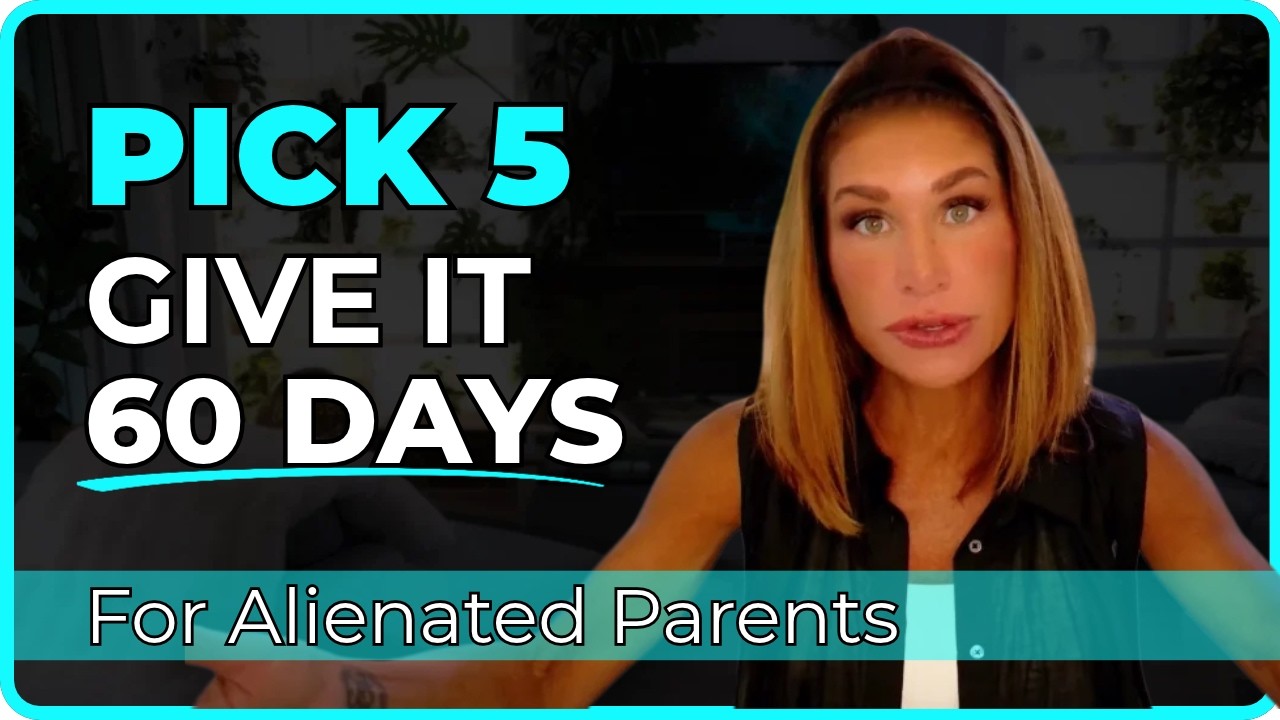
This is all within your control right now. Nothing has to change outside of you to do any one of these things that I've talked about. And of course, you can improvise and make up your own, but I wanna encourage you to do, pick five to seven of these, um, knowing that maybe you won't get to them on every day, each one of them, but starting to incorporate them , I would suggest if you're gonna try any new practices, you gotta give them a fair chance.
You know? So pick either 66 days, like is the median, uh, habit-forming timeframe. Just two months, two or three months at a minimum to start out and see. And if you don't like them, then you don't have to keep them. But give it, give yourself a fair chance to get in the swing of things. If you practice even three of these for 60 days, I guarantee you, you're gonna feel different in your life.
If you're practicing them on the regular basis, I guarantee you, your life is gonna look different 60 days from now. And the more committed you are to these practices, to your own practices, whatever they are,
with the idea in mind that this is contributing to the kind of person that you are and are becoming, then your life In 60 days, three months, six months, and gosh, in a year, unrecognizable.
This is the easiest way to take control of your life, is to implement identity change, shift, evolvement through this kind of stuff.
It's not about doing it through some grand declaration about, "I'm taking control over my life," right?
The way that you care for yourself is becoming an expression of the relationship that you have with yourself.
And of course, the re- repetition of these choices helps shape the person that you become. It, it shapes the trajectory of your immediate future and of course, your long-term future. This is how you change your life. This is how you get unstuck, All right.
That is all I have for you. I gotta go and edit this, and I will see you next time. Next week, um, we have a g- we have a great episode coming up next week too. So talk to you soon. thanks so much for listening today. If you like what you're hearing and you'd like to hear more, please make sure to click subscribe wherever you're listening or watching. Also, for bite-sized clips and tips, be sure to find me on TikTok or Instagram. See you next week.