
Are You Suppressing Your Grief? Here's How to Tell
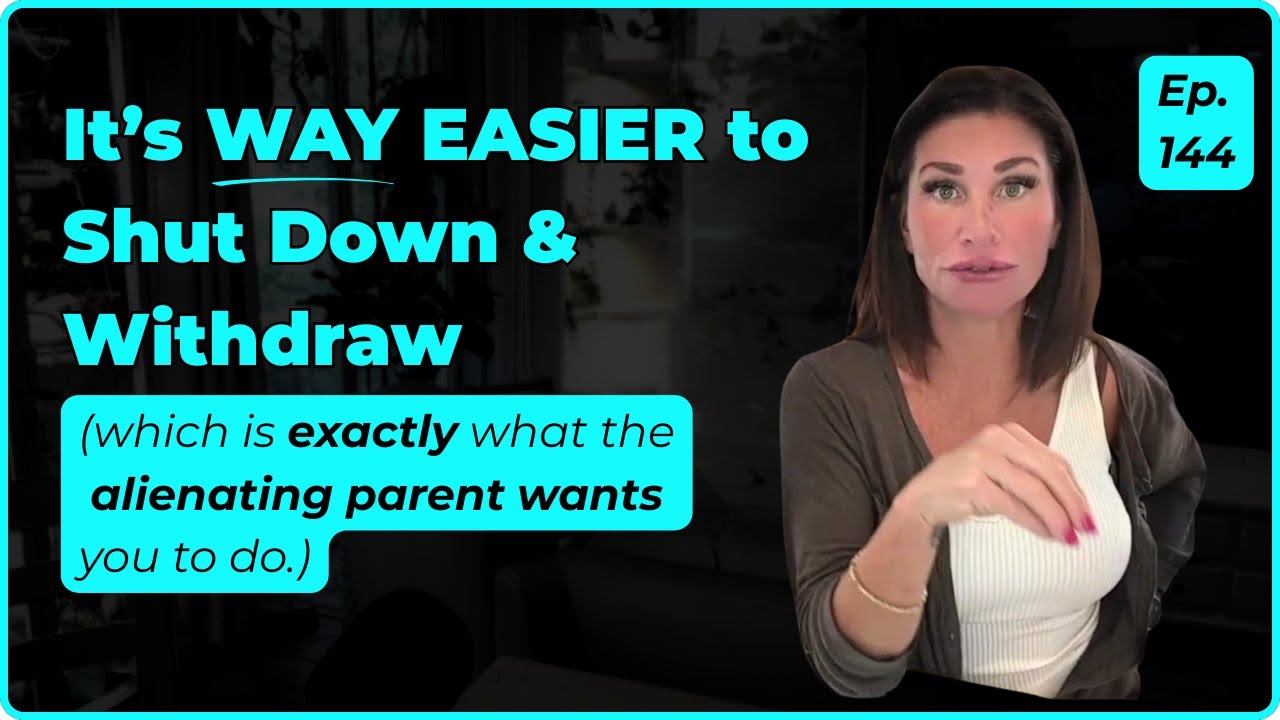
Read the full transcript
Auto-generated from the episode audio, so expect the occasional wrong word. Tap any timestamp to jump to that moment on YouTube.
You are listening to the Beyond the High Road podcast with Shelby Milford, episode number 144. Stay tuned. Welcome to Beyond the High Road, a podcast dedicated to healing your heart and life following the grief of alienation. I'm your host, Shelby Melzford, a twice certified life coach specializing in post-traumatic growth. If you're experiencing the effects of alienation and you're ready to heal, then this show is my love letter to you. Stay tuned. Hey guys, what's the habs? I am sitting here with a bird underneath my feet right now underneath where I'm sitting. The heating pad, it's still here. And it's been an experience, let me tell you, because um if anybody hasn't had ducks before,
especially just one duck. I'm not I don't have a duck, by the way. Like this is this duck is not staying here. Um not staying here. But especially just one duck because there's nothing else to keep it company. So I'm the one that's keeping it company. And I tell you what, it's uh it's a job. But anyway, right now it's right below me. Um, I'm not going to tell you too much about it now because I have an idea for an episode that I might record this weekend for next week um about my experience with this stuff which will end up relating to, you know, how I relate things back to alienation. So, I'm not going to go too far into it, but I will say right now that I have found very little
support from the wildlife rescue people in my area regarding this. It's been a little bit of a frustrating experience, but I think that there's an end in sight. So, there's that. It's just been a lot of work and a lot of energy and a lot less sleep. All because this silly little duckling walked up to me a week ago or a week and a day ago, whenever it was. Anyway, it's cute as can be, this little thing. I mean, ducks are so darn cute, but um you know, anyway, it's baby. It's a baby. So, and I've got this other little the dog here. Cute, sweet, Frenchie. That's so funny, but she also needs needs in her mind, I think, to be on top of this duck. So, there's that. Been a little bit
distracting. I'm just going to keep saying distracting. Anywh who, today I want to talk with you guys about being desensitized, right? Suppressing emotions and possibly withdrawing from your role as a parent emotionally, right? And how you can tell, Luna, sorry, how you can tell that that is what's happening with you and whether that's working for you or not. Okay, this is a topic that we've probably danced around many times throughout all of these episodes. Um, but it's not one that I've actually tackled like head on. We talk about emotions every single episode, right? And that's really really really where we all struggle when it comes well to anything, right?
Everything that we do and don't do is based on an emotion that we either have currently or don't want to be in, right? Or want to be in. When it boils down to it, it always is. But for us, it would make sense as an alienated parent if you developed a coping mechanism to withdraw. And that can look still like in the active times like I I know for me, I desensitized myself quite a bit. I wasn't necessarily withdrawing from my role. Well, actually, now that I say that, I'm I sure did. I withdrew from my parenting style and role way back when all of this started. It was more of like a uneasy questioning what my role really was and if I was worthy as a mom, you know, sort of thing. And so, I would
withdraw then um thinking I was doing it wrong or that I was going to get backlash or whatever. And so I would withdraw from my role and desensitize myself to that experience. Does that make sense? Um, so I think that this happens no matter what stage you're in as an alienated parent and also alienated children and anybody experiencing alienation as a whole. We do it to self-protect. You may have learned it, you know, from childhood, but it may not be working out well for you today. And the reason I say that is because the people that I notice that are doing it today something. Wait, before I even say about the other people, I will say I'm very aware of this for myself. Like I check myself a
lot. I notice when I go to stores like Target or whatever, I that's when I see all the other families out and especially the little girls for me cuz I have a little girl. Well, she's not so little anymore, but it seems to be when I'm faced with the experience of seeing other moms and their children. Lately, I've been experiencing like these waves of grief again. Like, I'll go sometimes weeks, sometimes months without really feeling much. And then lots of little quote unquote triggers or things will happen in front of me that provokes some sort of internal response, right? and like grief that I allow these days, right? But I can notice when I am desensitized, turned off, moving away
from the experience of being faced with other moms or other families and their children. There will be like a um not any sort of like negative negative emotion, but the propensity I guess to dismiss the families and their whole experience. there's a little bit of a negative tone to it, like a roll of the eyes maybe sometimes, right? It doesn't happen that often, but I notice now I'm so aware of it. And the reason I'm so aware of it is because I made the decision a long time ago that I don't want to desensitize myself and remove myself from being her mom, you know, and that's a really difficult thing. I think it can feel difficult, I should say. It's not a really difficult task to do
it. It feels so much easier once you've applied it. But sometimes it can be difficult to conceptualize in your brain like how to still continue on with the mom role or the father role, parent role when you're not doing it every day, right? How do you keep that hat on and go about living your life? Right? To me, I choose that because I I want to keep sending that message and that energy out into the world, right? so that I'm later on will be able to receive my daughter and be there for her and it just keeps the doors and the energy open. Right? Having said that, I do know there's a still a tendency somewhere in the back of my mind to want to shut it down because it's easier that way to
withdraw, to ignore the mom part of me and like just move on with my life. there's some sort of tendency there to want to dismiss me myself, right, as a mom and just lean into the other things because it feels in the moment it feels less taxing, right? It feels less hostile, I guess, like when we decide we're going to lean into the role as parent even though our children aren't contacting us. what you're really doing is leaning into the idea and the the the experience of pain. And most people want to, especially if they're in survival mode, want to run from that, hide from that. So the easiest thing to do would be to avoid, to suppress, to deny, to withdraw.
You know, I see a lot of parents doing this, especially like, and I'm not having the one-on-one conversations with them, deeper conversations, so it's difficult to judge, but just by some of the comments that people have made in the past and I see continuing to make like on Tik Tok posts and what have you. I I have one parent in mind um that does this. We have had a conversation before and he's pretty open about his the fact that he's moved on in life and that he's welcomed the idea of shutting his kiddo out right now. And he also says that he is better off this way and that he's doing just fine. The world is beautiful. There's roses and puppy dog tales everywhere.
But that no, his son is not welcome in his life and it's better this way. Now, this has been going on for a while with him, and this is, I know, is a very popular stance because parents want to say, "Well, they're not receiving me, so I might as well just cut them off, too." Sometimes it's not necessarily an fullon anger. It's more like, "I just need to remove myself from any hope or idea that things are going to get better so that my life can be easier." It's a way to sort of numb yourself, emotionally, remove yourself from your kids's life, right? So, I came up with just some bullet points of how this might be showing up for you. One of the ways that we can desensitized is that we mask her
emotions, which we may have learned, you may have learned growing up, right? Like if you had parents that were of the era of I'll give you something to cry about or your crying ball ends up in your bedroom, right? don't do that around me sort of thing. Then you may have carried this over to your relationship with your kiddo. And so instead of feeling your emotions when they're happening, you either suffer and feel the the suffering, right, because of like the victimization sort of emotions, or you tell yourself to suck it up instead. Many parents will tell themselves that they need to be grateful. they should be grateful for all the other things that they have or
that if they're feeling sad, they should, this is what my dad used to always tell me, just don't think about it. Just don't think about it. And while that's okay to concentrate on something else, I recently released that episode on um avoiding your emotions sometimes, absolutely, but knowing it, acknowledging that that's what you're doing is key so that you can come back and experience and process those emotions when you are ready. But masking them completely, denying that the emotions are there, like your emotions that are, you know, sort of under the grief umbrella. The whole purpose of masking it is to present this like sort of facade of well-being. But what you're
doing is denying the deep sadness, anger, vulnerability, or whatever is going on for you, which can cause this unprocessed trauma, trauma on top of trauma, and it can cause you to isolate yourself more, right? So, masking your true emotions is a way, it's just your way to deny what's going on. Bottling up feelings is more like just you completely avoid talking about the anger. You know, it's there. It's almost like the elephant in the room. The feelings are there, but if I acknowledge them right now, then it's going to be like Pandora's box, and I'll never stop feeling the emotions. So, I'm just going to leave them sitting there. They're there. They're annoying me. It's taking
up all my energy. I'm aware of it, but there's nowhere for me to let this out safely, so I'm just going to keep it bottled up. That's the difference between masking the true emotions. You're trying to deny them altogether to yourself, right? and you decide you're going to smile and focus on other things and not even think about it. Disengaging from the parental role, which I kind of just touched on, is that I started doing this early on, downplaying my role or like second-guessing what my role was because of the scrutiny, right? What was coming at me from the alienating parent and his wife. And so I stopped participating or participated in a muted way in order to avoid the pain that I
might feel if I was further scrutinized. I let them control me from afar really. And so that's one area that is something I've really made myself stay aware of, like chosen to stay aware of and on top of on purpose because the role isn't something that I'm exercising on the everyday and the traditional way, right? So you parents that maybe your kids haven't been in your household for a while now and if you're noticing that you have sort of disengaged completely and you do not see yourself as a parent anymore. I'm not saying that that's a bad thing or it's wrong, but it might be causing you to stagnate with regard to your healing process. So you may emotionally withdraw from your children.
You cease efforts to reach out to them. you don't send messages to anymore or maintain any sort of traditions. Even if those traditions like you don't necessarily have the ability or the the opportunity to do those traditions, right? Keep playing those out. Still, there are ways to like it takes some ingenuity, a little bit of creativity on your side, but to reach out to them on occasion, drip love, right? so that you're continuing on that or keeping that line of communication open, the energy moving at least coming from you over to them. But when we are withdrawn completely from the role, none of that's happening because we're telling ourselves that they don't want us as
parents, that they don't need us as parents, value us as parents, yada yada, and that we are better off. Actually, this is one of my other points for in just a minute, but we're better off just erasing that part of us in our today world. Maybe we still long for the past role that we played, but we tell ourselves that in today, yeah, but now that's not our reality. So, let's just might as well just detach from that. Stop hoping that it's ever going to come back to that. Which is kind of black and white thinking, right? You can still long for that role or find ways to fulfill your role, which is really really what would be the most helpful thing is find creative ways to fulfill
your role without keeping false hope. You know what I'm saying? Okay. So, another way that you can do it is denial, minimization, right? You may convince yourself that you are, like I was just getting ready to say just a second ago, that you're fine. Everything is fine. like the guy I was the dad I was referring to earlier. Everything is fine. In fact, my life is beautiful now. It's better now than it ever was. Everything is perfect. It's roses. I'm making more money now. I've got more friends. Blah blah blah. Okay, I'm adding the tone. And I'm not saying that it's a bad thing. It it doesn't have to be a bad thing. And also, I think it's great to be to like be aware of. I
almost said beware of, but be aware of so that you don't find yourself later on suffering some of the the negative effects of that, which I'm going to go to in a few minutes. But yeah, you may convince yourself that you're fine or better off without the relationship and suppressing the lunging or sadness that you're actually feeling. It's there, but you're telling yourself that it doesn't need to be there or it shouldn't be there because why? Because they don't care about me, so why should I care about them sort of thing? It's a survival strategy, right? To avoid the pain of the loss that you're experiencing. Another way that you desensitize is by avoiding reminders.
You don't have pictures up. You don't acknowledge the birthdays or special days that maybe y'all celebrated together at one point. You remove momentos from your house or other reminders of your children from your entire environment. You maybe stop hanging out with friends that have kids or friends that remind you of your kid, people that remind you of your kid. You don't go to family events if the families are going to be there. You go places that support your new role, right? Your new idea of you and your life moving forward. And you can tell yourself, and not to say that it's not, again, I'm going to keep repeating this while I'm saying this stuff. It's not
bad, good, right, wrong, black, white at all. But you can tell yourself in those moments, this is what I'm doing to create a new life for myself. And that is amazing, right? And also avoiding and denying, kicking out of like going around trying to evade your quote unquote old life or your role as a parent is going to cause you pain in the long run. So it's just know that it's okay that you're doing it. Just know that like by doing this, by limiting who I'm seeing, where I'm going, avoiding reminders coming up, I could be stalling myself and stalling my my healing. Okay. Another thing is uh you're suppressing emotional expression. It's kind of related to masking your true emotions
and bottling up feelings. This one is you can suppress crying, anger, even joy, believing that any strong emotion is dangerous or unhelpful. This over time can lead to you being completely numb, which I read a lot about like on the Reddit posts and stuff like that where people have just become so numb, especially with CPTTSC, right? With complex PTSD, this is such a common thing for people to just go numb like lithium numb without without the lithium, right? They can't feel any emotions because they have learned the art of suppressing any and all emotions, right? Any and all expression of those emotions. You become sort of like a stone gray rocking yourself from the negative and even the
positive emotions. You're just feeling like the low hum of existing, you know. Um, and the last way that I think that you can do this is you withdraw socially to avoid questions or pity or judgment. We withdraw from a lot of social situations which I know I know I know I know that you can every one of you can relate to on some level. I know for me and you've heard it over and over, right? How I isolated myself and I was a hermit up on the hill living in the house on the hill, right? I isolated myself and reduced opportunities for myself and I still do this to this day. Much of the time it's very unconscious. I reduce opportunities for connection, for community, emotional support even
too. I tell myself and I tell others I don't need any help. I'm good because I can do it the best anyway, which is a whole another episode in itself. But we can withdraw socially and mentally all the things from our support network and whoever else that wants to be our support network because we're giving off the vibes that no, thank you. I don't need any help from anybody. I've got this. I noticed that I do this still to this day completely unconsciously like I was saying with new friends that I make the the energy that I give off it. How it came up for me is that the people that I've had in my life have in my life even they talked a lot about themselves and immediately from the get of our
conversations they wouldn't even ask me how I was doing but they would go into what was going on in their lives and what what their problems were and what was going on you know all of the their stuff and they really they felt the connection with me and I can feel the connection with them about them but I think that I have trained them to not ask about me Because when they had asked in the past, I was just like, "I'm fine. Everything's fine. How are you?" I would immediately turn and I have a friend that had actually annoys me. He's always done this for years. It's my uh Dr. Steve. He has done this since the first day we met when my daughter was like an infant. Infant, like a month old. Um, I
realized one day that he and I were like so close, but I never really knew anything about him except for like some surface stuff about people he dated here and there, but really nothing else because he always avoided always avoided sharing personal information. He loved to get information right about me, not because he was using it against me or doing anything wrong with it. He just was comfortable with that side of the conversation. Let's put it all on you. let's let's talk about you, right? And it gave me at the time, I think it served me well when we were really close because then I was able to talk about all the things that were going on with me. It was like I had a counselor right
there who just listened to all the things that were going on. And he actually does give out some pretty darn good advice, too. So, if you find yourself in the Dr. D role in with all the other people like I have now noticed that I do then it might be a way for you to remove yourself and not get vulnerable with the people that you might want to actually get vulnerable with the people in your life that you can express your emotions around and know that you're safe. So now we're going to talk about how you can differentiate between having resilience and emotionally desensitizing yourself. I almost did it today like titled this episode focusing on the word resilience
and having the difference between resilience and desensitizing but I didn't and here's why because I for me anyway personally when I hear the word or see the word resilient it used to leave a bad taste in my mouth if you will because it goes back to that if you've been listening you've heard me talk about how I resented when people told me how strong I was and I you know oh this is just opportunity for you to become stronger. And I was like, I don't want to become stronger. This is enough already. I've been tried so much. I don't want to be strong anymore. I want to be weak. Like, I don't want to have to be put to this test anymore. I'm sick of tests. I'm sick of growing
spiritually. Right? And the same kind of feeling I got with that word resilience, right? It kind of pissed me off when anybody would suggest that I need to develop resilience in my mind. Anyway, if you guys can relate to me, it felt like I was being gaslit in a way, you know, like, oh, just ignore your experience, which is basically what I was taught my whole life. Oh, don't worry about that. Just be grateful. Right? That's what resilience was to me is like, look, I've been hit by a train and cars and been punched in the face and been kicked in the stomach and here I am still standing. That's what resilience felt like to me in my mind. That's how I defined it. And that's not
what I mean by resilience. And I think that most of y'all know that. But I just wanted to I guess make that distinction because I get it if you're there. Resilience to me means allowing for yourself to be completely human. Not just wanting to experience the joy and the happy and the whimsical and the you know whatever emotions. Being a human means that we feel the full spectrum of emotions and we don't have to suffer all the time and love being in pain or like feel a victim and we also don't have to all also be in the happy joyous glee place in our life. Being resilient is learning how to adapt with all of it. It's an and to me resilience is a big capital A and D. It's I'm experiencing
this and I'm experiencing this and I can make room for all of it and I'm going to be okay because I have learned how to adapt. Neuroplasticity, right? Is learning how to adapt and grow through it all as opposed to avoid, suppress, withdraw, deny, move around, circumvent that kind of you know? All right. So, how can you differentiate between having resilience and emotionally desensitizing or withdrawing? You can tell the difference by examining how you're relating to your emotions, your relationships, and also your coping strategies. Right? So, with regard to your emotional response with resilience, you feel the full range of emotions like I was just speaking about. You're
welcoming it all in, including the pain, right? But you recover and adapt. You allow for. You keep swimming. You keep swimming without denying. When you're desensitized, you are emotionally numb. You have a diminished sense of emotional response or awareness. My dad is kind of like this. A lot of parents who had not gone through like a healing journey, like our parents, depending on how old you are. I let me just say it this way. A lot of like the boomer parents, no offense if you're a boomer. I made a remark about boomers recently and I felt terrible afterwards because I think I didn't mean it this way but it came off a little judgy so I'm not saying that way but I just have noticed huge
generalization here but many of the boomers because of the emotional like the social climate like how kids were raised back then how the their parents did it and even Gen X how we were raised was to not feel not recognize our emotions recognizing our emotions was weak right that was weak and kind um unproductive in your coping style. If you are practicing resilience, you use adaptive coping, meaning that you're problem solving, you're seeking support, you have sort of a self-care plan going on. So, you're coping by recognizing, welcoming it all in, addressing each area in a strategic, more healing focused way. And if your coping style instead is what I used to do, which was
to avoid all my emotions, to numb, to go get wine, a glass, which really meant a bottle and a half of wine, and decompress, move away from my emotions to escape. Then that's the desensitization, the withdrawing, right? This is pretty much self-explanatory, but sometimes we don't know or see why we're doing it in our own life, right? A lot of people will say, "Well, I'm just having a glass of wine because I enjoy a glass of wine." And that's fine. I'm not saying that there's anything wrong with that. But if you notice that when you decide that you want a glass of wine is when you have a certain feeling in your belly because something has just happened in your life
and you think that wine is going to make that whole experience better, then that's when I would just have you think again because usually it doesn't. It only helps you in the moment. It numbs you in the moment. And here's where that if you haven't heard my episodes on this then I'm going to tell you quick version of that now. Here's where that you in the end. You can numb yourself now and it can feel like a relief now. But when you numb, you end up continuing to tolerate the current unacceptable status of your life. So you end up prolonging the unacceptable. So, not only is it like a time suck, a time waste in the moment because you're just basically avoiding the inevitable,
right? You're also not feeling the pain that you need to feel cuz pain is always the motivator for change, right? Discomfort is the currency for any sort of success that you want coming up. If you remove the discomfort from your life by numbing, then you don't have the opportunity to create the growth to move to get out of it because you're too busy numbing and then it's tolerable. Then you're like, "Oh, it's not so bad. This life isn't terrible because at least I can escape it and drink at night." Great. But then your life is going to continue to stay the same. That's when you you feel like you wake up and it's groundhog day. It's like every day is the same Yeah. That's because
you've been tolerating by numbing. And so you're never experiencing the pain that you actually need to feel that would motivate you to get out of it and grow. Okay. So your empathy, this is a big one you guys, is that I find that Okay, let me just do it the way I've already been doing it and then I'll tell you in a second that um I've got notes and so I bow and I'll go all over the place. When you're acting coming from resilience, you maintain your empathy and sense of connection. you are continuing to relate to those around you about let's say their problems. This I see happening with alienated parents who have been remarried or are in a new relationship
with a significant other and also with others like close friends and family members. I see alienated parents who are desensitized or are actively avoiding their own emotions and their own role as parent. They are so apathetic to others around because in their minds you may not know that you're saying this to yourself but there's this idea of oh suck it up if you only experience what I have you don't even know pain you have less empathy compassion all the things for the people other people in your life and you don't even realize that's there because you have given yourself that same treatment you are apathetic to your own self in order to remove yourself from the negative emotions you end up
creating more negative emotion. That's the pisser of it all is that you're trying to avoid the emotion. You shut that area of your life sort of off. It goes cold and dark, right? Like your loving role as parent, your the hope for the future and whatever. You guys know my feelings on the word hope, but you get what I'm saying. Looking forward, you know, positive way in your mind if not possible. So, we're not going to even go there like cutting a limb off. By doing that, you end up extending that same coldness to other people that you want to feel the closeness to and you don't even realize you're doing it because you've shut it off completely. It's just the way that we work, right?
Our brains, the subconscious will work. It's like, oh no, if we're not going to accept that from ourselves, we're definitely not going to accept that from other people. So anyway, and it creates so much negativity in your life which can end up in the long run then compounding your feelings of isolation and rejection right so yeah I see that happen a lot and of course naturally now we're going to get to your feelings of connection right so if you are acting from a place of resilient you seek and maintain meaningful relationships and also maintain support work you're actively pursuing connection for yourself, continuing therapy if that's what you're doing, continuing maybe any
group activities, making new friends, even being resilient is that when you're not, you're withdrawing from relationships, right? You're feeling disconnected or detached from maybe you hold yourself back from making the new friends or going to the community get together, whatever's happening, or telling yourself, "What's the point? They're just going to judge me or what have you." you know, you you move yourself away from connection and you end up maybe feeling a victim even more to your situation of alienation because now you're backing yourself in a corner more and you don't even realize it because your brain is telling you that they have you backed into the corner,
you know. And by the way, removing yourself from the situation, withdrawing ends up causing you again the same negative feelings that you would experience if you face the ones that actually need to be processed that you're trying to desensitize yourself from. So there's that. Um self-awareness. When you are in a place of resilience, you are recognizing and processing emotions, even the painful ones, right? But when you are desensitized or um withdrawn, you may deny or be completely unaware of the fact that you're avoiding or the fact that you're numbing. I I hear it from parents all the time and I see it in the comments. Oh no, I'm fine. I don't know. That's usually the people that are
saying life is great. Life is totally fine and I'm fine and everything's great. You can tell the difference. I can tell the difference because of the energy that's behind it. The oh no, everything's fine. I don't know what you're talking about. Things are great. things have never been better. That's the It's a more of a tight-lipped, speedy but firm sort of there's an anxiety behind it even though they sound so like resolute and sure of the fact that everything is better. Again, nothing wrong with this. I know that I've done this before too, right? No, things are fine. It's very rigid, but the avoidance of it is I mean I did this like I'm thinking back right now. It's
reminding me of pretty much how I lived my entire life. Like everything's fine. My family life was fine. Everything was great. Things were perfect. They were fine because I learned that from my from my dad. Things are great. What's going on? How's the weather? My dad to this day still talks about the weather. He loves talking about the weather. And the weather is like there's like a hierarchy of emotional vulnerability. and talking about the weather or like external circumstances, politics, the weather, that kind of stuff is like just barely scratching a surface, right? So, you keep yourself at this very superficial, desensitized place. But that can lead to a lack of
purpose or meaning in your life. That can lead to why am I even here to begin with? What's the point? it can take you on this long dark road of questioning your existence, questioning all of it. So, um, goals, when it comes to your goals, when you're coming from resilience, you aim to adapt, grow, and return to well-being after the adversity or during the adversity, knowing that the adversity is there and that your grief will always be there in some way, shape, form, right? It will be there, but it doesn't have to be a negative thing. It's when we judge the emotions, like when we have a sadness, we judge the emotion as bad or wrong or inconvenient. That's a huge one is I don't want to
feel sadness right now because it's inconvenient. I I have other things to be doing. I have places to go, things to do. And if I have sadness, it's going to distract me. I don't have time for those things right now. You ain't to avoid the pain. Let's just get through this and stop feeling the negative. If we can just look towards the things that I can create positive, which is a good idea. It's like a noble, seemingly helpful, healthy way to go, right? Well, I'll just focus on the good things that are happening in my life. There's nothing wrong with this, but this is where the and comes in. The capital A, the capital N, the capital D comes in. Let's look to the good things.
Let's have gratitude. Let's have purpose, meaning drive, motivation, whatever it is. And also allow the experience of sadness, anger, victimization, even whatever it is. Just allow that to expand. You know, the the goal isn't just all I can hope for is just to save off the pain to not wither away and die. It's going to keep you stagnant, you know? So resilience and being open to all of it is about bouncing back and adapting to the adversity, adapting to the experience of pain and the experience of joy in all in between peace, discord, unsuress or uncertainty and then full certainty everything. the newness of creating love in relationships with your friends, like
refalling in love with the people that you're already in relationship with, not just significant others, but other people in your life, your mom, your dad, your other children if you're not alienated from all of them. Recommitting yourself to those relationships, right? and not only delving yourself into those so that you avoid feeling the negative emotions of what's happening with your kiddo or kiddos, but accepting it all in, right? Opening the door and allowing it all in and knowing that the worst thing that can happen is that you feel a negative emotion. And it's just that it's when we add on the story on top of that negative emotion. It's when we add
that suffering of, well, this negative emotion means that my healing is stunted or that means that that I'm inconvenienced or that I'm not where I thought I was healing wise or that this grief just keeps pounding on the door and it just doesn't stop. That's the extra suffering, the unneeded really. It's indulgent sort of suffering that is hiding the the real slow true pain of grief, you know, and allowing it in. It gives you practice to keep allowing things and experiences and emotions in your life. And then you don't necessarily make things so much of a big deal. Like experiences that maybe are in your mind negative or um like hardships in relationships and all the
relationships in your life aren't so difficult anymore because you've now gained the confidence and like the wherewithal to move through them. You know, you have confidence that you can move through them. Like it's going to be okay. Things are going to be okay. And things don't always have to go the way that I think that they should go in order for me to be happy. In fact, today for real, I invite in the negative experience because it just means that I'm going to get that much better at experiencing negative emotion. And when you get good like excel at experiencing negative emotion, then you have nothing to avoid in your life. And when you have nothing to avoid in your life, then you
have less less resistance happening on the friction happening in your insides and on the outside and your how all the things that happen around you. And so that means less suffering. So welcoming it all in is where it's at. But here's the part of the episode that I really actually wanted to get to and almost forgot is that the effects that desensitizing can have on your relationship today and your future relationship with your kiddos. Desensitizing and shutting out your role as a parent or shutting them out as your child or children is going to threaten or lessen the chances of you reconvening the relationship with your kiddo when they're ready. When you desensitize, you
end up many times anyway confirming. You're sending off the energy to in the direction whether you're in contact with them, right? like you're still seeing them on a semi-regular basis or regular basis or you're not. When you have removed yourself from the parental role and stop having expectations be expectations on yourself about being a parent like in all the ways that you fulfill that you end up sending the message to your kids that you've stopped caring. And again, you guys know that I am not big on talking about showing up so that other people can see you a certain way. like that is definitely not the message I ever want to send. If it's not rooted in the what you actually want
for yourself in the long run, right? So if if that's not the message that you want for yourself, then don't give that message out to others is what I'm saying. It's not authentic. It's not true to where you want to go most likely if you're listening to this podcast anyway. So if you don't want to confirm what the alienating parent has already been telling your kids and you want instead to send the message that you are open to receding them and rebuilding the relationship or reconvening, however you look at it for yourself. Then keep that energy going on within you because whatever you're thinking and whatever you're feeling will even without you saying a word will go be sent out to the
world by what you're focusing on it. It shines through and you know that right which can I I I I'm right now I am uh hesitating on saying the next part because I don't also want to focus your attention or put the attention on what happens with them. But it also I think being a realist too and wanting to lay it out all all out on the table for you when you cut that part out of you and say I'm not going to like you do it because people that parents that do this do this as a protective way, right? Like I'm not going to even try to expect that they're going to return so I'm better off without them. Screw them. They've been disrespectful. That's the angry parent
that's dumb. We can do it in all the ways, right? But the parent that I'm speaking to in right here, right now for this little portion, when you do that, you end up depending on how old your child is, yes, reinforcing what the alienating parent might be already saying about you, their claims about you, but you also the effects on your child in the long run if that's conveyed to them is their relationships moving forward like their sense of connection may be completely diminished because of that message that you might be sending out like I don't even care anyway. Fine. You can you've disrespected me for too long now. Now I'm putting my foot down and forget it. Then I don't even want a
relationship with you if you're there. You know that in the end, even though your child may have been a big fat jerk to you on many occasions, like disrespectful in your mind, but choosing that route with them is going to negatively affect them moving forward for likely a very long time unless they really address it, which will be on them. Right? I'm not making you responsible for how they, especially adult child, deals with the alienation that you did not necessarily that wasn't your responsibility. I I'm second guessing myself there because also too I know that alienated parents all of us had a huge role in the alienation for it to even become alienation right and so I think that
that's also really really that's why I was just dancing around my words because yes no without the alienating parent exercising the strategies none of this would actually be but you still did play a role anyway um By cutting them off, they in turn will develop, if they haven't already, trust issues in their relationships, a deepened feeling of isolation and like non-relatableness in their own world, right? They feel like other people don't understand and they're completely disconnected and detached from their own world because you have detached from them and many other reasons too. So that's not blame here. So just know that. So, in summary, emotional numbing
or survival mode, wanting to avoid all the pain, it's going to cause you to stay in denial and perpetuate all of where you're in right now. If you're telling yourself that life is great, life is fine. I'm not trying to say that it's not fine for you. And also, I think that it might be helpful for you to notice the relationships that you're currently in right now and your sense of connection with them and their sense of connection with you. Like maybe you have that conversation, right? Do you like asking them, "Do you feel that I'm receptive to your needs? Do do you feel heard that um you know that I'm listening to you that I understand what you're saying and that I'm taking those
things into um consideration? for the next conversations and the next encounters and what have you. And also ask yourself the same questions, right? Do I feel hurt? Do I feel um supported and connected to them and that they're listening and all the things? Not to blame them, but maybe there's something in you that you have just like how I was explaining with the relationships that I've built over the last I don't know how many years where they talk all the time and then I don't. I set that up for myself without even knowing that I was doing it. But I was doing it so that I could avoid my emotions and avoid connection, right? Because connection to me felt risky. I didn't know that I was
thinking that, but it was much more comfortable for me to hear them talk about themselves than for me to talk about myself and what was going on with me because I got the message way early on that that stuff wasn't important or valuable to other people. Nobody really ever said that to me, but that's really the actions kind of showed that, you know, I felt like minimized or something, you know, and that's okay. That's the experience I was supposed to have. And if it's you, the experience that you were supposed to have, I mean, if that's how you want to think about it, but I'm overcoming that because I've developed a mindset of resilience and growth and adaptation and and everything
is an ant. All of it. Let's embrace all the emotions, all the experiences. I mean, there's some of the experiences that I'm embracing that I don't love and I wish didn't happen, many of the experiences, but I'm still welcoming the experience if it's already here. Then how can I overcome this? what's my plan to overcome and include all of it as opposed to a avoiding denying or saying life is better off without them or better off without it depending on what you're moving trying to move yourself avoid move from you know okay I thought that this was an important topic to visit because I know that this is such an easy mindset to fall into this mindset of avoidance or like um uh
diminishing the role that you actively once played and embraced and maybe now these days you don't even realize it but you have pushed that role out of your reality and sort of said oh that was the old me or my old life and now this is the life that I have now you don't have to do that you don't have to compartmentalize in that way if you don't want if you notice that other things or relationships are suffering or that you feel a sense of isolation or disconnect connectedness, you know, or if it's affecting your moods. Like, do you notice that you're a little bit more angry and frustrated these days? And you maybe you are right now putting it on the responsibility of other people.
I actually just noticed this with myself the other day where I was not denying it. I was in a shitty mood and it was actually it was just two days ago. I was really frustrated because I had so much going on in my world and this damn bird duck. I was feeling victimized and cheated on my time, the amount of time I had. But then I went out into the world, you know, not here at my desk, um, talking with clients. I went out and was doing some shopping, uh, errand running. I was so angry. I was angry at anybody that did anything on the road, like driving. I was just zero patience. And no matter what somebody would have done in front of me or beside me, they would
have been doing it wrong because I was placing all the responsibility elsewhere when I was really really just mad at myself for not creating the time and the plan to make something happen or at least do something about this damn sweet, beautiful, gorgeous cutie pie little baby duck, you know. Anyway, that's actually for the next episode. So, um, I'll leave that be. But just notice in your life if you have been trying to move away from cut ties with the parent role or your child in general, right? Like, forget it. There's no point in even looking that direction because they're to me and they're going to turn out just like the alienator or however you're saying it.
It could be like the angry like that or you could just be silently diminishing your role and still though still somewhat active or maybe you're going back to court. That's how it was for me in the beginning. It was more second-guessing my role and my worthiness like I kind of said in the beginning. And then I really really try to be aware of any time that I'm presenting as in my own like mindset or thought about myself as a person who's not a parent, you know, a woman out in the world that doesn't have kids or that was another life. I really really try to be aware of that because that is only a way it's a matter of convenience for me and for most people that do it. It's
just a way to avoid any sort of grief and pain cuz we tell ourselves by thinking about it. This is again go back to my dad how you know don't think about it just move on with your life and focus on the good things or the things that you can create. That's a great He doesn't say it that way, but that is a great way to go about life, but don't also then cut out the other part. I mean, you can, but that's where you're going to experience the suffering, prolonged suffering, you know. Okay, I think I've done it. I got to go edit this cuz I got to release it today, too. Um, listen y'all folks in the United States, happy 4th of July. Have a lovely one, a safe one, and have fun with some fireworks. I
used to love lighting fireworks. It's so fun to smell a fireworks like when you're up close to it. So good. And it's such a rush to go and light it and then run. But I used to do it in my both of my houses of Texas, you know, like with my kiddo, you know, and it was so much fun. And back then, for whatever reason, either I didn't notice because I was completely unconscious or they weren't it didn't wasn't a problem. But my dogs weren't scared of fireworks. I don't remember them being scared of fireworks then. I mean, this wasn't that long ago, 2016, 2017 like that back then. I don't remember my dogs ever freaking out. And we would light the the fireworks. I lived on a like a small
private drive, six houses, and I don't remember them ever freaking out. Anyway, these days, I don't because my dogs now completely freak out. In fact, I drunk them before because I the the people behind me, the guy behind me, it's an amazing show. I can literally look from my kitchen window right here and watch. Well, now I've got a tree. I've got a poinsi on there, but um watch the whole fireworks show. It's like being in DC. It's like that. Maybe that's much, but it's really amazing fireworks right close up. They drop I don't know how many thousands of dollars each year on Fourth of July and New Year's. So, the fireworks show is great here. But having said that and when my pig Neita was
alive, holy this place was like chaos central because they were all the animals here I I am sure they thought that they were going to die. All of them that the the world was ending, they freak out. So I drugged them with either gabapent or benadryil. Judge me if you like. It's completely away from alienation. But if you have pets and you're wondering what you're going to do with your doggies, check with your vets first, of course. But benadryil works wonders. I I do know that it actually has the opposite effects on some dogs. I don't know. I've never tried it on a cat and nor will I, so please just know that. Just pigs and dogs. Anyway, that is all I have for you
guys. So, have a lovely fourth everybody in the rest of the beautiful world. You have a lovely week. And Canadians, didn't you have Canada Day or I need to go look? Yeah, Canada Day. Happy belated Canada Day for you Canadians out there. And that's all I know. So, take care. See you. Thanks so much for listening today. If you like what you're hearing and you'd like to hear more, please make sure to click subscribe wherever you're listening or watching. Also, for byte-size clips and tips, be sure to find me on Tik Tok or Instagram. See you next week.