Auto-generated from the episode audio, so expect the occasional wrong word. Tap any timestamp to jump to that moment on YouTube.
0:00You are listening to the Beyond the High Road podcast with Shelby Milford, episode number 133. Stay tuned. Welcome to Beyond the High Road, a podcast dedicated to healing your heart and life following the grief of alienation. I'm your host, Shelby Milsford, a twice certified life coach specializing in post-traumatic growth. If you're experiencing the effects of alienation and you're ready to heal, then this show is my love letter to you. Stay tuned. Hey y'all. How we doing today? So before I get into the episode, I want to remember on the beginning cuz I always remember towards the end. If you are liking this podcast, if you've helped you in any way, two things
0:50actually. If you've been getting some results like here and there and you like what you hear on the show, going through the six-month program and the three-month program is like this on many steroids, all the most effective steroids. So, um I have some spots open. I'm actually I've got one spot now, another couple spots that are going to be opening up in the next couple few weeks. So, um, yeah, if you haven't already, schedule a consult with me and if you're ready to get the ball rolling on your life. A lot of people don't I know that like I've had recently a few people tell me that the reason that they didn't actually start when they did and they wish they would have started sooner
1:38is because they were wanting to get their life more in order before they got to me. you know, like, oh, maybe it's kind of like when you um if you've ever had a maid come to your house and you want to clean up the house before the maid comes sort of thing. I get it. But with coaching, it's best that you come as you are. So, anyway, just bringing yourself if you've been thinking about it and you know that you want some stuff in your world's change and it hasn't happened thus far with your own efforts alone and you know you need a little bit of help or you'd like some help. Sometimes it's not always that you need it. Um, and I know I've talked about this with you guys before, but you know
2:16you want it because you would rather have the results sooner than later and you're done with suffering, then give me a ringy dingy. And the second thing I want to say, if you haven't already, I would love love love kiss you and call you George if you would write a little Apple review for me. That would be for the show, not just for me. Um, and for other parents out there who might be looking for some support, I would really, really love that. And I know that they would appreciate that, too, because there's so many, so many of us parents out there that are hurting right now, that are thinking that they're alone and that they're the only ones and they don't know where to turn. And so if
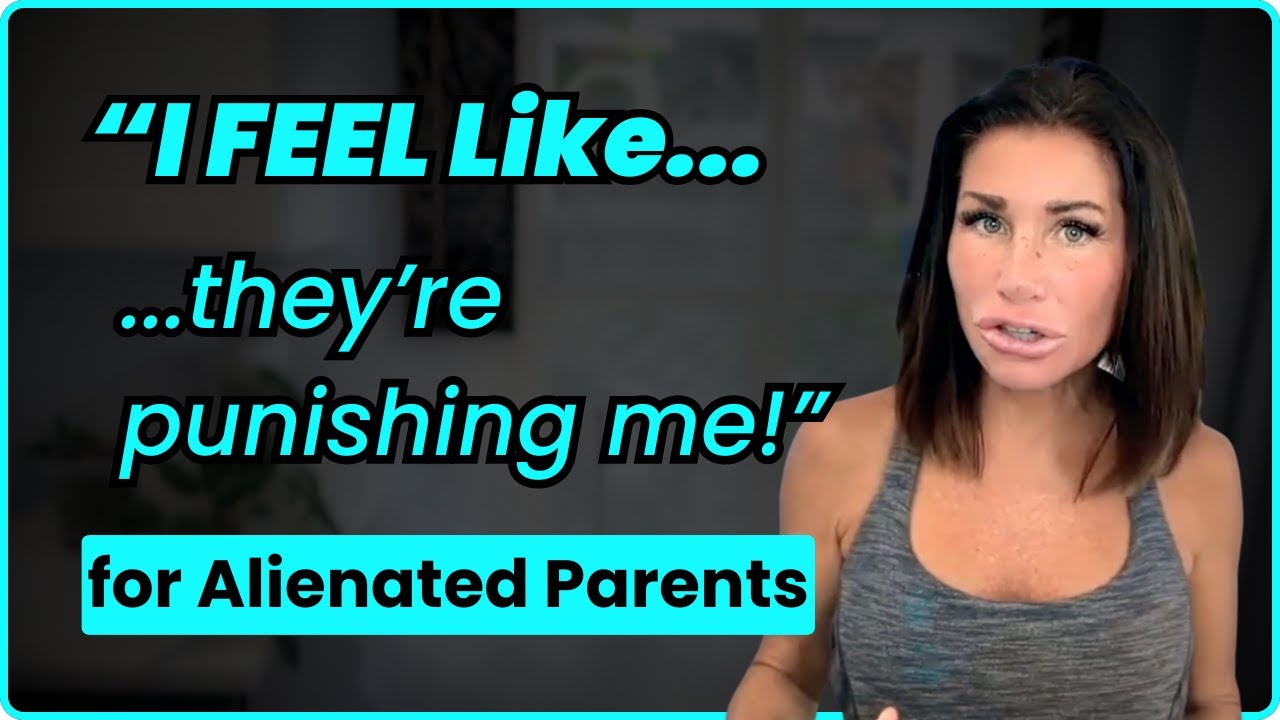
3:01you can remember how you felt, maybe even when you found the show, like you didn't know that there was another show out there talking about this kind of stuff and you don't want other people to feel the same way that you felt and I would love it if you would write media. The more reviews would get, the more times that our show is suggested to people. So yeah, there's that. All right. So today we're going to be talking about um I can't believe I haven't shared this or we haven't broached this topic yet. I say that so often, but last week I had a few clients back to back to back bringing this up and one of them being a a newer client like it was just her second or third
3:43session and she kept saying I feel like I feel like I feel like and it reminded me of me and I think so many of us like I feel like I feel like um that we are conditioned to used that term since for a long time anyway. I can't remember when that started for me, but I mean I think in the the new millennium like in the 2000s era is when people started using that more and more often and it seems to have just stuck and it doesn't always work for us. In fact, most of the time it doesn't like long term that using the phrase I feel like can cause us to feel cause you to feel uh disempowered and a little bit confused about what's going on. It can also lead us to emotional reasoning and
4:37it just doesn't especially when we're dealing with a situation like alienation and some past abuse, current abuse, it's just really not a helpful phrase when we're talking about the personal matters of our life. When we're saying, "I feel like eating some ice cream," that's one thing. But when you're using it in order to describe the situations that are going on in your life, that's where it can lead you astray. So, that's what I'm going to talk about. The first time that I ever heard I was confronted with this, I guess I should say, is I was in counseling online. The whole reason that I got into counseling online is a whole story in itself, but in a nutshell, it
5:18had to do with me wanting to stay out of jail because the ex and wife were accusing me of things and demanding and all the things, right? And so I agreed to go to this online substance abuse program thing was called Lion Rock Recovery. And there, I'm so happy I went. I actually enjoyed my time there. But I had this counselor who I spoke with on a weekly basis and I really look forward to my time with her. But when I started there, I think that I thought that I had really great communication skills and that I was really in touch with my emotions. And I learned over time that I wasn't as emotionally intelligent, I guess. I don't even know that that's the words that I use as I
6:03thought that I was. I thought that I was so aware and so progressive and was in touch with my feelings and everything and then I learned through this one counselor how out of touch with myself I was. It was in a really helpful way. So I forget how it came up. I just remember having this huge breakthrough. We were on a call and she asked me how I felt when blank blank blank I forget what it was. And I kept telling her, I said, "I feel like," and then I told her a story. And she said, "Okay, that's great. I hear your thoughts, but how do you feel when that happens?" And then I said, "I feel like." And then with a whole another story. And again, she stopped
6:46me. She said, "Hey, wait. I hear you. I hear the story. I hear what you're assuming or what you're presuming about the situation, but how does it make you feel?" that story that you just told, how does it make you feel? And I was like, what? I'm telling you, clearly I'm telling you. And she said, when you use the statement, I feel like anything that follows that is a judgment or a thought, a belief that you have, it's not actually a feeling. It's presented as an emotion, but you're tricking yourself and maybe the person in front of you because you're not actually becoming vulnerable or identifying the emotion. And for whatever reason, I just started sobbing. It was like this release. And I
7:36didn't fully know why then. Now I do. It's because I mean, it seems obvious now, but it's because I had never never in my life what maybe I feel sad, I'm angry, blah blah blah, but I've ne I'd never otherwise gotten vulnerable enough with somebody to say when this happens I feel this way when um at the time I wasn't alienated alienated yet. They were doing lots of things, you know, and I was in that really dysfunctional relationship with that other guy, you know, at the time. I'd never been able to take responsibility for my own emotions. So, it just felt like such a release to be like, "Oh, all of that other pressure." Like, I spent my life talking really fast and
8:27trying to hurry up and get the information out and assess what was going on and figure everything out so that I could stay out of a stress response, right? I didn't know it at the time, but it was like I was always trying to control assess control assess my life, my environment, my surroundings so that I could maintain some sort of homeostasis, right? Some sort of calmness. It was like this illusion of control. But that labeling that I'd feel like blah blah blah was really always just assuming the roles of other people, what they were thinking about stuff. And it was so exhausting. to have to come up with a story about why somebody behaved the way they did when I didn't really
9:11have to ever come up with that story. I don't really need to know why somebody behaves the way they do. What's really important to me is to know why I feel the way I feel. Identify the thought that's causing it. My story. When something happens out there, I tell myself a story and then I feel a certain way. That's it. It's so freeing, right? And it helps you to take helped me to take full ownership of my experience from that point moving forward. Now, did I take full ownership from that point moving forward? Absolutely not. But that was the the foundation. That's what started laying the groundwork for me to begin taking my power back. And I realized that like I feel and then if I
9:58had the like into it, it was going to be a weak statement coming up. B it was exhausting. always exhausting. I felt like it uh it felt I don't know how to explain this but rushed and hard and um resistant every time I use that I feel like blah blah blah blah blah is going to happen or they're acting this way it is rigid very rigid. So when I learned that I feel like is not actually vulnerability, it's the opposite of vulnerability, that when we say I feel like, we're playing it safe because we don't have to commit to using other terms like I feel and then giving up an emotion or I think which is a lot stronger and more like concrete. We don't like to do that in social
10:52situations because it seems too direct. Saying I feel like in our minds is less likely to provoke any sort of disagreement or judgment. Okay. So, I'm going to say a few of the I feel like statements and then we're going to switch it up and in your mind you try on these statements both ways and see which feels better, more empowering for you. So, I feel like they're trying to hurt me or I think they're trying to hurt me. I feel like they're using me or I think that they're using me. I feel like something bad is going to happen. I think something bad is going to happen. I feel like they know what they're doing. I think that they know what they're doing. I feel like they're
11:47punishing me. I think that they're punishing me. I feel like they're angry with me. I think that they're angry with me. I feel like they don't want me around. I think they don't want me. The difference between the two is the first one I feel like is very weak and we're making assumptions based on how we feel, which is a little bit distracting and sort of blurs the lines between who's doing what, why you're feeling certain ways. You're putting the focus outward. And where we say I think which with any of these it's more committal it's a stronger statement and it takes ownership of your experience because when we say I feel like they're doing anything or they're not doing something
12:30we're suggesting that we understand and know what somebody else's intention is for us or for themselves or what have you. Okay. Seems like such a innocent statement I feel like. Right. It also can feel like you're being vulnerable. So, drawbacks to using it. I feel like you don't care about me. When you say, I feel like you don't care about me, it focuses on their intent. It invites denial. How many times have you said that and your child or the other parent when you were with them or anybody you were in relationship with was like, "That's not true. I do care about you." Or maybe you've said that to somebody when they've said that to you. I feel like you don't care about me is rarely
13:18going to get you where you want to go. Again, you're blurring the lines from what you feel like and what they actually feel. So, and it possibly opens you up to their gaslighting of you depending on who we're talking about. Not that anybody can really gaslight you. Because if you're aware, you make the decision to be aware, then nobody can really gaslight you, but anyway, I feel like you're punishing me. That statement interprets their behavior and can actually be super argumentative. It can put somebody on the defensive. Um, I feel like you're always mad at me. Sounds accusatory. When we're talking about your kids, they may use that as evidence to support this idea or notion
14:01belief over in the other story from over at the other house that you are too sensitive and too dramatic. So instead, and I I mean I cannot tell you how many times I spent hours and hours I mean probably going around and around with whoever I was dating or in relationship with. I'm thinking right now about the guy that I was with after my daughter's father. We argued a lot. And I went round and round with I feel like I feel like you're trying to hurt me. I feel like you don't care about me. I feel like you're just doing this to make me angry. I feel like there's no respect. You don't respect me. Even that statement, you don't respect me is not going to help you to take your power
14:40back because again, you're focusing on what they are doing and how that's going to directly affect you. And that's not the case. there is another thought that's in between their quote unquote disrespect of you, which by the way is all up to interpretation. So instead of I feel like you're trying to hurt me, you can say when I hear from others that you called me a name, I just made up a story. Insert what you want here. I feel blank. I feel sad. Betrayed. Actually, I don't even think betrayed is an emotion. I feel like that that's an interpretation, too. I feel hurt. I feel alone because the story I'm telling myself got that from Bnee Brown years ago is that you're trying to hurt me.
15:22Okay. The problem with using I feel like is we distract ourselves by going into a whole ass narrative about what they're doing and why they're doing it so that our emotional brain can feel more at ease about them doing that whatever they're doing and not doing. You know, we want to feel better instantly. So we start making up a story about why it is that's happening and then that way it'll like lessen in the emotional brain. It'll lessen like pad the fall for us. If we can just make sense of what's happening and understand why the perpetrator is doing or not doing what they're doing, then we can feel rest, feel at peace, and move about our lives. But actually what that causes you to do,
16:09think back to any time you've done it before. notice it now moving forward. It causes you to ruminate and start supposing about all the other things of doing it all the other times. And so then it sort of raises up this like red flag for you to always beware. Remember what happened last time. So then it'll turn into a distraction for you. You'll constantly be looking back at that. But what if what if they go and do that thing again? Or you make it a rule set for your life or like a a belief. that turns into like a state of mind. You're always looking for and carrying with you the stories that you made up in your mind about why they're doing those things, but it's all come from your
16:52brain. You supposing why they're doing or not doing. Oh, they're ignoring me because they're trying to hurt me. Did they say to you that they're trying to hurt you? Maybe you do know from past experience that this is what they do, but you still don't know. They didn't say those words. So why are you going to keep supposing and repeating them back to yourself? Because it actually doesn't help you to show up in a way that is more helpful for you moving forward. You know what I'm saying? More often than not, it will work against you and not for you. It distracts us in the what we're thinking about, right? Like if we're thinking I feel like and then we go and tell the story we're looking
17:28outward and we're forgetting to look inwards which is convenient because if you haven't been used to paying attention to your emotions or you were never taught how to do it kind of like me then it feels much more comfortable to go outside of ourselves right it's an avoidance technique but it's going to keep you in that unknowing unconscious sort of living and it'll keep you focused on the alienating parent your children whoever else in your life you're you're in relationship with, right? You end up always living in their minds or supposing or trying to fortune tell what's going to happen next and then you completely forget to live yours or you don't even you're not even
18:07comfortable in your own skin because you're so busy in everybody else's experience. Also when we say I feel like we end up replacing the emotion with these thoughts, beliefs or perceptions, these ideas instead of the actual emotions and so it's a blocker. And emotions really are what cause us spur us to do anything that we do in life, right? Is because of an emotion. And an emotion always comes from a thought that we're thinking, right? not from the act that happens outside. And I know I've explained this to you many, many times before, but just in case you needed a refresher or you're new here, it can really help you to take your power back when you realize that what you're saying
18:56is often times just an interpretation or a perception and not actually what's coming from here and what you're feeling because of the story that you're telling yourself. Even if you want to continue telling yourself those that story, just stating that the story I'm telling myself is blah blah blah and that's causing me to feel blah blah blah. Right? So using I feel like also can make the statements that you're saying sound less assertive or confrontational, which causes us to feel safer and not so opinionated. I feel like you're just doing that to get a rise out of me. is more like you're feeling out the situation. If you were to state the thought that you're actually thinking,
19:44the fear that you actually have, I think the story I'm telling myself is that you're doing that to get a rise out of me and that's causing me to feel a little threatened. Is that true? That's you taking responsibility and then also asking for either confirmation or for them to really share what's going on with themselves without you being accusatory, without you blaming them for a story that you have in your head, you know? So it it helps to become very clear and concise about your own boundaries where somebody else stops and where you begin. So, we use I feel like to soften the blow on statements that we're using, right? It's a way for us to transfer responsibility, soften the blow
20:29of our own actions. Oh, I did that because I feel like you were ignoring me. I blah blah blah because I feel like you don't care anyway. So, it's a way to excuse ourselves out of things. Also, we'll say it when we're unsure of of whether our thoughts or ideas are the right way. Like, I feel like we should try a different way to do this as opposed to I think that we should try a different way. I think we should come to a different agreement. I feel like sounds less yeah assertive and it can feel for you again safer that you don't have to make such a like you don't have to be so decisive. I feel like is like e I'm not sure but maybe which doesn't actually get anybody anywhere. If you say I feel
21:23like and then the other person they're I feel like too then the two of you are in this non-action sort of place. Nobody's really putting themselves out in the line in order to get some done. It's very passive. Again, it feels safer because you're less vulnerable and what if your thoughts everybody up, you know? But what if they don't? And what can you really lose by putting yourself out there, your thoughts out there? Maybe you saying, "We've been trying this way for 12 weeks now and we haven't gotten very far. I think it's time to try something else." Very assertive and also effective. So because we are a little bit codependent, many of us, most of us, all of us, we often, depending on
22:11who we're speaking with, are seeking validation or we want to reduce any sort of defensiveness or combiveness. And so in order to make everybody happy in our minds, again, we're assuming on the other side that things aren't going to be happy, doing that is taking responsibility for somebody else's side, which is never ever really effective. But because that's the intent on our side is to try to reduce the tension. We will frame statements as I feel like because it we think if we say I feel like it'll appear less threatening to them and that may work sometimes but I will say the downside to that it's misleading. We say I feel like you're not being truthful. We think in our
23:00minds that it's harder for somebody else to argue with because we're saying how we feel, but we're actually not saying how we feel. And I've already gone over this. We're really stating our own fear or what we think that somebody else is doing. This passive way to keep the peace while getting our point across to the person in hopes that they will change or collaborate or do whatever it is that we ultimately kind of want them to do, you know. And I just know that when I'm saying all this that in no way am I saying that you're knowingly doing this because I know for me for as a fact like I just did not know how to communicate. I didn't realize that I was not truly understanding and of course
23:41expressing my own emotions being in touch with what that meant because I was too busy explaining other people's actions and saying that those were my emotions but it wasn't. In fact, it was just a distraction. It just kept me running in circles and telling stories to myself. Had me very um like feeling very chaotic inside. Of course, it did cuz I'm constantly having to to do the back stories on everybody that I was in relationship with, you know, and what they're going to do coming up. It's it was a very, like I said, very chaotic way to go about life. And then I was never really in touch with who I am and what I felt about the things that were happening because I was too busy up in
24:25their models. I've been there like, "Oh, they're doing that because this miss," you know, it kept me blocked from knowing and understanding who I was and what I felt and why I was feeling it and what were the thoughts that were causing it, you know, instead it was like they're doing this, so I feel this way, but that's because they're doing this. Okay. A lot of times we say, "I feel like when we're fortunetelling or feel uncertain about what's to come." It's a cognitive distortion that so many people do today. I feel like this isn't going to be a good day. I feel like something bad's going to happen. I feel like the world's going to end. Insert whatever you want to say about the future there.
25:04We make it seem like it's really going to happen. What would be really helpful if that's you is understanding where your uncertainty is coming from. You have a fear that in the future things are not going to be good for you. How does that make you feel? Vulnerable, fearful, anxious, that kind of stuff. Really identify what about the future you're scared that will happen and then how that makes you feel. It'll help you to not only solve for your actions moving forward, right? Like, oh, I see. I'm telling myself I'm never going to feel loved because I have the story that everybody that's in my life is going to screw me and this is how it's always going to be. But now I can understand,
25:47oh, okay, I'm feeling unloved and right now I'm not happy with the people that are in my life. Do I want to continue having them in my life? Do I want to add different people in my life? So just as a general statement, I think that the phrase I feel like can be useful at times when we are in like the workplace or we're having a conversation. It seems already like a tense conversation. It can be helpful to use. I feel like when you're wanting to soften your stance, but just know when you're using it and why you're using it. Also, it can we can use it in different applications. kind of like what I was touching on in the beginning when we say I feel like obviously I feel like going and having
26:30ice cream or I feel like going to a concert tonight that's clearly an effective way to use that but it's when we're assuming how other people are thinking feeling or behaving like if we're making a story up and presuming what's happening with them often times it's an indicator that you're distracting yourself without even knowing it and you're doing it to avoid recognizing the emotions that are happening within you and then taking responsibility for them. We can cause a lot of wasted time, energy, and suffering. Really with the I feel like statement, you have this whole series of stories. I talk with my clients say, "Well, how does that make you feel when
27:12they don't go back?" Well, I feel like the reason that they're doing it is because blah blah blah blah blah blah blah blah. It'll go into a whole thing about their aunt and their cousin and why the alienator whatever. It goes into this huge story that most of the time is made up in the noggin about why so that they can feel better. But then we've never not once mentioned the emotion. They will go into all the story and forget about what's happening inside of them. So it is a great tool to distract and ignore your own experience of the world. And when you do that, like I said, you just prolong your suffering. And so when you feel I feel not the like I feel the next word should be one word
28:01descriptor of the vibration that you feel on your inside. An emotion starts in your brain then travels to your body where a sensation you feel hot, you feel hungry, you feel cold, you feel burning, itching, those start locally in the body and then travel to the brain. So remember that an emotion always starts in the brain travels to the body as a vibration and that's when we feel lonely, hurt, bewildered, wonder, sad, angry, excited, anxious. Those are generated because of a thought that you think. Many times the thought that you're thinking or you know have been thinking for many many times over has become automatic and it's become so ingrained in you that you don't even
28:50recognize that a thought caused the emotion because it's just part of your inner workings, right? It's just part of your habit system. So it's really helpful to become aware of what that those habits are, your automatic thoughts are. And you can do that by just literally becoming the watcher of yourself mentally. Like just keep asking the question, oh, I wonder what what I was feeling then. What's that story that I have? Why am I like what am I feeling inside? Oh, I'm feeling like this funny feeling in my stomach. And I know that just most of the time be anxiety. What's causing my anxiety? What's the problem here? What have I been telling myself? And there will be a story there. A lot
29:33of times we just don't pay attention. and stop and pay attention. When you go into I feel anxiety because they have done this and then I feel like the reason that they're doing this is blah blah blah, you will take yourself on this huge tour of their mind and their experiences narrated by you without actually having any facts. And so then you get further and further and further away from yourself. So just remember emotions start in the brain as thoughts and travel to the body. Sensations start in the body travel to the brain. So emotions really are, believe it or not. Even if it's old trauma coming up, there's a thought or a belief that triggers that. So emotions
30:22actually, they're never out of your control. People say, "I can't help who I love." The heart wants what the heart wants. It's not true. The heart wants what the heart wants because there's a story. There's a thought that's making the heart wants whatever it wants. And the same thing with when we feel anger. Okay, why do I feel angry? There's a story there. It's not that you just overcome with anger. You have a story. Find that story. It's very helpful to get in touch with uh all the stories that your mind is creating on its own sometimes because you've built a whole life full of narratives and stories. So once you start to become aware of those, then you have your own life back and
31:07then you're not in the jail of the abuser, your alienator, and at the effect of everybody else in your life. I feel like will only distract you and cause you to be a poor communicator. If I'm being quite honest, it'll just blur the lines between who's responsible for what and help you to continue to feel out of control and like not the authority of your life. Okay. Thanks so much for listening today. If you like what you're hearing and you'd like to hear more, please make sure to click subscribe wherever you're listening or watching. Also, for byte-size clips and tips, be sure to find me on Tik Tok or Instagram. See you next week.