Auto-generated from the episode audio, so expect the occasional wrong word. Tap any timestamp to jump to that moment on YouTube.
0:03You are listening to the Beyond the High Road podcast with Shelby Milford, episode number 146. Stay tuned. Welcome to Beyond the High Road, a podcast dedicated to healing your heart and life following the grief of alienation. I'm your host, Shelby Milford, a twice certified life coach specializing in post-traumatic growth. If you're experiencing the effects of alienation and you're ready to heal, then this show is my love letter to you. Stay tuned. Hey y'all. I am um I've had a day already. Well, now I guess it's 1:00. I my day started off not in one of the best ways, I'll tell you. Um, so last week I was talking with you guys about that darn bird, right,
0:54that we finally found a home for. And I mentioned that there was a lot of stuff going on in my household regarding my pets, but I didn't get into it because I mean, I know we're here to talk about alienation, not necessarily Shelby's menagerie of animals. Um, but I will say that in just in the spirit of saying what's up, um, there's a lot of other stuff going on. My dog Buddy, who's getting older, he got attacked by another dog about a week and a half ago and that's really set him into his tail spin. And on top of that, today my cat, my favorite cat, so I have two. I have Mushu, who is I got her. I mean, I don't mean to be mean, but I got her a few years ago because Kitty, my my favorite
1:51cat, my favorite of all, lost his bonded partner. And so I got Mushu. And Mushu is fine and all, but she's just not my favorite. Right. I got her only for Kitty, but Kitty had very original name, right? He started having seizures. He started having them a couple weeks ago. Um he had four in total. The last one was this morning. And he's no longer with us. Um I took him to the vet. I spilled something on my shirt, you guys. Um so if you're watching me, you see like this big spill right here. Anyway, but he had a seizure last night. Um I told myself, "We're going to go to the vet in the morning." And then before I could even get up and ready to go to take him, he had another one this
2:38morning. He was my little man, you know? He was like a mama's boy, but he also was he's the feline mafia. He's the cat that was like mostly outdoor until the last couple weeks when I brought him inside and he wasn't allowed to go outside anymore. He had some sort of bone marrow cancer or disease or something. That's what the blood work shows. Anyway, um he's gone and right now I'm surprised I'm not emotional. I've been emotional all morning. Um I think I'm at like still kind of in shock because when I took him to the vet today, um I didn't expect to not come home with him like at all. That was not even an option in my mind. I thought, "All right, we'll get him on medication.
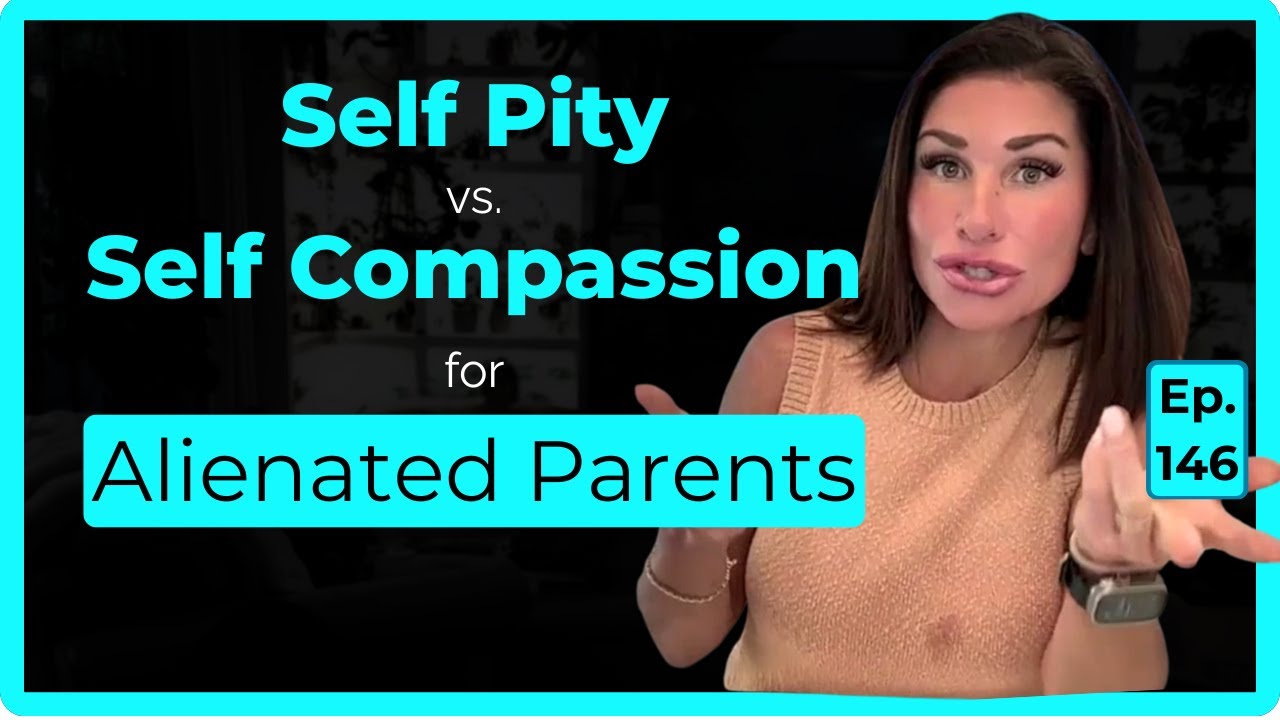
3:29Maybe it was epilepsy." I didn't know. I thought we were going to get it under control with some medication and that would be that. And I'd already decided that he was just going to stay indoors if it killed it. Well, worst thing to say right now, but no matter what, I was going to continue to keep him indoors, but um we didn't even have that opportunity. So, and he was only six years old. I'm telling you all this because I want to be upfront with you. And I had a plan today to do an episode on already. This was my my plan was to do an episode on the difference between self-pity and self-compassion. I've been wanting to do this episode or do an episode on self-pity for a really long
4:12time now. And I've sort of shied away from it because it's kind of the same thing as when somebody tells you that you have a victim mindset. It's not like the most fun topic. I mean, none of them really are when it comes to alienation, but nobody wants to hear that they're pitying themselves, right? Nobody wants to. We all want to resist that idea like, "No, this isn't self-pity. I'm strong and I look at everything I've been through." So, it's just I know that it's it's one that we all kind of resist and that's why it's kind of been something that I've I guess avoided or resisted. It it just risks the impression that I'm calling people out here and I'm not. And I want to say
4:57right off the bat, kind of like I was mentioning last week, it's okay. Like, if you are noticing that this self-pity is where you tend to lean towards after everything that's gone on, it's okay. It's not bad or good or right or wrong. It's a neutral. That behavior or the tendency to lean towards self-pity if it is you has served you. That's why you've done it, right? Or you think it served you in the moment. Really, self-pity doesn't often serve anybody. It's more of an indulgent emotion, but we do it for a reason, right? We do it because it feels necessary, very necessary in the moment to to feel it, right? So I get and I've been there. I mean I can't even
5:44tell you how many times in fact I could have gone there today and that's why I chose to keep this topic where where it was. I could have chosen to go to self-pity today regarding my cat. Here's how. And this is why I thought it was good that I tell you about what happened this morning about my cat. As you know, I always like to give you examples that are away from alienation and then tie it back into what we've gone through ourselves, right? And so, this is a perfect example of that, and it's an accurate depiction of what's been going on with me. When I got the news from the vet today, they had taken in some x-rays, and of course, my vet bill over the past two weeks, 2 and 1/2 weeks has
6:24been astronomical. That alone could have got taken me straight into self-pity um by itself, the financial part of it, right? But the vet came in after I brought my cat in today and immediately without even asking, she went and did a view of his lungs and airways because of his symptoms. He was panting and huge dilated pupils. And so, um she wanted to make sure that was nothing was obstructing or there wasn't fluid in the lungs and what have you. But when she came back into the room after doing that and taking his blood, she the first thing she said was, "You know, the it doesn't look good for your little guy. The prognosis is not a happy one, and the choices that you have are there's
7:11two that I see, and I don't think you're going to like either of them." She was very upfront with me, which I really really appreciated in the moment because I didn't want to hear all the fluff, you know. So, she gave me my two options. And my two options were to either give him blood transfusions to bide some time. And I don't know, I guess that's more it would have been more for me so that I could come to terms with the fact that he's about to die, you know, maybe buy him a couple weeks or maybe a month, maybe. Um, I actually didn't ask her how long that would buy me. Um, but his body wasn't making any more red blood cells and he was super anemic. Or the other
7:53option, of course, was to put him down, you know, and he was actively he had been in um in an episode, a seizure, and then just like an episode, the the back end of one basically since the last night, since the one he had last night, but really active one was um over 30 minutes. It was a long time. And so though he probably wasn't feeling pain, he was wailing and very uncomfortable I think because he was in anxiety. So I could have from there gone down a whole like spiral of why does this keep happening to me? Why are my animals dropping like flies? Ever since my daughter got taken from me, ever since all of this happened, life has been nothing but downs, right? Things being
8:44taken away from me. My dog Buddy here has been through so much because not only was he present during all that abuse with the abusive guy after my daughter's father, you know, so he saw so much icky abuse happening in front of him, which he still to this day has some PTSD himself about, right? lung process trauma because he's very jumpy and all the things. So I could go into a whole spiral on how he's about to die and also he's seen so much and I could feel so bad for him and then feel so bad for me because all my animals one by one seem to be Pepper died what two years ago in bay and then Anita died 6 months later my pig and then now a year and a half later
9:29there goes Kitty and Buddy's gonna I mean I hate to say it like this but he is he's not far behind. He's, you know, on the he's the he's teetering. We'll see. Hopefully that jinxes it so he stays alive for a while and is happy and painfree. But I could go choose to go into a lot of self-pity today and hold that story from now all the way through my life about how I'm targeted. Not only a targeted parent, but I'm targeted in my life. I've just got bad luck. Buzzards flying over my head. In fact, now that I just said that, that's a term that I said about myself, to myself, to others on the regular about my life. I actually kind of forgot that I used to say that about myself. I used to always
10:16think about my luck as like awful, right? And that buzzards were always the dark cloud was always hanging low above me anywhere I went. Which of course speaking that over my life had to have an effect on the way that I showed up in my life. Right. I don't know that back then when I said it I was saying it more in a self-deprecating sort of humorous way. It was like backhandedly funny. Um but I know it still affected me. I on the outside never have appeared to be in self-pity. Personally, I don't think I don't know. I'm actually not ever perceiving me from the outside. Maybe somebody else would tell you different, but I don't believe that self-pity. I don't think I wore that on my sleeve.
11:05However, I will tell you for sure that I lived self-pity until I mean, and I still pop in and out of it, right? And we're human. It's one, it's a human experience. Um, it's not a helpful human experience, but it is still, it's there, right? We've all felt it at some point, chosen that route. I will tell you, it's one of those the more indulgent experiences or emotions that we can feel. indulgent, meaning that like when I heard the idea of indulgent emotions years ago, I didn't understand how negative emotions like that could be considered indulgent. I would more think of like on the hedonistic side of things like an indulgent emotion would be something like uh you know uh greed or
11:57desire or something like that, right? I never thought that self-pity or confusion, a state of confusion or overwhelm could be considered indulgent, but they definitely are. The reason why is because if I were to choose, going back to my story about my cat today, if I were to choose self-pity today, why is this always happening to me? My animals are dropping like flies. Ever since the alienation began, ever since he started, he promised me he was going to ruin my life. And somehow he's even managed to do it from afar with my animals. I don't know. I guaranteed, it doesn't sound very um uh rational when I say that out loud, but I guarantee you in self coming from self-pity, I would have somehow
12:45attached my animal situation to his efforts. his meaning my daughter father somehow someway I would have made it be and given him over the power to say he somehow had an effect on my animals you know and that life has gone awful ever since he and I broke up and he started all this stuff right I would have figured out a way to make it about him and about me really but doing so and I had a conscious conversation with myself a few times today when I got the news from the doctor and then on the way home And when I got back here, um, I made a conscious decision three times within maybe an hour, 90 minutes maybe. Um, when I got home, I could have gotten back in bed, ruminated,
13:34festered, felt terrible for myself of the fact that I just lost my favorite animal, my favorite cat. He was my mama's boy. He was my We had an understanding. We were like, here, you know, he understood. He used to sit on my uh shoulder when he was a k, you know, a little bitty kitten. Now, I got him when he was like three weeks old. So, he was not socialized by other cats, which was a problem for a long time because he had some anger issues and all the things and frustration issues. And then anyway, but he used to sit on my shoulder while I use my power tools in my garage back at the house on the hill. And so, he wasn't scared of like anything. I could use a circular saw,
14:14like anything around him. He didn't care, right? He's just he and I weren't good, you know, and so I could have gone to bed and been felt really sorry and sad and moped for a very long time, not just today. I could have gone on for a long time and then my story, the story I would have carried with me would have been the story of victimization and self-pity and how animals aren't working out for me anymore. that I love things and things just keep getting taken away from me. That's what my story could still be if I chose to go into self-pity. But I think especially when we realize from the moment that we realize that there's pain or that there's been suffering going on, the
14:58moment that we awaken to that, you're standing at a fork in the road. And you can make your story mean one thing or you can make it mean another. And if we go the self-pity route, you will carry some version of that p self-pity story with you for all of eternity and make that mean something about who you are and the kind of things that happened to you, at you, for you, against you, whatever for the rest of your life. It becomes part of who you are. Or I could choose a story of humanness really. That's part of our experience here on this earth is to have pain, feel pain, experience all different kinds of pain. And when we experience pain, especially when we're talking about a relationship,
15:44it's because it's like the evidence. I'm sure you guys have all heard that saying that the pain is the evidence that you have loved deeply, right? So, I could look at it that way, which I chose to do, right? That's what I chose all three times this morning. And the last time, like I was just getting ready to tell you, I came home and I had the decision right there. I could either go get in bed, sulk, do nothing, or I could go jump rope because that's what I like to do to get my mind clear and also for exercise and all the things. I could go jump rope and create an outlet for myself, right? An an emotional and physical, all the things, mental outlet for myself, advocating for myself. And
16:26that's what I chose, right? I chose the letter. I chose self-care, self-compassion, and the experience of pain really. And it takes guts. It takes some bravery to say, "I am not going to buffer away my pain by blaming or by wo is me." Choosing the experience of pain means that like I'm here for it. I'm going to be here for it and I'm going to experience the pain. Not in a victim way, but like instead of being like all my animals are dropping like flies and everything I love is dwindling away. I can instead say I am a human and suffering is part of the human experience and so is the experience of loss. I mean it's part of who we are, right? We live, we are born and then we
17:18die. Everybody. So, if we try to tell ourselves something different, that our experience is supposed to be all of just loving and and receiving and having things be rosy and whatever, of course, we're going to be disappointed. But I signed up for it when I got that cat. And when I got all the other ones, and when I got pregnant with my daughter, I signed up for the experience of heartache and loss and pain and disappointment and betrayal, if I chose to believe it. I didn't just sign up for the glee of having like when I got pregnant with my baby with my daughter, right? I didn't just sign up for all the gooey good emotions. It's all of it. Worry, anxiety, rejection. When I'm real
18:01with myself and moments where I am experiencing the pain, this is just part of the human experience. I knew that one day I was definitely going to outlive Kitty. It was going to happen at some point. I did not think it was going to happen at six years old. Absolutely not. But it was going to happen. And I I choose to believe, and Byron Katie talks about this, that when pets die, whenever they die, is is their time to die. It's the perfect time to die. I mean, it's kind of a weird way to say it, but even in the tragedy, find ways to believe that even that tragedy is exactly how it was always going to happen. this is always going to happen this way. I just didn't know that. And that's what I'm
18:45grappling with right now is this realization that oh [ __ ] things aren't working out how I thought that they might. And that's okay. I can have the pain of missing someone. You, your kiddos, me, my daughter, or kitty, right? That's just how this came up today. But and you guys know, and I know I say it every single time that I I use something else to describe our situations of alienation. I'm not comparing my animals at all to my kid or your kid, right? They're I know that they're different things. They're the same, but they're also different. So, just know that I'm not um you know, I could have the experience of missing my daughter, my cat, and it's painful,
19:26right? It feels like I talk about with the clean pain, that slow sad heartbreak, right? Heart ache, longing, deep sadness. But then when we add self-pity on top, this shouldn't have happened. It always happens to me. I always get a raw deal. Tragedy just seems to follow me around like a black cloud. Buzzards flying over my head. When I choose that route, I'm having pain about my pain. So, I have the pain of the sadness and the the the heartbreak, right? That's the clean pain. Then the dirty pain I add on top is the pain about my pain. And I know I've done an episode on this long time ago. So it muddies up all your waters and then diverts your attention to the
20:13pain about your pain. This shouldn't be my experience. It shouldn't have happened this way. They shouldn't be this way. All of that stuff like we're resisting reality which will take you off the pain that's there for you to process so that you can move through it and do what you want with it. you know, open yourself up to loving again, open yourself up to growing, having the courage to love again, and also be hurt again, even by your kiddos. Open yourself up to even the idea of rejection, which sounds crazy. This is the first episode you've ever heard of mine. It's more of an advanced topic probably. So stick with me because I promise and maybe you can listen to some of the
21:00earlier episodes, but opening yourself up to the idea of rejection isn't a masochistic thing. Because if you open yourself up to and become not fearful of rejection, you're also opening yourself up to acceptance, feeling accepted by somebody. The idea of like inclusion or belonging, right? In order to open yourself up to belonging, the idea of being accepted by others, you also have to open yourself up to the the idea that you might be rejected. They go hand in hand. And if we're not open to the idea of rejection, we risk becoming more and more isolated from the world, from ourselves. And then we hold on to this secret pain, this aloneeness, isolation. And we then we end up
21:51perpetuating that. That's another episode I was going to do for you guys sometime soon is the idea of secret pain and how secret pain actually perpetuates self-pity. They all sort of compound one another, right? If we're holding on to secret pain, this idea that nobody else has experienced what we have, that ours is the worst case of all. I see this also happen like with um parents that I don't know who started this first and maybe it's was it psychologist or somebody I don't know but the idea of classifying yourself as severely alienated moderately alienated or whatever I feel like that there is zero point to classifying yourself in that way I'm severely alienated versus I am
22:41just alienated I see zero upside side to thinking about it this way. Maybe if you guys see an upside, please bring it on. Let me know because I'm always open to hearing something new and changing my viewpoint. But I think that saying I'm severely alienated. Just saying that out loud that way already starts something up in my central nervous system. Like I don't know that I feel cortisol releasing right now, but that's the idea. You know, it feels really activating to say I'm severely alienated. That makes me feel set apart from and more isolated, more alienated because it's severe. Which will lead you to holding on to your pain, keeping it secret, only reinforcing shame, guilt, and this idea
23:30that we can't share because it's too dangerous out there and that nobody will understand us. They will judge us. They will reject us. All of the things. And so then this whole I'm severely alienated is like a self-fulfilling prophecy. Not only will you be severely alienated quote unquote from your kiddo, now you're severely alienated from society, you know, as a whole because of the the the mindset that the words or the term severely alienated, how that makes you feel inside and then how you show up as a result of it. When we have ideas in our mind that nobody understands us, which goes along with self-pity, that's why we got on this whole went down this road. When we have
24:16this idea that nobody understands us, why even bother? If I tell them they're going to judge me or it's going to harm me in some way or whatever you're saying, then you're choosing this long, dark, lonely road of isolation. And you're doing it yourself. I'm not pointing fingers here. Just know that. Me, too. Anybody that does this is choosing that path. And so it's really self-inflicted. The route I think that is going to cause you to create what you want to create and move forward and heal yourself. I mean the quickest. Not that we're trying to win a race here, but with the least amount of suffering is the route of allowing for the pain, allowing the experience to hurt like
24:58hell. just feeling the rejection or like that this isn't working out the way that you really thought, hoped, ever dreamed it would, right? It's not. And just that's where you stop. It's when you add in the pain about your pain. That's when everything starts to get all complicated and compounded and compacted. All the co words. Yeah. So having the courage to just feeling it, this is I wouldn't want to feel any other way than disappointed and longing right now for my cat, but also for my kid and not entertain the ideas that this shouldn't be happening. This is wrong there. Not to say that it's not wrong, but and it's one thing if you're saying that outwardly to help your
25:49situation, right? Like in court or whatever, you know what I'm saying? but to repeat that in your own head and ruminate about all the things that have happened in your past. Replay those scenarios. And then another thing is when you choose to repeat, say out loud, like vent your troubles to all the people around you. Of course, we need to process through and that's helpful, but there is a fine line between processing through with somebody that you're sharing your feelings with, whether it's a therapist or somebody that you love or whatever, that's one thing. But when you choose to repeat, replay, ruminate about, share with others to like I said for the purposes of venting, what that
26:37does, the latter does is reinforce and retraumatize yourself even after the fact, which will then create a just kind of like how I was talking about before. It'll reinforce like the story that you have about yourself and what your possibilities are moving forward, like what your capabilities are and what life has in store for you because you've already got this story and you reinforce the story that bad things always happen to you. I often um will interrupt my clients. I don't like to interrupt my clients because I also believe that if they need to get some stuff out off their chest that the one place that I think it's safe to do it is with me because I'm not judgmental and I
27:21understand. But I can will always notice when somebody starts to get like ramped up and they start retraumatizing themselves. So I I do I interrupt them and let them know that for me it's not necessary for me to understand what they're going through by repeating the story if it's traumatizing retraumatizing them in the moment. Also too it's just a lot of times it's really not helpful to keep retelling the stories of suffering. You know, again, fine line of processing through saying what's going on and then maybe sometimes like visualizing the experience that the negative experiences that you have sitting coming from like the audience position like replaying it in your mind
28:05coming from an outer body sort of experience like being the watcher of you back in the situation whatever happened before. um that can be really helpful, very very useful and um can help you to process through and let go of a lot of the pain that you might be holding on to. That's one thing. But it's another thing just to keep venting, repeating, and saying over and over how shitty people are and the bad things that have happened and look how my life is awful and look how everybody's been hurting me or the alienator's been hurting me and hurting my child and yada yada yada. Right? Does that make sense? So self-pity sounds like what was me? It sounds like I have no options. It sounds like why
28:53me? No one has it as bad as I do. It's not my fault. It's everyone else has is the problem. Life is out to get me. I can't handle this. That's self-pity, right? Self-compassion on the other hand, this is hard. This is a hard moment. This is a hard situation I'm going I'm dealing with and suffering is part of life. Suffering is part of everyone's life. How can I be gentle with myself is another way that something that you might say if you're exercising self-compassion. Other people face challenges too. I'm not alone in this. Maybe you are alone in the moment like physically alone but other people many other people even in their differences of what their suffering is there if you can find the
29:46similarities in your difference and suffering it can help you to feel less alone and pull you out of the secret pain and the and the self-pity. Okay. So looking for ways that you are not so different and set apart, but that even though somebody else doesn't have the same pain as you, find the similarities between y'all to help you feel, you know, draw you closer in feeling connected, feeling supported. Another thought that happens in self-compassion is it's okay that I made a mistake. I'm learning and growing, right? I'm always learning and growing. A question you can ask yourself in self-compassion is, what do I need right now to take care of myself? Sort of just how I was this
30:35morning. What do I need to do right now to take care of me? Would it be better for me to go lay in bed and think about all the ways that life has done me wrong recently or how all the bills that I have? Or would it be better for me to go jump rope, get some exercise in, release, and come over here and connect with you guys? You guys have been through it with me. Like I've shared with you guys. I you've been listening for a while. You were there for when Pepper died, you know, and I came home and immediately recorded an episode and then when Mita died and then, you know, now here with this. You guys have been through it with me and so I really appreciate you guys sticking here with
31:18me on this. You know, I do self-compassion. How it feels. You haven't severed a sense of connection. There's still a sense of connection with others. Recognizing that others and you are more the same than you are different, right? that everyone has struggles and they may not be suffering the same way or having the same struggles that I am having, but it doesn't mean that they don't understand the emotion I'm feeling right now. It doesn't mean that I can't feel supported and also support them even though we're not twinsy same. We got more in common than maybe I'm recognizing right now. Bad self-compassion. Also, self-compassion feels like a warmth towards pureelves, right? Even when
32:03you're struggling, you know, and you can be understanding about the experience you're having. I understand why I'm feeling this way right now. I really love my daughter. I really love my cat. I really love whatever you feel like you've lost. It makes sense that I'm feeling this right now. Self-compassion looks to understand, seeks to understand and support. Self-compassion obviously is kind. It's comforting. works on inclusion and and and right and what else how else what can we do now what can I do next yes I'm suffering yes I'm feeling pain right now loss extreme loss right grief uh desperation even whatever it is and this will pass it's okay that I'm feeling this because
32:55this is a normal feeling and I wouldn't want to feel any other way given the same exact circumstances. Right? This is appropriate. Giving yourself the space to heal. Whereas self-pity instead feels stuck, helpless, overwhelmed, right? Like there's nowhere to go from here, which is I know that we've all felt this, right? We feel isolated and self-pity. You feel isolated as if nobody else understands. I've already kind of said that. or suffers like you do, which is exactly what I was talking about with the severely alienated tag that you might put on yourself or somebody else might have put on you for you. Right? You know where else I hear this is where I just watched a video
33:40yesterday of another mental health expert or professional if you will that deals with PA. He was talking about this his PA, somebody told him that it was the worst case of parental alienation that this therapist had ever seen. I I don't think he was using it against himself, right, to cause him to hurt. But I'm sure that there were times because he it was very clearly part of his story. He has suffered as a result of him repeating that story to himself like this is the worst the most severe case of PA that they've ever seen. I hear this so often from my clients and from other alienated parents, right? We want to hang on to that because if we hang on to the story that it's the worst
34:25case that these other professionals who've seen it all, then it gives us room to feel to justifies the reason why we're in pain, right? And it makes us feel like there's less to be guilty of because then it wasn't our fault. And I'm not here or there about that right now because it doesn't matter. It's not wrong or bad or nothing's wrong with that take, but it's going to cause you more suffering in the end and it's going to cause you to feel set further apart. You're going to be the special snowflake from there. So, I just don't think it's a really helpful place to be. It causes this. It'll breed self-pity is what entertaining those kinds of stories of like ruminating on how your lawyer said
35:08it was the worst case he's ever seen or how the therapist said in all of my 20 years of practice this is the most severe case I've ever seen. Whatever. Don't hang on to that if I were you. It's not going to serve you. The only place that it might serve you is if you're directly in front of the judge and that is said by somebody other than you. And hopefully then the judge will see because of the expert witness or whoever saying it. Otherwise, it's not going to help you to say that. My thoughts, my opinion, but take it or leave it. Self-pity feels victimized for unlucky. Kind of like how I was just talking about buzzes flying over my head. Victimized where you feel like you
35:48can't be anything other than a victim. Not to say that you're not a victim here and your children as well, but you guys, if you've heard me, this is not your first episode with me, you know that I talk all the time about difference between victim mindset of course and being a victim, right? Entirely different things. One is a circumstance. The other is a mindset that you've put on now and taken on as your own. You know, self-pity also feels drained by negativity in the sense that life is unfair. How come they have it better than me? right? Drained by all the negativity. Self-pity feels very draining. It feels exhausting. Self-pity also induces or activates your central
36:31nervous system so that you release more cortisol and you stay in stress response, you know. So long term, it's definitely not healthy for you to keep those stories that are based in self-pity. That life is unfair, that you're just unlucky, that dark clouds follows you, that they're controlling you from afar, all of that. How self-pity looks is frequently complaining about your circumstances, avoiding responsibility for your own feelings. I feel this way because they did this. I'm doing this because they did this. I know I've shared with you over and over again about how I was in this place avoiding responsibility for my own feelings and actions for a very long time. I wouldn't be here if it
37:13wasn't for them, which is true, but it wasn't helpful, right? And it caused me to always divert my attention to how they are the ones that they started it. Like a little kid, they started it. It was all none of this would have happened if they wouldn't have started it. they were the ones that made me this way, which if they're the ones that made me this way, then I can't help myself. But if I'm the one that reacted this way, then I have many more choices. Self-pity looks like dwelling on past mistakes without moving forward, dwelling on anything from the past without moving forward. Right? It's expressed as irritability, resentment, victim mentality, right? And it's difficulty
37:53seeing any solution or positive aspect to the situation that you're in. You have a really hard time seeing like you've almost blocked by the negative that's happened so that you can't see the forest of the trees or what's the next step because you're too stuck in the problem, right? Which is a natural natural uh response for humans in general, right? to when we're have something so devastating go on, of course, our eyes are fixed on the problem. But at some point, um, depending on how long this has gone on for you, that's going to cause you to keep, you know, walking in circles. So, I will say that sometimes that self-pity and self-compassion appear from the outside like they're one
38:42and the same. It's hard to tell the difference from the outside from like maybe an onlooker because a lot of times self-compassion does include you veging out on the couch. It does. The difference is what you're saying to yourself and how you're feeling on the inside because self-pity feels like [ __ ] It feels awful. It feels hopeless, helpless, defeat. There's nothing more. There's nothing I can do no matter what I try to do. It's exhausting. It's heavy, right? Where self-compassion recognizes where we are, but it also knows recognizes that there are solutions or there are steps that we can take. It's a more about feeling accepting of yourself in the pain that
39:28you're in, right? But again, from the outside, that could mean that you're accepting of the pain that you're in and you're going to allow for it. And maybe that means that you're just taking quiet walks out in nature and being alone. that might be the best thing for you. It doesn't mean that you're not reaching out otherwise or that you're in your head and feeling alone. There's definitely a difference, I mean world's difference between the way you feel in self-compassion and self-pity. entirely different self-compassion also from the outside and from the inside like you you're taking steps and you're looking for ways to care for yourself, resting, reaching
40:09out for your support, making healthy choices, taking into account everything that's gone on and making the correct or not correct, but like the most loving choices for you in the moment, moving forward, knowing what's been going on for you. Not denying or pretending like it's not happening or just plowing through. That's another thing. Self-compassion and facing something, having the courage to face something doesn't mean plowing through. Let's just keep going straight through. That is also will lead you to burn out and then cause you to go back into secret pain and self-pity again. Right? Self-compassion is like, I feel this way. I have some negative feelings, but
40:54I'm going to continue to take action anyway. Not always. Like I said, sometimes you're not taking action, but like when you are taking action, you're you're keeping in your mind the experience that you're having. An example of it would be like after a difficult conversation with like maybe your kiddo, right? After having a difficult conversation with them or where you feel kind of rejected or whatever, you can either go into a whole pity party about how I can't believe they've rejected me. is means that it's the alienation has gotten that bad and they are really being abused and not saying that that's not true but it's not going to help you because you're just
41:30now going to be focused on the problem and not the solution. So you start ruminating about how you've been wronged and they've been wronged and this is awful and then you feel isolated and removed from everybody and like your situation is even worse than it is. Right? Or after that difficult conversation when you felt rejected, you could pause and reflect and tell yourself, you know, that was really painful and it's okay that I feel upset right now. Everyone has moments like feeling upset and feeling rejected, right? Other alienated parents I know would understand how I'm feeling right now. What would help me to feel better from here? What would maybe not even
42:10that you want to feel better like in a happy place, but what would help me to feel supported right now? Maybe I go for a quiet walk or a journal. You comfort yourself and you're gentle with yourself and you think about maybe how like you would do that conversation again another time or what you want to take away like consciously. What do I want to take away from this conversation? Do I want to take away a story of defeat or do I want to take away a story of strength, resilience, um, unconditional love, devotion, support, whatever? I like to run with the ladder. You know, how can I challenge myself to see this situation, every aspect has a potential for growth
42:53for me while still acknowledging and and recognizing your pain, you know, disappointment, the feelings of rejection, whatever it is. So, I am exhausted, you know, sad and I probably just need to go do some of the things I was just talking about. Go take a nice quiet walk with myself. And just in summary, self-pity amplifies your feelings of separation and victimhood. It keeps you stuck in the suffering. Self-compassion brings a wider perspective. It connects you to others experiences and to the idea of community um and provides a path moving forward through kindness and encouragement for yourself. When we're feeling self-pity, we become immersed in our own problems
43:44and we forget that other people had similar problems. We forget that others could even possibly relate to us because ours is so bad. Self-compassion allows you to see, open yourself up to experiences that others have and find that similarities and the connection between you. We already know that alienation, it's right in the parental alienation. It's in the term, right? This causes us to feel alienated from our kids and also from society. But that happens the from society happens as a result of the the constructs that we create in our mind because of the dynamic that's happened with our kids and with our ex you know so I think it's really really helpful for you to keep
44:32reminding yourself of that so that not to blame yourself but so that you can take back your power and start to plug back in to the world around you even when it seems like all hell's broken loose. that like me, they're dropping life flies around here. That's okay. I mean, it's not okay, but it also is okay. I'm going to be okay. You know, I don't have my takeaway doesn't have to be that everything I love just falls away. That's not going to work for me in the long run. It's that that's that's the deal I make with myself each time I open myself up to love. And that's okay. Heartbreak isn't going to break me, you know? It's just more evidence that I have loved and it makes my life that
45:16more rich because if I've opened myself up to the heartbreak and I've had that happen. I also think that I will shut up after this. I also think that those people that haven't suffered or they've had like these perfect lives like the people that you probably always compare yourself to, we always like to romanticize how other people neighbors and and people that we know or like family members how perfect their life is. So what do they know? They've never suffered anything. and everything is so beautiful and in their world and then look at mine. But those people that we say first off, we never really know what their suffering is or isn't. You know, we're not in their shoes. We, like I
45:53said, we like to romanticize that, make it bigger and prettier than what it really might be. But also, those people that haven't suffered and experienced some deep, deep pain in their lives. I have a friend of mine who um when my brother died um years ago, she came over to my house and otherwise we were pretty close, you know, as close as I could be at that time because I was kind of pretty all over the place. But she came over to my house and she seemed very like detached, right? She didn't she didn't seem to understand the gravity or like the heaviness that I was feeling after my brother had just out of nowhere died. It was a surprise situation. and it was in a lot of shock, but it it had
46:36rocked my world even though I had so much so many mixed feelings about my brother because of what had happened when I was a kid. And I think that's probably why. But she had no idea how to feel me, you know what I'm saying? Or to be around me. And that really rubbed me the wrong way. And I'd asked her, I was like, "Have you ever lost anybody in your life?" And she was like, "No." Of course, he couldn't understand the situation. But those people, no disrespect to her, but like those people, I don't find myself like being like um what's the word? Like I'm not mesmerized by people that have had it all good. You know what I'm saying? There's so much more substance to the
47:14people like you and I that have suffered a lot. I think the more people have suffered, the more interesting they are, the more well-rounded they are, the more compassionate they are to others around them, the more willing they are to give and to receive and to love, and they're not scared as much. Those are the ones that have suffered deeply and move themselves through it, right? Not the ones that are still stuck in their victim mindset. Not that there's anything wrong with that, but I'm just saying the ones that are have allowed the suffering to be there and taken it on as a fact of life. Those are those are the really to me the most captivating people. And so I dare I say
47:56that that's you and I, you know, we've been through it. And um I feel like for us, our lives can be that much more rich as a result of that. So allow for it all as I always say. Okay. All right. You guys have a lovely, lovely week. Now I'm going to go drown myself in my tears. No, I'm just kidding. Okay. All right. Bye. Thanks so much for listening today. If you like what you're hearing and you'd like to hear more, please make sure to click subscribe wherever you're listening or watching. Also, for byte-size clips and tips, be sure to find me on Tik Tok or Instagram. See you next week.