
3 Questions to Ask Before You Reach Out to Your Child for Alienated Parents
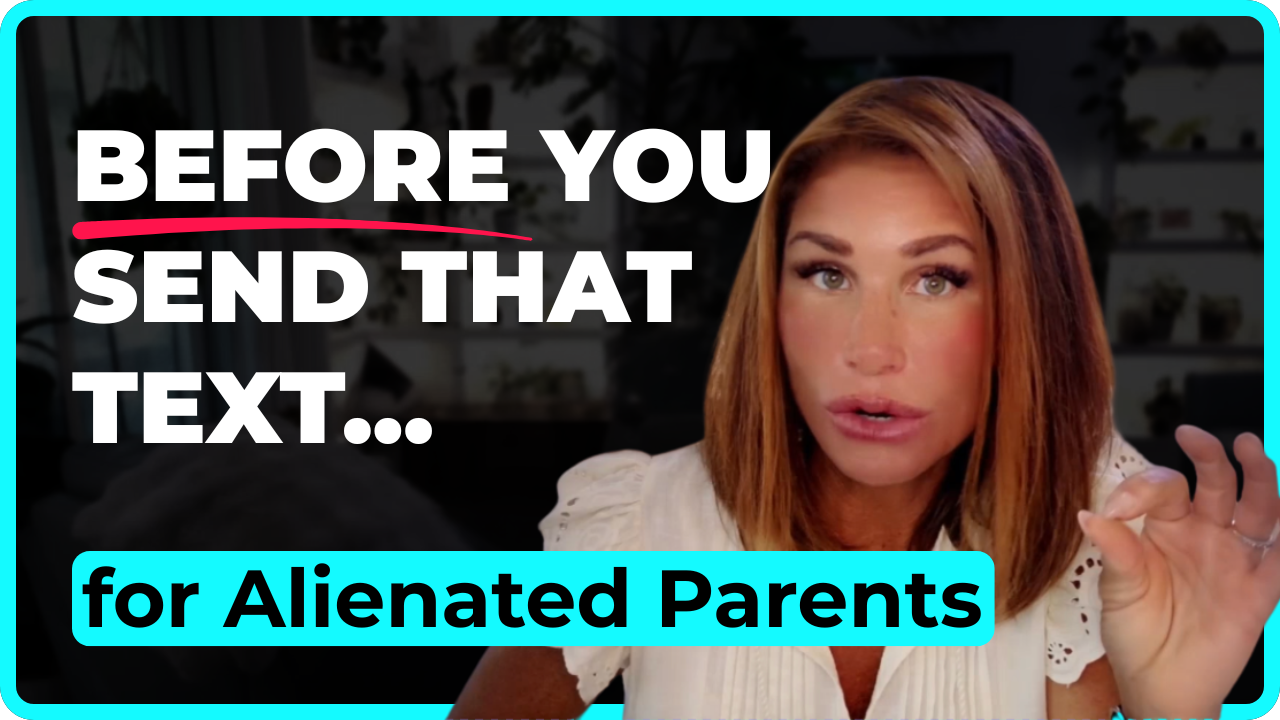
Are you an alienated or estranged parent who replays every mistake each time your child goes silent? In this episode of Beyond the High Road, certified life coach Shelby Milford breaks down the hidden meaning-making that's quietly driving your nervous system — and your decisions. Before you send the text, wrap the gift, or skip the holiday invitation out of self-protection, Shelby wants you to ask yourself three powerful questions that shift you from reaction to intention. This is Part 1 of a two-part series on reaching out. Today's focus: your inner world.
🎙️MAIN TALKING POINTS
- Why your child's silence feels like a verdict on your worth — and why your brain is wired to do this
- The 3 stories alienated parents tell themselves when there's no response:
- "No response means I'm a bad/unlovable parent"
- "If they don't reply, I should stop trying altogether"
- "If I just say it right, they'll finally understand"
- The reframe — their behavior is data about their current capacity, not a grade on your worth
- 3 self-inquiry questions to ask before you reach out:
- What's the first story my brain tells me when they don't respond?
- Where did I learn that story?
- Would I say this to my best friend in the same situation?
- Values-based parenting — shifting from "what does this say about me?" to "who do I want to be in this relationship?"
- The grief underneath the self-blame — how self-criticism protects you from feeling the deeper loss
🔑 RESOURCES MENTIONED🔗 🎥How To Increase Your Capacity To Handle Anything:  • How to Increase Your Capacity To Handle AN... 🚗 Start your healing journey: https://calendly.com/beyondthehighroa... 👉🏼Follow me on TikTok: / shelbymilford_pa_coach 👉🏼Follow me on Instagram: / beyondthehighroadcoaching 👉🏼Website: https://www.beyondthehighroad.com
KEY TAKEAWAYS
- Your child's non-response is information, not a verdict
- The stories your brain tells you are often borrowed — from the alienating parent, old wounds, or court experiences — not your own truth
- You can't control their response, but you can control your energy and your values
- Closing the door and calling it a "boundary" may actually be fear of rejection in disguise — notice the difference
- The gap between the event (no reply) and the story (I'm unlovable) is where your power lives
- Use the mantra: "This tells me something about their reality right now — not about my worth."
- Try the "wouldn't it be nice" energy shift before jumping straight to affirmations that feel unbelievable
Episode Transcript
3 Questions to Ask Before You Reach Out to Your Child for Alienated Parents
Intro/Teaser:
If your friend told you, my kid didn't respond to my birthday text, would you say, wow, you must be an unlovable parent, You must have really pissed him off. Of course you wouldn't.
Of course you wouldn't say that. You would probably say something like, that's gotta be so painful. please know that it doesn't mean anything about you as a parent. they're getting fed a lot of disinformation right now. Remember that. You are listening to The Beyond the High Road podcast with Shelby Milford, episode number 187. Welcome to Beyond the High Road, a podcast dedicated to healing your heart and life following the grief of alienation. I'm your host, Shelby Milford, a twice certified life coach specializing in post-traumatic growth. If you're experiencing the effects of alienation and you're ready to heal, then this show is my love letter to you.
Stay tuned
Hey you guys, how are we doing today? So today I wanna talk with you guys about. What happens, the something that happens before you ever send the text to your child, Um, before you wrap the gift, before you send the invitation, before you send the message on social media, the text, leave a voicemail, whatever it is, because I know so many of you are sitting with questions.
I know this for a fact 'cause I hear it all the time sitting with questions like, should I keep reaching out, should I stop sending gifts? It feels so one sided. Is it healthy to keep inviting them when they never show up anyway and when you're in it, these questions feel like life or death sort of decisions.
it can feel like if I make the wrong move here, I'm gonna lose them forever. But here's the thing, before we talk about when and how to reach out, which is gonna be next week, next couple weeks, probably, um, we need to talk about what you're making your child's response or non-response mean about you, because that meaning is quietly driving your nervous system, your decisions, and your experience of every single interaction with your child.
So today is part one. This is the pre-work for all the practical concrete stuff about timing channels and what to say that I'll walk you through in the next episode. Okay. Today is about your inner world, the story that your brain tells you about you when your child doesn't reply. So let's actually start here.
[00:02:27] Why Your Child's Silence Feels Like a Verdict on Your Worth
When your child doesn't respond to a text they ignore an invitation, Or they don't say thank you for a gift. Right? What happens inside of your body? For many alienated parents, the ones that I speak to, it's instant, The stomach drops, your chest tightens, your brain goes into overdrive, right?
Hunting for explanations to why, and then the stories start. I'm a terrible parent. I must be a terrible parent. I must have done something wrong. They hate me. I must be dead to them. If they cared at all, they would respond.
They would initiate. They would tell me they love me. At the end of conversations, sound familiar? I was talking with a client recently. We'll just call her Lisa. Um, and she told me "if my son leaves me on read.." Like read receipts, you know, um, "I can't function for the rest of the day. I just stare at my phone and I refresh, wondering what I did wrong this time."
Right? And this particular parent, Lisa, we're calling her, um, she sat on her couch all day. She was supposed to be working and instead she went home for lunch, took a break, was gonna go back to work, but she ended up getting herself so worked up that she sat on her couch. And then eventually it went into going into the old baby pictures.
And what have you. What's powerful about the example The initial example I gave you about Lisa though, is not that she's just hurt, of course she is. Right. What's powerful is that her brain is taking his behavior, her son's behavior, and turning it into a verdict, on her own worth. And on her own identity as a mom,
and when that is the frame, then every interaction that you have or try to have. becomes a test, Every invitation, every message, every holiday is an exam that you either pass or fail, which is absolutely exhausting, as I'm sure that many of you know. And it also keeps you stuck in the same power, inverted, dynamic that alienation created in the first place.
S right Where the child is in the parent role and you are in the child role. Or actually kind of the neglected child role, waiting to see if you are, you did good enough for you ever to be noticed or loved. So if that's you, nothing is wrong with you. As I always say, your nervous system is doing exactly what it was trained to do in a hostile, unpredictable environment, which is what you've likely been living through.
But we're going to gently question whether those meanings are actually true.
[00:04:56] 3 Stories Alienated Parents Tell Themselves (And Why They Keep You Stuck)
So I wanna walk you through three common stories. Three. Did I write? Yeah. Three common stories that I see alienated parents tell themselves when there's no response. And as I do this, I want you to notice which one feels the most familiar to you and familiar inside of you, right? Like drop into your body.
so the first one, story one is no response means I'm a bad or unlovable parent. so this one sounds like if I were a good mom or dad, they'd want to talk to me.
Another example of that could be if I hadn't messed up so badly, they'd at least respond. They'd respond to my texts, they'd say, thank you. Right? But it must be something that I have done because why else would, could this keep happening? You, you keep yourself in the why be, it must be this, because if not, where else is the, explanation. So one client, I'm gonna call him Mark. He told me, um, recently. That he sent his daughter a short message on her birthday.
she didn't respond at all. And he spent the whole night replaying every, this is what he said to me via text. I spent the whole night replaying every mistake I've ever made as a father. I've ruined everything, is what he wrote.
I asked him if I could relay this information with you, share it, and it was, yes. So anyway. I've ruined everything, is what he said.
So notice that in this example, Mark's brain took one piece of data, which was that no reply, it was actually a no data situation, right? And turned it into evidence for an entire character judgment. He's like, I'm ruined. I'm not. I'm ruined as a dad. I, I've, I've been, I've made terrible mistakes Un.
Forgivable mistakes , and he couldn't even locate what those mistakes actually were. Right? It must be some combination of these. It's one thing now, and we can talk and other guys just know that personal responsibility and taking responsibility for, anything that we've done in the past is an absolute necessary step in your healing.
So necessary. But right now we're talking about. Taking outside information and making it mean something about us inside. Okay. So they're two separate episodes completely. So I'm just, just want you to
just an aside.
So if you do this right, if you are, the no response means I'm a bad unlovable parent, right? It doesn't mean that you're dramatic or that you're irrational, or that you hate yourself forever, It just usually means that you're carrying shame, And that your nervous system is scanning for proof that your worst fears about yourself are true.
Which seems backwards, like why would my body do that to me? But I can explain that later. Okay, so number two, story number two is if they don't reply, I should stop trying altogether. This is why I made this episode you guys is because this last week alone, I have gotten four different clients. One of them was a listener that emailed in and then three clients actually that have asked this question and this week alone, and I get it all the time.
If they don't reply, then shouldn't I just stop trying? this one sounds logical on the surface and it often dresses itself up in boundaries.
Well, I'm not gonna chase them, is what it could sound like. Or if they want a relationship, they can reach out. I'm done. That's the parent that's passed into the anger stage, like revisited the anger stage and in the long term anger stage. And the last example I have of that, there's probably lots of ways, is what's the point?
They clearly don't want to hear from me. Okay. And sometimes that is a healthy boundaried sort of choice, right? But oftentimes, most times there's something else underneath that, which is the terror of feeling the same rejection again.
So instead of saying. This hurts right now, and I would really love some support. Your brain might say, I don't wanna continue beating my head up against a wall. I'll just shut the door and call it a boundary. If that's you. Notice if there's a part of you that would actually like to keep a small door open, cracked open even, but it feels safer to slam it shut than to sit in uncertainty.
Oh gosh. I cannot tell you how many times I've coached on this. Right. Can I just forget, just let's just drop the case. Let's just forget all of this. I'll just walk away and I'll see them when they're 18. And most of you know, and so do the parents I'm speaking with, when they proclaim that, that it doesn't always happen on their 18th birthday or even 18 at all, not that I'm trying to instill any sort of scarcity or fear in you, but in that moment when you're saying that if this is you, you're just your body.
Notice that your body is just craving to find some certainty now. Right? It's like this short term comfort. For long-term discomfort, when I wanna always encourage you to do the opposite. Okay? So, now we're gonna go to story three. Okay? The story three is, if I just say it right, if I just say the right thing in the right way they'll finally see the truth, This one I craft the perfect message, I can fix this story sort of thing. Sounds kind of like, maybe if I explain my side more clearly, they'll finally understand.
I kind of just said that if I can just get the words right, I can break through the alienation, break through the other parents' tactics, break, breakthrough, the other parent's punishment, whatever. And the last way, um, that I've got written here, like I said, there could be many ways
I guess maybe if they just see me one more time in action in my element with other kids or other people that respect me, interacting with them, right? Then maybe they'll get it. Then maybe if I could just get them around my family
they'll remember how things were and they'll finally just get it. This is where you find yourself, sending long text or long emails, rewriting the same letter 10 times, not because it feels good or feels grounded for you, but because you're trying to control the outcome, it's natural. Just know makes sense why you would.
I get it, you know? it gives you the illusion of power in a situation that feels wildly out of your control and sometimes is out of your control. When we're talking about other people's thoughts and feelings and all the things, right? The problem is. It keeps you stuck in a cycle where a nervous system only settles if they respond in the way that you want or the way that you think it should be.
Right? Which means your sense of safety is living over on the other side of the net, always which is entirely dysregulate. in its own right.
[00:11:54] Reframing Your Child's No-Response: Data, Not a Verdict
So now we're gonna go into the next segment. What do we do with it? What I wanna offer you is a reframe, a reframe actually that you've heard me use before in different ways. I want you to hear me here. Your child's behavior is information about their current capacity, their influences, and their nervous system. It is not a final grade on who you are as a parent or as a person. I'm gonna say it again in a slightly different way because your brain will want to slide right past this.
Their silence or their whatever is telling you where they are right now.
It is not telling you the full truth of who you are. You might try on a mantra, if this is you, you might try on a mantra like this tells me something about their reality right now, not about my worth. That does not mean that their behavior doesn't hurt. It just means that we're gonna stop using their responses as a measuring stick for your value. Why is this so important? Because if you're using the replies as your only source of emotional oxygen, then every decision about reaching out will be contaminated by fear and desperation, and I trust me.
This is something I, I, I had it myself and so many parents that I speak with have this. They're, they get on a loop, being obsessed by needing like that is the goal. And it's almost like you're on a hamster wheel. You're just chasing the cheese. It's up here, you know, and you can't ever get there because your, your, your goal is a, with love, a low quality one.
if instead you can hold their behavior as data, right, as a snapshot of their current capacity, their pressures, their influences, then you can start making choices based on your values rather than their reactions. it's freedom you guys.
[00:13:52] 3 Questions to Ask Before You Text Your Alienated or Estranged Child
So here's what you can do.
Basically, it's a mini sort of self inquiry. practical exercise that you can do in your situations. Okay? Next time you're staring at your phone wondering if you should text or you're looking at a birthday or a holiday on the calendar and debating whether to send something, I want you to pause and ask yourself three questions.
You can even jot these down somewhere right now. When they don't respond? What's the first story that my brain tells me about it? Is it I'm a failure? Is it they never loved me?
Is it I'm being punished? Is it I'm invisible? They don't respect me. What? Just notice. Do not argue with it. Not yet. Okay. Just name it. Actually, not ever, don't ever argue with that stuff. 'cause that's another, it'll take you on to another whole cycle. Just name it. Oh, this is a story I'm telling myself.
I'm telling myself that they never love me. I'm telling myself that they are disrespectful or whatever. It's, or they don't value me or they don't like spending time with me, whatever. Just state it and be done and move on to question two. Okay. Question two is, where did I learn that story? And again, you wanna keep this very simple and not go into a whole spiel afterwards.
Very simple. Where did I learn that story? Did you learn it? I'm just gonna throw some examples out here. And it could be other things too, but did you learn it from the other parents' words? And that can include whatever words that your, your kiddo has. I'm gonna about to say parroted to you, which is a common.
comparison, but I also don't think it's like so respectful to our kids. But that's basically it's them, borrowing scenarios from, you know, the, the other parent. Maybe it's that, maybe you learn that story from them. Okay. Maybe your own parents or c caregivers growing up. Right. I only mattered if I was obedient or perfect.
Something like that. What was it like for you when you were growing up? You know, they always say that, um. Your own, your inner critic is usually in the voice of your biggest bully. And so if you had a parent, one of your parents, I did, I had, one of my parents was my mom. I mean, God love her. I know she loves me and, and it's whatever.
It's just, it is what it is. But she was a bit of a dictator, you know, growing up. And so she was my voice for a long time, and then it switched over. 'cause she was no longer my biggest bully. But who was, was the alienating parent and also his, of course, at that time, new wife. She was in my head, oh my God, that was hell.
And then I was, I was borrowing their stories, their scenarios, because that was what was being fed to me. But I never really realized I was doing it anyway. It was hell. I felt like that. They were like following me around. It was awful. Um, and the, besides the fact that they were actually following me on outside my house, but they were in my house too, in my brain anyway.
Um, or did you learn it from a court decision that made you feel dismissed or erased or unheard? Right? Often the story about your child's silence is actually an old story from somewhere else, right? That your brain is now pasting onto this situation. And an old story from somewhere else. Could be not your story, but the story of alienation that has been handed to you.
It's not your generated stories you don't have authority here. Right? So, um, question three is, if my best friend, and I don't always, well, I'm gonna leave it alone. I'll just say it. If my best friend were in, my exact situation and this exact situation, and I knew them. Super well, knew their parenting, knew all the things right.
Would I draw the same conclusion about them in in this situation? So if your friend told you, my kid didn't respond to my birthday text, would you say, wow, you must be an unlovable parent, or, You must have really pissed him off. Of course you wouldn't.
Of course you wouldn't say that. You would probably say something like, that's gotta be so painful. please know that it doesn't mean anything about you as a parent. Or they're getting fed a lot of disinformation right now. Remember that, You would say that kind with some compassion, some understanding, or even something as simple as you're doing the best that you possibly can in an ugly situation.
Right. That's how you would speak to your best friend, likely, I hope. Um, but what I'm asking here, the whole point of this is, are you more willing to understand and extend compassion to others, other loved ones than you are to yourself? And if so, that gap is where a lot of your work really lives. Just doing this three question, little check starts to create a bit of space between the event and no response. Right. And the story, I'm unlovable, it's hopeless. I should stop trying. That tiny bit of space is where your power lives.
[00:19:08] How to Show Up as the Parent You Want to Be (No Matter Their Response)
, So now we're in segment five, and so once you have separated out the story, we can move to something more grounded, which is your values. So instead of asking what does their silence say about me, I want you to start asking. Who do I want to be in this relationship?
What kind of parent do I want to be here? Regardless of how, what their behavior is, their current behavior is. and I, when you pose this to yourself, I really want you to come from a genuine place, not from some perfect idealized. Place, right? You wanna think about this in a realistic, sustainable sort of way.
You might choose a couple of value words that feel right for you. Things like steady. I wanna feel steady, I wanna feel compassionate, maybe neutral at times. Maybe you want to feel boundaried. Boundaried is really not an emotion, but it's a state of mind maybe. Honest. patient understanding, secure certain and your own ability.
So many different things that you could come up with, emotions or states of mind that you could channel for yourself. So you, I would love it for you to finish this sentence on my side of the net, on my side of the street, I wanna be a parent who is, choose two of them, blank and blank. I wanna be steady and boundaried.
I want to be kind and honest. I want to be patient and self-respecting. I wanna feel neutral and loving, which sounds like I am, contradicting myself. But it depends on what we're talking about. 'cause you can feel neutral about their response to you and loving toward them. Yeah. Okay. Those words, those. States of mind become your compass. that's what I would offer that you do. They're not about how often you reach out. That's next for next episode, right? The next one or two weeks episodes, they're simply about how you want to show up, when you do. These words will define your experience when you do show up.
So the question shifts from do they still love me? To: am I showing up in a way that feels aligned with who I want to be, who I am, and who I want to be? From? What does this say about me? What are they thinking about me? To: does this choice reflect my values and my capacity?
Which this is a callback from a couple episodes ago when I did the capacity versus a capability episode. Okay? This is how you pull your power back from their reactions and bring it back home to you. .
[00:21:54] The Grief Underneath the Self-Blame: What's Really Going On
All right, so before we wrap, I've got one more small section here. I wanna normalize something really, really important. The harsh stories that your brain tells you, I'm nothing to them. I ruined everything.
It's all hopeless are not usually the deepest truth. they're often a shield over something even more raw, which is grief, fear, and probably powerlessness.
It can feel safer in a twisted sort of way to say, I'm just unlovable. That's it. Right. Oh, well, than to sit with, I love this child so much, and right now I can't reach them in the way that I want to.
so if you notice yourself going into those global all or nothing, black, white sort of conclusions and statements about yourself, I want you to gently say something along the lines of.
Of course, part of me is making this mean that I'm unlovable. Of course, part of me is doing that. That part is trying to protect me from feeling the grief, the deeper, heavier feelings of grief. You don't have to like that part. Listen, you don't have to love it.
You don't even have to believe it, but you can recognize that it's trying to keep you braced for the worst, right? This part of you that wants to self deprecate or self blame, it's, it is doing something. It thinks that it's protecting you. And it actually could have in the past, and maybe it still is, I don't know where you're currently at, But I would love for you to slowly, um, invite another voice in, One that says,
this hurts deeply. It does. It hurts so bad. And what if it was possible? What if I could start to believe. That this doesn't define who I am as a parent. Doesn't define my worth, doesn't define who I am as a person, In order to get anywhere new in my, the way that I, if you guys have been listening for a while, you know that in order to get anywhere new, your energy actually has to be new too.
So what if you could soften around the idea of experiencing grief and hurt without the suffering? Wouldn't that be nice? If you guys have ever listened to Abraham Hicks, she talks about manifestation and energy,
and that's one of her entry level sort of energy shifts is wouldn't it be nice? Wouldn't it be nice if I could allow this hurt to move through me as freely as it's asking to? Wouldn't that be nice? Wouldn't it be nice? If my energy towards this whole situation could soften, wouldn't it be nice if I could send a text freely, openly, and let that be, let that be enough.
Wouldn't that be nice just opening up to it? Because sometimes it's really difficult to move into, uh, an I am like, I am worthy. I am. Uh. Loved, I am, whatever it is. I even, I love myself. Some people it's very difficult to go to jump to that if you don't, if you haven't, if you've spent so many years, your, maybe your whole lifetime disbelieving that about yourself, right?
That you are loved or that you are worthy. Maybe you've built up all this evidence around the fact that you're not worthy. And so jumping to I am worthy right now is gonna feel. It's gonna feel ridiculous. You're gonna feel a lot of resistance, and it's much easier than when you've spent that lifetime building up that you're not worthy.
Even if you may not say that, it's the, your results in your life are showing that, then it's going to be so much easier to believe that other people's actions are evidence of your unworthiness. You know? So that is why I think it's, um, such a great idea to go to, like, it's, and it's possible. What if it's possible that I am worthy?
Wouldn't it be nice if I started to believe that I was worthy? I wonder what that would feel like. Maybe I could try it now, you see, it takes the tension out in the resistance away because it doesn't demand that you already believe it.
It's just asking, wondering, opening up the doors to a possibility. Right, which leads to, a flow of energy. New energy coming in.
[00:26:19] Your Weekly Homework: Reclaim Your Power Before the Next Holiday
as you go into this week, here's your gentle assignment.
Before you send that text, before you decide to send or not send that gift before you decide to make a call about the next holiday invitation. Pause. We are coming up on mom's and dad's day. Oh, I always forget when the UK or the overseas, when you guys, I think your mom's day was already, and I'm so sorry if I missed it.
And Dad's day, I don't know. I'm gonna say it right now. Happy Mother's Day and Father's Day to everybody across the globe. And I know I'm either early or late or whatever, but just know that you're always on my mind and I'm always, um, looking for ways to honor you guys. Okay. Having said that, before you make the next call about the holiday invitation, pause, okay.
And ask yourself, what am I making their potential silence mean about me? Before you even go into the text, write the invite. Many of you, I know this for a fact, that many of you are doubting whether you even send it, right? Well, they're not gonna answer anyway. What's the difference? So what am I making their pot potential silence mean about me.
You're already anticipating, right? And how does that actually, this is not part of the question. How does that actually affect the energy that you have when you're sending that text? And then it does that energy it's gonna convey in your words, but not that we're doing it for their reaction because we're not trying to control their response, you know, but it's always good to notice how your energy is affecting you and your immediate environment. Okay? So what am I making that potential silence meet about me? Um, is that story actually true? Like, what kind of evidence do I have to support that? Don't spend too much time here?
And who do I want to be on my side of the net, on my side of the street, however you wanna say that. No matter what they do, okay. We don't wanna allow them. I'm gonna talk about this next week, but we don't wanna allow them to dictate our behavior because by doing that, we end up entering into the child role or reinforcing the alienation dynamic where the US as the alienated parent are in the children's role, and the children then get promoted up into our role.
Right. So we don't wanna reinforce that by allowing them to dictate our behavior. Alright, so you don't have to get it perfect. Just start noticing that awareness alone will begin to shift how you feel inside of your body and how you show up around your child if you are around them. But even how you show up in the world, knowing that your child might see you get word of you and what have you.
So in our next episode. We're gonna build on this, and we're gonna get into the practicals. We're gonna talk about how to tell the difference between healthy persistence and anxious pursuit. How to decide when to reach out and how, in ways that feel aligned for you and in respectful of their current capacity.
Right? So you're not, especially if they're adult now, they're not crossing any boundaries or, um, further alienating or. complicating the estrangement, if that's you. Okay. and then how to cope in real time when there is no response. So think of today as part one, tending to your inner landscape, the meanings, the stories, the self worth piece, and part two will be the outer how to, and it will land very differently once you've started to shift what their responses mean about you.
Okay. So if this episode resonated with you, please know that you're not alone as always. You may be alone physically right now, but just know that there is a community and network, uh, of parents that are going through this at the same time with you, okay? There are so many parents walking the same path, feeling the same things.
Even if it looks like nobody else around you gets it. You are doing incredibly hard emotional work. Okay? A situation that you did not choose.
Alright, you guys, I will talk to you in the next episode and I'll see you next week.
Thanks so much for listening today. If you like what you're hearing and you'd like to hear more, please make sure to click subscribe wherever you're listening or watching. Also, for bite-sized clips and tips, be sure to find me on TikTok or Instagram. See you next week.
00:00 3 Questions to Ask Before You Reach Out to Your Child for Alienated Parents 02:27 Why Your Child's Silence Feels Like a Verdict on Your Worth 04:56 3 Stories Alienated Parents Tell Themselves (And Why They Keep You Stuck) 11:54 Reframing Your Child's No-Response: Data, Not a Verdict 13:52 3 Questions to Ask Before You Text Your Alienated or Estranged Child 19:08 How to Show Up as the Parent You Want to Be (No Matter Their Response) 21:54 The Grief Underneath the Self-Blame: What's Really Going On 26:19 Your Weekly Homework: Reclaim Your Power Before the Next Holiday
