
How Grief & Complex Trauma Hijack Your Mind for Alienated Parents
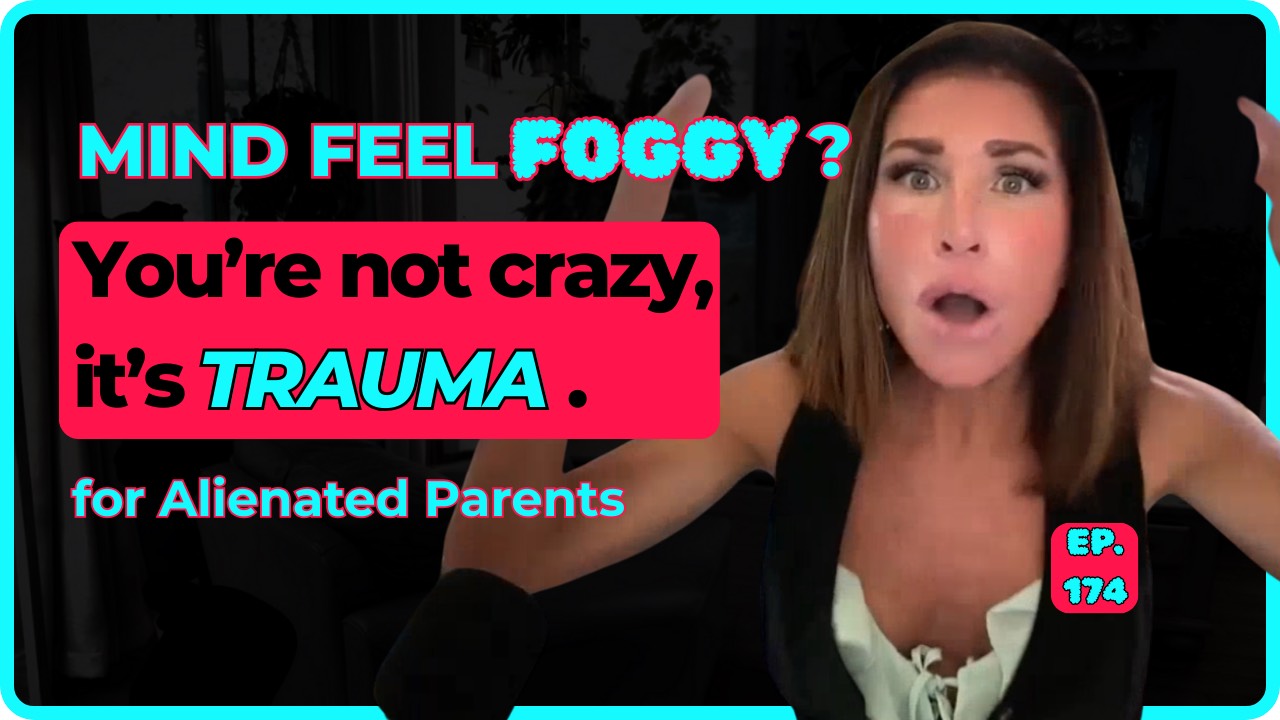
As an alienated parent, you've probably noticed an unsettling side effect: foggy brain. Ever have it where you can't remember your wedding date in court, you blank when someone asks 'how have you been?', or you walk into rooms forgetting why you're there — yet, the moment your child rejected you plays in vivid, painful detail on repeat. This isn't early dementia. It's not you losing your mind, either. It's complex PTSD & prolonged grief physically rewiring how your brain stores memories. Here's why it happens — and what you can finally do about it.
MAIN TALKING POINTS
-
Memory fragmentation is a symptom, not a character flaw — Complex PTSD and prolonged grief physically alter how your brain stores and recalls information
-
Three types of memory affected by alienation:
- Explicit memory (facts, dates, timelines) — controlled by the hippocampus
- Implicit memory (body sensations, emotional responses) — controlled by the amygdala
- Autobiographical memory (your life story) — becomes centralized around the loss
-
Why you sound "scattered" when explaining your story — Your nervous system is in survival mode, scanning for threats while trauma fragments interrupt chronological recall
-
The "yearning" feeling explained — Your body is addicted to the dopamine and oxytocin rewards from parent-child connection; when cut off, you experience withdrawal
-
Trauma memories intensify over time — Unlike normal memories that fade, PTSD-stored memories become MORE vivid because they're stored as "present moment" in the amygdala
You can rewire this — Through CBT, EMDR, tapping, mindfulness, and intentional recontextualization, you can move memories from the danger center to processed history
KEY TAKEAWAYS
✓ Forgetting dates, times, and sequences is normal after complex trauma — Your hippocampus struggles to timestamp events when your nervous system is under siege
✓ Body memories (tight chest, nausea, numbness) are stored separately from factual memories — that's why a smell or sound can trigger intense emotions without context
✓ You're not "crazy" for sounding disorganized when recounting your story — trauma fragments memories into sensory pieces rather than coherent narratives
✓ The solution isn't avoiding painful memories — avoidance reinforces the danger signal; intentional processing helps move them from "present threat" to "past event"
✓ Self-supplied love is the long-term answer — Learning to activate your own reward system means you're no longer dependent on external validation
✓ Recovery is possible — Through trauma-informed therapy, EMDR, tapping, mindfulness, and recontextualization, you can restore cognitive function
✓ You get to choose how you tell your story — Reframing your narrative in a way that supports your healing is not denial — it's empowerment.
Episode Transcript
Hey y'all, what's happening? So, I'm gonna give you a little insight into this week's episode, how the topic came up, and we'll move from there. So, last week when we were doing the Window of Tolerance episode, it came up for me like halfway through recording it and then I forgot to add it in.
But there's like a really obvious segment that I think sort of an afterthought or mid-thought, however you wanna say it, that Applies to us as alienated parents. When we're talking about the window of tolerance, and that is accessing memories, like good memories of our children, right? And how some of us I went through phases of this and everybody's sort of different. Um, some of us avoid good memories like, for instance, having pictures up in their home, like photos of up in their home, or, avoid going into their child's room if it's still set up, what have you.
Right? I went through phases of it where I did it, and I put everything up in the room, her room as if it was like, like it was a shrine, really. Um, and then I didn't want anything to be touched in there, and I never really went in there because I needed to avoid it anyway. It was a whole thing. And so I thought this.
Last week I was thinking , I don't know why I didn't add this into the window of tolerance, because it's so applicable. It makes sense, right? So I was gonna talk about that this week, but as I was doing my research and the more I thought about it, I know I've done a similar episode to this a while back, but I didn't touch on all the areas and I didn't, , put it out the way
I'm gonna do it today. so we're gonna be talking about first, like this week we're gonna be talking about your memory, like how complex PTSD and also prolonged grief disorder. Complicated grief, ambiguous grief as well, how those can affect our memory making abilities, memory, recall, abilities, and.
How it can, stand in the way of your healing moving forward, if not addressed. And I, when I say that the way that I just said that, I don't mean to instill any sort of fear in you. It's all gonna be okay. It's already there anyway. I just wanna bring attention to it, sort of shine a light on this area so that it can just be another, um, it could just be on your radar so that you know where you need to head, what you need to address if you haven't already, or what you might need to address.
I'm not trying to tell you what you need and what you don't need, but, um, so anyway, so today we're gonna be talking about, yeah, just that how complex PTSD, prolonged grief disorder, impede our ability to heal and access memories.
Recall memories, even make those memories, , and what you can do about it. Okay, the next week we will talk about the other part about your window of tolerance and making basically the memories that you have of your children. Um, not shrin eyes, is that even a word, but not something where you need to go sit them on some altar and, keep them sacred.
however, not desensitize them, and also not avoid them. Okay? So that's next week, but I felt like this part was a very important precursor. Okay,
Complex Trauma, Prolonged Grief, and Memory
I'm gonna read my little spiel here and then we're gonna move on. So, you know that feeling when you open your phone to check one thing and suddenly realize you've forgotten why you've picked it up in the first place.
layer that over months or years of court rejection and waiting by the phone and it can start to feel like your brain has been scrambled on purpose. walk into rooms and you can't remember why anybody raise your hand And I know that that's like a central to a lot of people's experiences outside of the alienation, but if you noticed it happening. Like starting to occur right after all of this trauma, then it, it, the rest of this will make sense too.
So you walk into rooms and you can't remember why. You lose simple details And yet the worst moments with your child are still painfully vivid, like they're happening on a loop in the background. If you've ever wondered why can't I remember the good times? Super clearly, but the bad ones, I just can't seem to escape. Or why do I sound so scattered when I'm trying to explain what happened? This episode is for you. This is such a typical, Experience for alienated parents
whether you're at a social gathering or you're in the middle of a deposition or you know, on the stand in court or just maybe even trying to recall certain events for yourself, and you feel like it's so pieced out, fragmented, hopefully this episode will help you to understand that that actually makes perfect sense because of what you've experienced.
Okay. This is an area where I really truly, and I may have touched on this last week,. I thought something was wrong with me. I did say it last week. I thought something was seriously wrong. I thought I was, um, having like early cognitive decline. Because I was always foggy brained, I was always foggy brained. Way worse than like pregnant brain for you moms out there that are listening. Um, way worse than that. And I couldn't, and I still, sometimes I will tell you, you guys, like, while recording these episodes, I will, and in with, with like my clients, I will be mid-sentence very animated, telling a full on story, something I know really well.
Mid-sentence will forget what I'm talking about or what my point was. So if you, um, can relate to that, then this episode is for you. And, um, I wanna just offer you hope right now that it's okay. Like, since I just said that I still experience it. It happens less and less frequent. It used to happen. All the time, like every day, all day long where I could not put things together, um, concepts and thoughts together in a fluid manner,
Today I'm gonna finish what I wrote. I keep going off my notes very early on. So today we're gonna talk about how complex trauma and , prolonged grief actually affect your memory. Why some parts of your story go foggy, why others stay raised or sharp, and why none of that means that you're broken or failing.
Okay? And then next week we'll move into the hopeful part, how to begin accessing and gently reshaping some of those overwhelming or even beautiful memories so they can support you. Those memories can support your healing instead of hijacking it. Okay? So how many segments do we have? We just, we have three segments today.
It's, I don't believe it's gonna be entirely long, unless, of course I keep going off my notes.
There are actually a, probably a lot a textbook full of memory types, but today I want to zoom in on three-ish of them that really shape how we as alienated parents experience our story.
Individually, each of us.
Explicit Memory and Parental Alienation: When Dates and Details Vanish
So the first kind of memory that I wanna talk about is your explicit memory, right? 📍 📍 📍 📍 This is the detail oriented, the what and the when, the timestamped, portion. Of your memory, of each story that you have. So explicit memory is the kind that you can consciously recall, like facts, life events.
It includes semantics, The semantic memory, which is the facts about your child or whoever the birthday school name, what grade they're in, what have you. Same with any other relationship that you have in your own self, 📍 explicit memory also includes your episodic memory.
Okay? These are specific moments like a family vacation, something, you know, an episode, some sort of something happening, right? First day of kindergarten, or the last time that you say goodbye to them in person, even if you didn't know that that's what you were doing is saying goodbye to them for the last time.
Um, for this portion of our. Situations. 📍 📍 in complex trauma, especially when the nervous system has been under siege, if you will, um, for a long time, the hippocampus, which is the part that's responsible for your explicit memory and also for your learning, like your recall, all of the things, this is the part of the brain.
Your hippocampus is the part of the brain that helps date stamp, timestamp, um, and organize events. Okay? And it doesn't always work efficiently after complex trauma, the way that it can. affect this. This is just one way is that memories of like rejection or certain court dates, conversations don't feel like they're anchored in the past.
They can land in your body as if they're happening right now. This is why your reactions sometimes feel way bigger than what's in front of you. And that's what I was kind of referring to last week also. Um, I don't know if I wanted to say that now or later, but also it can be that you forget.
Dates times all the things like I was just right here. Where I talked about events that happened in the past, they seem like they're still happening now. That's one aspect of it, but you can also completely lose track of those dates and times, which I'm gonna talk about here in a minute.
But I can remember I just wanna give you an example and then I'll move on to implicit memory. While I was writing this outline up, this came to my mind being in court the first time ever back when my daughter's father and I split, they put me up on the stands and his.
Attorney was asking some of the initial questions and asked what our wedding date was like when I got married to my daughter's father and y'all, I couldn't remember, and it was only like a year and a half, two years before that we were together for 13 and a half years, but we weren't married for that long and we got married twice on the same day of the year.
So we got married once in South Africa and then we got once married, like out in the bush, and then we got married once in Texas. Right. In the US because it didn't, anyway, it doesn't matter, but so I, it would seem like that date would actually be etched into my brain since it, we did it twice, you know, but I just couldn't recall the dates.
And that's because I think trauma had piled on top of that. Like I truly couldn't remember. And I sat there and the look on my ex's face, oh my God. I think he probably thought that I was trying to do that, trying to be hurtful, but I wasn't. I just could not remember it. And that is, I think too, because our bodies are so good, our nervous system is so good at covering up things that feel too emotional for us.
And I don't know that I was, anyway, it doesn't really matter right now, but it's just an interesting, um, effect, I guess, of how our bodies work with memory and what it decides to throw out or cover up and what it doesn't. Anyway, So your hippocampus controls your explicit memory, it's responsible for learning and what have you. 📍 📍
Implicit Memory
now we're gonna go to the second type of memory, which is your implicit memory. It's your body memory,
Implicit memory is more of your body's diary, and also autopilot. It's all of your subconscious, like I said, body memories or stuff that's done in your habit system.
It's your procedural memory: the route to school, how you used to pack their lunch, what you would put in and how you would layer it, the feel of buckling them into their car seat. Also, procedural body memory. Two muscle memory, if you will, And then there's the emotional somatic side of things. Tight chest buzzing limbs, nausea, blankness like complete, like spaced outness, your implicit memory is what your amygdala is fundamentally responsible for, tagging, your amygdala processes.
All of, , the emotional parts of, and the good emotions too of your memory. during trauma, the alarm systems of the brain, your emotional processing, which is your amygdala record, these sensations vary vividly. So when an emotional event comes up for you, the amygdala it will go block the hippocampus.
Until it's deems things safe, and then the hippocampus can maybe come in, okay, this is how I understand it anyway, you guys, and then if it's a like a danger event, it stays and gets tagged and processed only through the amygdala. Okay? If it's a super traumatic event, and so your, hippocampus will not, record or log any sort of date time sequences and attach it to whatever is happened in your past or when it's happening.
Um, real time. Your instead your amygdala is the one that's responsible for that whole experiencing it because it needs to file it away in your system as to avoid any future sort of danger. Scary. Alert, alert, don't get hurt. The same way that you are getting hurt right now. Your amygdala stores it. So because it's all working with emotions and senses, it will store, like I was talking about last week, states of mind.
Okay? How you felt the tight chest, the buzzing right in your head, or maybe, uh, numb limbs, uh, nauseous ness, all that stuff. Nausea. , So your memories are not stored in not neatly labeled, they're just stored in the danger part of your brain.
So later, a neutral moment, kids playing outside. I just got a text from one of my clients, one of my newer clients, um, a couple days ago, um, talking about this very thing she was hearing next door neighbor with parents and kids playing outside. It was jarring for her. She went into, an unbearable, intensity of grief, a certain ringtone, a hallway that smells like their old school can yank those sensations right back online in a split second. Okay? So any smell, sensory, any touch, any sound, music, whatever, can bring you right back your body, right back to whatever emotional moment that you might have had in the past.
But it doesn't even, because when it initially happened, whatever event that happened that was, , stored in your amygdala
the context of that memory gets all kinds of muddled up. And all you can really remember are the way that you felt. Your state of mind, maybe you focused in like hyper zoomed in on the expression of your child you know, like the expression on their face, their body language at the time that it was happening.
And that's what, that's all you really zoomed in on, Or you maybe heard whatever sound that was playing in the background and that's what your, it was, it's a way for your body to cope, right? And so that's what your amygdala will store. And so anytime that it sees or hears anything
that closely resembles that experience, it will bring you, your body right back to the danger memory. Okay? Hopefully I'm making sense when I said that 'cause I had a hard time getting my words out there. All of this will happen, before you even have a chance to think this is all done like faster than a blink of an eye because it's now been stored in the emergency centers of your brain.
Autobiographical Memory: When Loss Becomes Your Identity
📍 📍 📍 The third type of memory that I want to talk about. Is your autobiographical memory. Autobiographical memory is how you stitch all of this together into a story about your life, who you are, what's happened, and what it all means. And prolonged or complicated grief, the loss doesn't slide into being one chapter in that story. 📍 📍 it becomes your entire book. It becomes centralized to the, it's like the theme of your life. , Your brain keeps circling around the how and the why of the loss or alienation as a whole, even the positive memories of your child can trigger intense yearning and that hooked feeling, , which makes it hard to shift your attention toward anything else.
. the same client that I was talking about, um, just a second ago that heard the kids outside playing. She was talking about this. She said, I don't even know how to put it into words. This was a different time, the feeling that I have, but it's all there.
I don't, the thought isn't there. She didn't know how to say it, but it's just this intense yearning for their love, For the, quality time being spent. It's that hooked sort of feeling, which makes it hard to shift your attention toward anything else when you're there. Can feel like, before they rejected me, and of course after they rejected me, before alienation, after alienation is just separated like that. Everything else is just kind of noise, right? Everything else is explained around that when things were normal and then after everything blew up, all hell broke loose, however you say it, 📍 📍 📍
📍 what I think, and I don't have this in my notes, but what I think is, um, notable, interesting, , I just think it's a valuable piece of information, is that. The reason I think that this happens, like where you have that yearning for them and you cannot really explain it, put it into words except for that you just, you yearn them for them, right?
Mm-hmm. You just want them, need them physically, um, around. And I believe that that is because in relationships, especially a parent-child relationship, the way that our attachment system works is that we we're set up, it's a reward. It's based on, you know, it goes into your reward system. And so there are all these tiny little rewards and oxytocin and dopamine that's released each time that, we feel accepted, loved, appreciated, thanked, they give us a hug right after, you know, even like the seemingly insignificant things that you experience before the alienation happened, right? Um, those are all like little rewards that are activating that system inside of you and giving you, the rush of dopamine, oxytocin, and all the things. And so when we don't have that, it all of a sudden just goes blank dark.
And they're, they're maybe even if they're coming home, you know, to your home, to your house, and they just go straight up to the room and they don't talk. Or a lot of parents, and I see this in my comments all the time too, um, where parents will be like, yeah, but they just go up to the room and they're just not nice.
And they'll maybe eat when I make them their favorite meal, but they just throw their plate outside of the, the door and just refuse to speak to me. And if I try to make them go do things with me, like not give them a choice, then they just blow up and it's not even worth it for me anymore. Right. And then so parents will feel hopeless, helpless.
Like, and that that's what makes them wanna give up, because well, forget it. If my kiddo isn't giving me, if there's no feedback, positive feedback, then this isn't working. And it's exhausting, right? It can be exhausting until you learn how to manage your mind around it. But this is why I think that this happens in my mind anyway, is that you, your, your body is yearning for it because it's addicted to, is used to, and not in a bad way, but it's used to receiving those dopamine hits.
The, the oxytocin, the, I was gonna do a whole segment, not now, but like a, a series on neurotransmitters. And I may still do that actually. This is just reminding me of and how they work and, and cue your system and keep you going, you know, and also can hinder anyway, so I might do that later, but it makes sense why your body is.
Yearning for them, wanting them. And you don't, can't always put it into words. So the solution that I give to my clients and gave to the client that was experiencing this was talk we were talking about a couple weeks ago, is when you learn to, this is like, like, uh, not the best answer. It's not the one that you want to hear, but I promise you when you put it into practice, it is the most rewarding forever, like long term to promote long-term change and growth in you is instead of looking for the reward, which is totally normal, that you did, this is your kiddos, right?
But now that it's cut off and gone, it's for you to now supply that love to yourself. So you to supply and activate your, that reward system within you. And actually the little hits of dopamine and even oxytocin though are, beneficial. And not to be, I don't mean to minimize them, you're getting those through other people, we do need other people, but they're short-lived, right? They're, you're always needing more. But when you learn to supply that for yourself, to cue your own reward system, then you don't ever have to need anybody. And then you can keep your, your levels regulated, even keel like forever.
And then when the extra love comes in from whoever you decide to be in relationship with, or even your kids or whoever, it's icing on the cake, right? It's not like the whole. Everything, like where you're needing and yearning and wanting, and I, I need to get that back. You don't need to do that anymore when you can supply it for yourself.
Trauma's Role in Fragmented Memories and Recall
Okay. No, I just got way off my notes, but it's okay. So now I wanna talk about why you feel foggy, scattered out of order, whatever you might say. you might notice this, as I kind of touched on in the beginning. You might notice your foggy brain scatteredness out of order, whatever. Um, mixed up memories, thoughts, trains of thought to come up in a couple different areas.
Maybe lots of different areas. Maybe it's, yeah, but I'm gonna highlight two your casual check-ins. So if somebody as a social gathering says, so how have things been? And your mind either goes blank, right? Or it jumps straight into the most painful part. You might hear yourself skipping around, well, there was this court thing, and then, no wait before that.
That's, oh my gosh, I cannot tell you how often. I was like, well, I went to a court and that was fine, but before that and then after that, well, no wait, I should tell you about what happened way before that. And then the middle, and it just, it's chaotic. It sounded chaotic. And I was always so, like, I left the conversation or the gathering wherever I was feeling like, oh my God, how, how can I not get, a cohesive fluid set of thoughts out of my head?
in normal conversation. And I couldn't do it where it used to be so natural for me. So if that's you, it makes a hundred percent sense. Okay. Because of the way that trauma actually sort of dices up how our brain works. And again, I'm not saying that to alarm you or anything.
It does, it just segments, fragments, things you're processing out quite a bit. It does that number one to, uh, desensitize you or like protect you and, uh, eliminate or put aside the most painful, . If you're forgetting parts of maybe things that happen in childhood for you, this is the first example that's coming to mind.
A lot of people will forget about abuse that happened, right? And we could talk about this even with our own kids. You know, this is, by the way, let me just say that, um, I have so many thoughts on this because I was actually, every thought that I would have then it would cause me to go and look something up, and then it would leave me down another rabbit hole and then another rabbit hole.
We could probably do a whole full series on, um, how, C-P-T-S-D and prolonged grief actually affect our processing. But anyway, it affects our children in a different way than it affects us, is what I was just getting ready to say in like their memories, of course. Right. How they're being rewritten and all the things.
And if you like it at y'all's request only I can do, An episode specific to their experience. I feel like I can actually a little bit talk about that because I, as a, I was alienated, there was alienating behaviors from both, by both of my parents. Um, one parent. It was a little more severe, I guess I should say, than the other.
So I did experience, I can't say to the extent that my daughter's experiencing it, but I did experience a good amount of, um, of alienation growing up. So anyway, if you want that, just let me know, make a comment. If you're watching on Spotify or YouTube, just let me know that you do want that. Um, and I, we can talk about it another time.
Okay. So,
where was I? so if we don't remember something that happened in childhood, like, you know, something happened but you, or you feel like something happened, but you really can't put a finger on it because. You can't remember it or it's very foggy. It's only that things are very fragmented and you know, your state of mind, how you felt or the, maybe the dark room that you were in, if that's what it was, or like footsteps or whatever it was that just very fragmented, weird things.
It it's because your, your brain is trying, your body al nervous system is keeping that away because it's trying to protect you from what it thinks that you can't handle. Okay. So that's one aspect, but it can also do the exact opposite and bring up the most negative part or the most taxing part of whatever happened in your past too.
Okay. So with, there's, uh, it was a study, I'm completely off my notes, 📍 📍 📍 📍 done with war veterans and the study was, uh, spanned over I think like 45 or 50 years and they would check in with them every couple, few years. And ask them the same series of questions again each time to see how their memories, um, were stored.
. So those veterans that did not have any PTSD, they, they, they were in the same experience, but for whatever reason did not, it wasn't as traumatic for them.
Their memories of the same events over time, sort of dulled and moved meaning like they evolved right. With each time they recalled whatever event that happened. Humans in general. Every time that we recall a, a specific event, the memory will change. The details of the event will change ever so slightly with each time.
Okay. It's just a natural way. We don't, I'm not trying to alter a story, it's just how our brains work. What, what, depending on how we're feeling in the moment of recalling and, and what we've processed through and what have you. Right? So with these war veterans, those that did not experience PTSD, their memories, uh, faded over time and also got like, they were less vivid.
And also they, they changed over time. Dissipated where the veterans that experienced PTSD, their memories of the exact same events intensified over the 50 year period They were more vivid.
though the facts of their, each of their stories did not change. Does that make sense? They just got more affected by the memory because when stored in the amygdala, the memory stays as present moment, which I think is really important for you to maybe know if you're experiencing, still wondering why you can't get over something that happened in your past.
It could be this, because your body is telling you that it's happening right now. You know, this is this, it's going to stay current because you haven't yet con like recontextualize and date timestamped. Put it into, filed it away, like intentionally on purpose, processed through the that memory. Your amygdala holds onto it, and, um, it stays traumatic for you.
So each time that you recall that memory, it's traumatic. It feels like it's happening in the moment, even though it with your prefrontal cortex, everything else, you know, that it's not happening, your body says otherwise. And I was kind of touching on that last week. Okay, so what I'm, the reason I'm saying this, and I interrupted myself entirely, the reason I'm telling you this is because it, this itself can be really useful like knowledge and also, um, it's sort of giving you your recipe, if you will, or your, , roadmap for what you can do to start, processing this stuff.
Because oftentimes what we'll do, again, from last week when we know that recalling a certain time period or memory. Is quote unquote dangerous, like the no go zone, we keep avoiding it, right? Which only actually reinforces this danger idea in our minds of said event, like recalling that event which also retraumatizes you because the brain thinks, oh no, it's not just the um, the event that happened back then, but each time we say it, recall it, think about it or reminded of it.
That is also dangerous. Talking about it is dangerous, which halts your healing. Okay, so where was I? 'cause I was mid-sentence when I interrupted myself.
Another way that this can happen is, so I was talking about the casual check-ins, check-ins. When somebody at a social gathering asks you how you've been, and all of a sudden you're, you forget, you're really scattered with how you are, , explaining whatever it is to them. You know, it can happen to, in high stakes situations like depositions or on the stand or, , in front of, any of the powers that be, of your alienation situation? You sit down and give a statement and you feel yourself jumping out of sequence, leaving things out, or suddenly remembering, crucial details after you've already finished talking.
Right? How many times have you like left wherever you were and been like, oh my gosh, I forgot my whole point. The whole point was to explain or, and to show evidence of this pattern of behavior on my ex's part, you know, but you forgot it because you sidetracked yourself recalling body memories as opposed to getting to the point and presenting it in a clear and sort of concise way.
you might come across even to yourself as inconsistent or confused when really your nervous system is actually in survival mode. Okay? So this isn't you being flaky or dishonest, your system is overloaded and when that happens, your attention and working memory are busy scanning for threat.
What if I say the wrong thing? What if I'm judged? What are they thinking of me? What if this is used against me? Right? So that's part of it. And then your hippocampus maybe have atrophied over however long complex trauma has had gone on, right? The alienation, active alienation, um, felt like a, you know, a battleground.
your hippocampus is struggling to. Pull up events in a smooth timeline because a lot of those events didn't get stored in the hippocampus. They got stored in the amygdala so at the same time, those undated trauma fragments are barging in images, phrases, and feelings, right?
So your inner experiences is chaotic, even if the room where you are seems like it should be calm, right? It looks calm to you. so what comes out of your mouth is a reflection of that, right? It's fragments, it's jumps, it's blank spots. The story is in there. Your brain just doesn't have the full access to it when you are in that state.
If you've ever walked away from a situation, a deposition, or even some other little, um, get together with friends and you've been thinking, oh, I didn't say that right. I forgot what mattered. You know, just know that
that's trauma, brain and grief, brain doing its best. Okay. It's not evidence that you're unreliable or crazy. I used to, that's what I used to think to myself, that I, I look entirely insane trying to explain a simple, maybe not even normally activating sequence of events. You know, them pulling my daughter out of school when I had volunteered for one of the days that I did, you know, or like some other incident that otherwise didn't need to be so dramatic.
I mean, it makes sense to me because of how I was and the state of mind I was in overall, and for you too, but like some of the isolated incidents that it, maybe other people think that we're acting the, our response isn't appropriate for such a quote unquote like small or meaningless incident, But it makes sense.
Trauma, Grief, and the Alienated Parent’s Sense of Self and Life Story
Okay, so in summary of all the things that I just said, right there is that complex PTSD and also grief, prolonged grief, um, and, uh, ambiguous grief. Specifically affect your, one, your autobiographical memory, which is the disruption in your personal history relating to gaps in your memory,
difficulty recalling specific life events or a fragmented sense of self. Okay? That's your autobiographical memory. The, another area that's affected by trauma is your episodic memory, it can lead to an inability to create a cohesive narrative of events,
with memories often stored as sensory fragments in the amygdala, smells or bodily sensations rather than a story. Your working memory, which I started to touch on for a hot second there, and then I interrupted myself with something else. But your working memory and your short-term memory are also impacted.
difficulties with concentration, um, which we've talked about in many of these episodes. Retaining new information and managing daily tasks. Your working memory is responsible for what, like in the middle of a task, like the sequence of your tasks, what have you, or retaining information, math problems, retaining the last piece of information so that you can do the next part of the equation.
That kind of thing. That's affected too due to trauma, which was really bothersome for me. Um, for a while there. Like, I was so worried that about my, cognitive health, but I just want you to know, and also your short term memory. Did I say that? Yeah. So, um, just know that this can, you can, um, have things come back online and it just will sort of happen gradually you don't really necessarily notice it in the moment when it's happening, but you can look back and say, oh, wow, I don't have a problem where I used to be before it, which is where I noticed now looking back, it's like, oh God, remember when I couldn't even. You know, blah, blah, blah. Put three words together that made sense.
It did happen. You know, or I couldn't remember, and I've talked about this on a lot of occasions, but I couldn't remember words that, and I used to be like a word person the way that I've described it before is that I used to, I was a spelling bee champ, you know, I, I know a lot of words or I used to know a lot of words and I used to be able to put them in context and all the things.
And then nowadays still, I still have a problem coming up with the words that I want to use. They're there, but it's just takes a little bit more time. Anyway, so I think, I think that this is a direct result of the trauma. Right. And science actually backs what I'm saying here. So, um. Just know that if you are forgetting words or you're forgetting the sequence of events, like, you know, in the high stakes situations, if you are forgetting why you walked in a room or, um, funny, not so funny sometimes too, other important aspects of your life.
If you're having a hard time with your recall, just please understand and know that it makes sense. Trauma, complex trauma and grief, especially our kind of grief affects , and like I said a little bit ago, dices up the way that our brains process information, process experiences, emotional experiences too, and the way that we store emotional experiences.
Hope for Healing: Rewiring Memory and Self‑Narrative After Parental Alienation
now, just because it's affected it thus far doesn't mean that you can't reverse most of it. I think maybe all of it, I don't know. I haven't done the, any research on that, so I, I, I can't, and I think honestly, the research is just being done there isn't as much knowledge as I'm sure the researchers want, but it's just really an untouched area.
Maybe not untouched, But I do know, from experience that what I share in all of these episodes, right, like basically cognitive behavioral therapy, it's just the way that you're processing things, the way that your narrative and working with your own story, how you're seeing it, how you're retelling it to yourself.
Will change the way that your central nervous system, your body responds to that information, how you reframe everything is huge in this. Also, EMDR is a great tool for this, um,
tapping, um, there are other tools, like if you go to a therapist somebody that's trauma informed,
the therapist is going to help you with processing through some of that stuff, give you the support and, like any of the eye movement or tapping any will help facilitate that with you for you. But then also mindfulness breathing techniques that we talk about in these episodes will really help you to oscillate between sort of like process the, the grief and then table those memories. , Intrusive memories that are coming up for you and feeling too much and taking you out of your window of tolerance, like I was talking about last week.
Um, you can do that yourself so long as you're safe, supported. And you've, I would like to say that you've been through therapy around this alienation or, any of the trauma that you experience as a result of it, then I think that you can do this, support yourself here. Absolutely. Um, by, like I said, either intentionally oscillating in between, uh, spending some time in the memory and then pulling yourself out, doing it maybe in timed, um, increments, right?
That can help. Um, also. Writing out. One of the ways that I help my clients with this is having them write out the whole story, how they see it. Like you could take chunks of time and write out the story in the the most harsh victimy voice that you have, like coming from the victim part of you that actually was a victim of whatever happened for you, right?
Telling it that way first because you need to let that out. It's all real and true and valid. And then. The next step would be to pull all the facts out. I've talked about this before, just like, go through, scan through and find, pull, extract only the facts. No adjectives, no inflection, no nothing else, no, um, attacks towards the other people, or you assuming what other per the other person's intentions are.
You know, none of that. Only the facts of the story. And then you re-contextualizing the facts into the story that works for you moving forward. Be okay. So, um, I was just watching the other day and then I'm just gonna end it and then we'll continue this next week. But I was watching the other day a couple nights ago, that new, , game of Thrones spinoff,
it is called, I just had to look it up A night of the Seven Kingdoms, I was watching that last night. or a couple nights ago. And it, the first episode opened it shows this guy, , who is standing over this older man, right? You don't know who he is yet. But then it gives context. It's his caretakers, elderly caretaker. And the way that he's remembering it, the way that he's talking about it, narrating this, is that this was his father figure, and he was a, the best father a, a, a man could have.
He gave him this wonderful upbringing and then it shows flashbacks. Of what really happened and what really happened. Funny, not funny, is this guy was like wailing on him and beat the crap out of him. They did it in a kind of a humorous way, but anyway, it was just showing highlighting. How our memories, number one, can protect us, like I was kind of talking about earlier, right?
And block out some of the most traumatic events that have happened to us. Or like I said, it can do the opposite and highlight those traumatic events. But in this case, this guy was, only remembering the good stuff. But also I think that we can do that in the practice. Like I was just saying, you can remember what you want about whatever's happened in your past.
And if it's not helping you, if it's only retraumatizing, you maybe don't. When you're re text When you're recontextualizing that for yourself, then you don't have to keep recalling the worst parts of the event. You can tell it, like I said, however you want, like using it in a way that moves you forward, supports you like this guy who decided to think that his father figure was the best a guy could have.
taught him all the things he needed to know to become a knight, you know? Fantastic. That works for him, at least in the first couple episodes. Anyway, it seemed to be working for him. But it's, I guess the reason I'm bringing that up is because , the contrast of the what happened or the flashbacks that they showed, and then of course how a person decides to tell it.
It's all up to you. What you believe is what matters, you know? So I'm gonna get into a lot of that next week, like the solutions. But I really truly, this episode, the point of this was to explain that if you're having some interruptions in your memory or just feel like, um, or intrusive memory on the other hand, like everything feels so much and it feels like it's still happening right now, I wanted to provide some explanation around that and let you know that you're not crazy.
And I wanted to offer that you don't need to get so frustrated with yourself if you are, you know, it doesn't need to be a source of, of shame or any sort of contention within you. You can simply re-explain this to yourself as symptoms of trauma, you know, and prolonged grief. This is Symptoms of a system that is trying to protect you, so if you've been expecting yourself to think, speak and remember, like someone who hasn't been living in a war zone, maybe just let yourself off the hook a little bit here. Once you understand we understand how C-P-T-S-D and prolonged griefs scramble our memory systems, then we, you can start working with them instead of adding shame on top of everything else.
Okay, so now next week we can, I'm gonna like to walk you through how we can begin access some of those overwhelming or even the good memories on purpose. And then gently recontextualizing them so they stop living only as fog or as raw nerve endings in you, right? And start becoming part of a fuller, kinder story about your life and your love for your child or children.
Okay? So that's what I have for you guys today. I hope you have a lovely, lovely week, and I will see you next week. Okay, bye-bye.
Thanks so much for listening today. If you like what you're hearing and you'd like to hear more, please make sure to click subscribe wherever you're listening or watching. Also, for bite-sized clips and tips, be sure to find me on TikTok or Instagram. See you next week.
