
Difficult People May Never Change. Here's How to Heal Anyway.
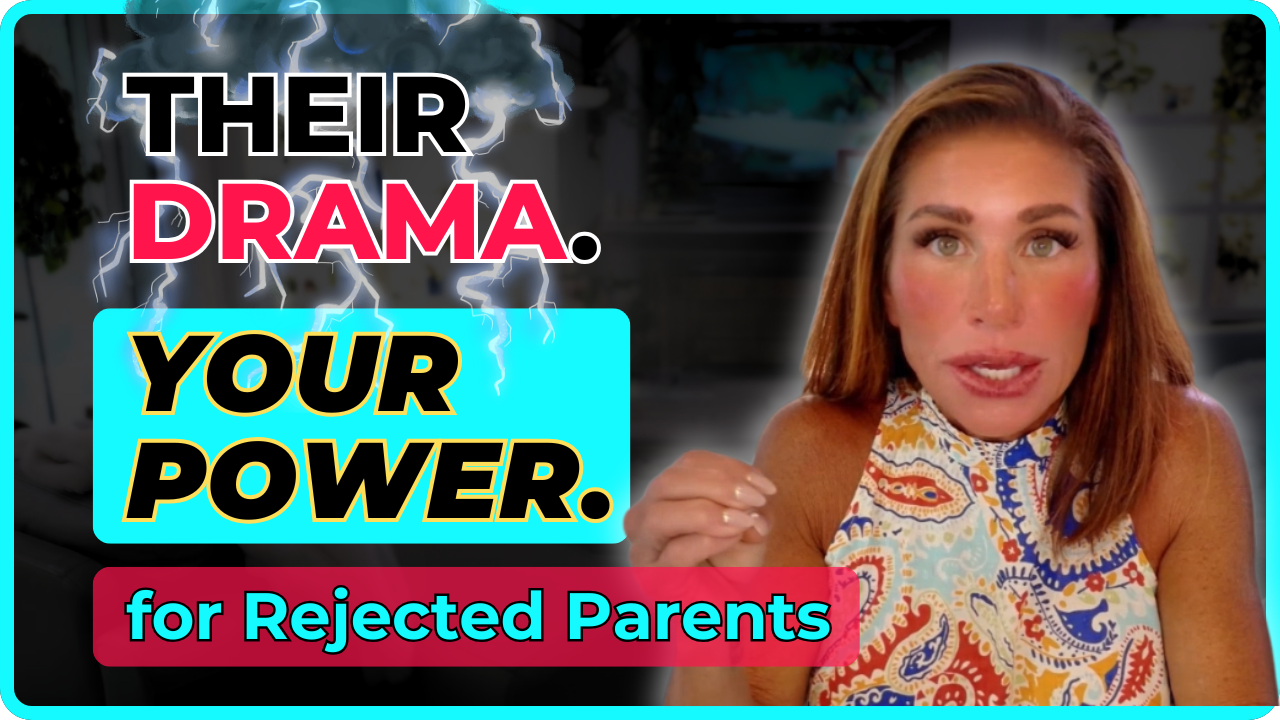
How to Stop Letting Your High-Conflict Co-Parent Control Your Life
*Beyond the High Road | Episode 194 | Shelby Milford, Certified Life Coach*
If you're an alienated or rejected parent, chances are you've spent significant time trying to figure out your high-conflict co-parent. Why do they do this? How can they keep hurting the kids? What will it take for them to finally stop?
It's exhausting. And it makes sense — their behavior has real consequences for you and your children.
But there's a painful truth that most alienated parents don't want to hear: obsessing over a difficult person's behavior is the very thing that keeps you powerless.
This isn't about excusing what they do. It's about recognizing where your actual power lives.
What I Mean by "High-Conflict"
When I talk about high-conflict behavior, I'm not handing out diagnoses. I'm talking about patterns — people who default to all-or-nothing thinking, who can't or won't regulate their emotions, and who resort to blame and extreme behavior when things don't go their way.
You've met them. Many of you share children with them.
The problem isn't just that their behavior is difficult. It's that the more we obsess over why they're like this, the more we abandon the only domain we can actually control: ourselves.
The 4 Traps Every Rejected Parent Falls Into
When a high-conflict person is in your orbit, most of us cycle through four patterns. All four feel different. All four have the same problem.
"Every time you people-please to avoid their reaction, you quietly teach your brain that your safety depends on keeping this person happy."
1. People-Pleasing You say yes when you mean no. You accommodate last-minute changes. You take the dig on the chin and rewrite your whole day around their chaos. Outwardly, it looks like peace. Inwardly, your nervous system is on fire.
The cost: Every time you people-please to avoid their reaction, you quietly teach your brain that your safety depends on keeping this person happy.
2. Tolerating and Ignoring You stop fighting — but you also stop engaging. You go through the motions. You're there physically but checked out emotionally. From the outside it can look mature. On the inside, you're seething.
The cost: You get no repair, no change, and no closure. Just chronic low-grade misery.
3. Acting Out After enough people-pleasing and ignoring, most of us swing hard in the other direction. We start to hide things, bend the truth, get a little sneaky. We start displaying the very behaviors we hate in them — usually without acknowledging it.
The cost: You're still orbiting them. And you erode your own trust in yourself.
4. Taking the Big Stand This is the speech you rehearse in the shower. The perfectly worded email. The fantasy where you finally say everything and they're stunned into permanent self-awareness.
The cost: When the real goal is to change them, you've set yourself up to lose before you even open your mouth.
In all four patterns, one thing is the same: your attention is glued to them. Their behavior, their intentions, their willingness or unwillingness to change. And when your sense of safety depends on another person's next move, you have no moves of your own to make.
The Victim Mindset Every Alienated Parent Knows
Nobody wants to admit they're operating from a victim mindset. But if you've been through parental alienation, you've lived there — because it makes complete sense given what's happened to you.
The victim mindset runs on one core belief: "My emotions are caused by other people and circumstances. I am powerless until they change."
The shift isn't about blaming yourself. It's about recognizing that the thought you have about them is what generates your emotional state — not their behavior itself. And thoughts, unlike your ex's behavior, are something you can actually work with.
"The moment you decide to stop watching the drama and start reinforcing your own fence — that is the moment you reclaim your power."
The 3-Step Framework to Reclaim Your Power
Step 1: Own Your Thought-Feeling-Behavior Loop
Think about the difficult person in your life right now. What do you believe about them?
Complete this: I believe ____ about them. When I believe that, I feel ____. When I feel that, I ____.
Now ask: Is that how I want to act?
This step alone — connecting those dots without shame — begins to dismantle the pattern. You're not blaming yourself for having the thought. You're spelling it out to your brain that it isn't giving you the result you want.
"We become full-time drama analysts instead of authors of our own lives."
Step 2: Choose Your Brand Identity
Instead of being defined by your reaction to them, pre-decide who you want to be.
Not: "I'm the parent who's constantly defending myself against manipulation." But: "I'm a parent who advocates for my kids — and fights for something, not against someone."
Your brand identity might include commitments like:
- I log every missed or canceled visit in real time, in one place
- I use AI to process hostile emails before I respond — getting baited isn't an option
- I don't send reactive messages. I only respond when I'm calm and clear
- I show up consistently, regardless of what's being said about me
Every interaction with your high-conflict co-parent becomes a rep for practicing the version of you that you've pre-decided on.
Step 3: Let Them Be Exactly Who They Are
This is the hardest step — and the most important.
Their behavior is their domain. Yours is how you think, feel, and act.
You're not required to like what they do. You're not required to stay in every situation. But you are invited to stop outsourcing your emotional life to whether another adult follows your handbook.
Their behavior will have real-world impact on you and your kids. That's true. But even in those scenarios, you still have choices. And that's where everything changes.
The Moment Everything Shifts
The moment you decide to stop watching the drama — stop tracking what they'll do next — and start reinforcing your own fence: the identity you hold, the rules you live by, the acceptance that other people get to be exactly who they are — that is the moment you reclaim your power.
Difficult people may keep doing what difficult people do.
But you? You get to decide whether you'll keep making exceptions at your own expense — or finally become the person in your own life that you can count on to have your back.
Ready to stop surviving your situation and start healing inside of it?
Watch or listen to the full episode of Beyond the High Road — Episode 194 — by either clicking the above you tube link or wherever you get your podcasts. And if this work resonates, book a Clarity Call with Shelby to explore your next steps.
Episode Transcript
Have you ever sat in your car after a drop-off or after a court hearing or reading a nasty email and thought to yourself, "If this one person would just stop being such a nightmare, then my life and my kids' lives could finally settle down"?
The high-conflict ex who badmouths you to your children, relentlessly sends berating emails and seems to enjoy making everything harder than it needs to be, can feel downright evil
Today, I am not gonna convince you that they're secretly kind.
Instead, I'm actually going to name how awful their behavior really is, and then
I'm gonna show you how to take your power back from someone who probably will never change
Starting with what's happening inside you when they do what they do. So you are listening to the Beyond the High Road podcast with Shelby Milford, episode number 194.
Welcome to Beyond the High Road, a podcast dedicated to healing your heart and life following the grief of alienation. I'm your host, Shelby Milford, a twice certified life coach specializing in post-traumatic growth. If you're experiencing the effects of alienation and you're ready to heal, then this show is my love letter to you.
Stay tuned
So let's be honest, difficult people can be annoying. They can be upsetting, downright infuriating sometimes. The high-conflict ex who lives for drama, the co-parent who badmouths you to your kids
and maybe plays games with the schedule, With your schedule, with the kids' schedule. The family member who somehow turns every interaction you have with them into a battlefield
When their behavior is affecting your children, when it's impacting your time with them, their sense of safety, their view of you, it doesn't just feel difficult, It can feel evil It can feel toxic
It can feel like that you're up against this villain who's willing to burn the whole house down so long as they win
And of course, I know that your brain is going to say throughout this episode, I'm just gonna prepare you, your brain is going to say that they are the problem. They're the problem, right? If they would just stop doing this, my life would be okay. I would be okay. If this one person would act right, my life, my kids' lives would be so much better, I get it. I've been there. Many of my clients still live there, especially my new ones, really. Um, in a lot of cases, their behavior is outrageous, it is high-conflict behavior, and it feels toxic to interact with. But here's what we're gonna do in today's episode, you guys. We're gonna start by naming how awful it feels,
and then we're gonna shift the focus to the part that actually gives you your power back. Not by excusing what they're doing, and not by spiritually bypassing it, Gaslighting you. But by getting crystal clear on what is happening inside of you in those moments and what then you can do about it.
When "High-Conflict" Doesn't Begin to Cover It
So when I say high conflict or difficult, I'm not handing out diagnoses. I'm sure if you've been listening for a while, you know that, right? I'm a coach who specializes in post-traumatic growth and grief for alienated parents, alienated and estranged parents, right? we're not trying to diagnose them.
I'm talking about patterns. The people who live in sort of all or nothing thinking, who can't or won't regulate their emotions, who default to blame and extreme behavior when things don't go their way. You've met them. Many of you share kids with them. I say many of you because um, some of you
it's not the other parent that's been doing the alienating, With those people, normal repair and reasonable compromise, both of those can be really difficult, but the more that we obsess over why they are like this, the more that we abandon the only domain that we actually can control, which is ourselves.
The 4 Relational Traps Every Rejected Parent Falls Into
When a difficult person is in our orbit, our brain instantly goes, "It's all them. If they would just stop, I would be fine," If they could let me be, if they could blah, blah, blah, then my world would be great. I wouldn't be underwater in bills. It's cause-effect is how you feel.
But the real leverage isn't in analyzing them, it's in watching what happens inside of you, the tension in your body, the sentences in your mind, because they cannot make you feel anything without your participation
The more that you can see, find that tiny gap between their behavior and your emotional spin-out, even if only in your brain, right, or in your body, the less you're at the mercy of those difficult people and the more power that you have to decide who you're gonna be in that moment. So with that in mind
Let's talk about the four ways that we usually deal with difficult people.
right? And where each one quietly drains your power or gives it back. The type first category are the ones that we people-please in order to keep the peace. I'm sure that you guys know this dance. You say yes when you mean no, right? You accommodate the last-minute change. You take a dig on the chin or rewrite the whole day around their chaos.
Outwardly, it looks like peace. It presents as peace. But inwardly, your nervous system is on fire. You f- might even feel like you are on fire, right? The relationship, that kind of relationship relies on your compliance, and there is never any real peace because you're not feeling peaceful.
You're in fawn mode Convinced that if you're just good enough, quiet enough, invisible enough, or compliant enough, they'll finally calm down.
Here's the cost, though. Every time you people-please to avoid their reaction, you quietly teach your brain that your safety depends on keeping this person happy. That is a horrible job for anybody to do, and for you to keep trying to do. so this-- that's category one, the people-pleaser, right?
You're just trying to keep the peace. You want everything to just run smoothly so that you don't poke the bear, rock the boat, however you wanna say it.
It's not that you really need to impress them.
It's more of just a self, preservation
the second type of, um, relationship dynamic, difficult person, relationship dynamic is the ones we just sort of ignore and tolerate, right?
You may not be actively people-pleasing them anymore, but you also don't address anything.
You are shut off, you go through the motions. You show up physically, maybe, but you're emotionally checked out.
You keep the relationship on paper, technically, like, intact, but you've quietly quit, you know? From the outside, it can even look mature, right? You're not fighting, you're not exploding, but on the inside, you're seething, You're consistently fantasizing about leaving, or maybe it's about them finally waking up and apologizing, but you never actually have the real conversation or take the real step.
This pattern actually drains you because you're spending so much energy performing that it's fine while your body is holding all the resentment
You get no repair, no change, and no closure, just chronic low-grade misery. And this, when I'm talking about this one, this can happen in all different kinds of ways. I'm sure you guys can apply it to your own life. With, the difficult boss, it can happen with the difficult co-partner, like the person that you're with now, right?
Um, and if it's the person that you're with now, like a partner or a family member that you ultimately do, they may be difficult, but you ultimately do love them, and you know that you're not gonna be leaving the relationship actually, this behavior of tolerating them, ignoring them, and like going through the motions, you're detached,
like I said, just completely checked out. And so by doing that, that is your wall. And it-- of course, then you avoid any, opportunity to reconnect for intimacy, right? And so there's that, okay?
Usually then, when we've had enough of either of those, people-pleasing or quiet tolerating, quiet quitting, we swing hard in the other direction.
That's when the next two patterns come in,
okay? The third category is the ones that we start lying to, or getting back at, or acting out around even. It's more of the combative feeling. It doesn't always have to be outwardly combative, but it's, it's there,
This is where we start displaying the very behaviors that we actually probably hate in them. Usually without acknowledging that. We hide things, we bend the truth, we get a little sneaky. Maybe we talk a big game around boundaries, but then we violate our own values to teach them a lesson or to even the score, If that's you right now, this is not about shame, as every episode that I put out, it's never about shame. It's never about blame here, it's about seeing the pattern. You've probably tried being reasonable before. Tried maybe people-pleasing even. You've tried ignoring. And now you're exhausted and furious, and your brain is like, "Fine, I'll play their game better than they do then.
I'll beat them at this." The problem is this keeps you locked in that same drama. You're still orbiting them, Your nervous system is still glued to, what are they doing? How can I outmaneuver them? You might get a short, short-term hint of satisfaction, right? But the long term
You erode your own trust in, in and with yourself. The fourth category is the ones that we finally want to take a stand against. This is the big speech you rehearse in the shower, maybe the perfectly worded email, the fantasy where you finally say everything you've been holding in, and they are, like, stunned into self-awareness and permanent transformation, right?
It's a lot of yelling and bickering, even if only in your head
I wanna say though, too, clear, firm communication is actually very important, I'm not telling you to never take a stand, but I want you to notice the hidden agenda baked into a lot of these moments. Often the real goal isn't just I wanna be clear about my boundary, or what I need to have happen, It's I wanna change them for real, for final this time, I want this conversation to turn them into somebody else. That's the goal underneath it all somewhere, And that is exactly where you hand your power away again, because if the win is to have them finally get it, you've set yourself up to lose before you even open your mouth.
When I Was the Alienated Parent Who Couldn't Let Go
I used to play this game quite a bit without even n- uh, knowing that it was a game with my last ex, the guy from... Now it's many years ago, but, not my daughter's father, right? I used to want to change him so bad, and that's why I could never set a boundary with him because I knew that my boundary would have been, had to have been that I would leave, and I knew I would never uphold that boundary.
So I would just yell and scream and try to figure out ways to show him all of the wrongs, all of the errors of his ways, and it never fucking worked. Ever, not once did it work. It would, well, I would say it would work for a moment, you know? And then we'd be right back to square one, right back into the cycle of abuse again, it was a very combative, frustrating dynamic that we had going on because I just desperately needed him to change, and he was hell-bent on not changing, right? So, and he also knew that I wasn't gonna, at, until I did, finally, I wasn't gonna uphold any sort of boundary or walk away, you know?
Because, because, because there was a lot of different types of abuse going on, financial, emotional, what have you, and I didn't have the guts until I finally did have the guts. But anyway, that's besides the point for now. Uh, in all four patterns, the people-pleasing, the quiet tolerating, the acting out, and the big dramatic stand, one thing is the same, y'all Your attention is glued to them, Their behavior, their intentions, their willingness or unwillingness to change
You still feel victimized and miserable because your next move depends entirely on what they do next
And when your sense of safety and okayness depends on another person's next move, then you have no moves of your own to make
So that's the problem that we're solving in this episode, right? Not how do I get this difficult person to behave correctly, but instead, how do I stop abandoning myself in every interaction with them?
so we've named the four ways that we usually dance or play with difficult people. Yeah? Now I wanna show you what it looks like to shift this focus back onto you, because this is where things actually begin to change. This is where the magic happens.
What My Client's Affidavit Couldn't Tell Me
So my new clients almost always, almost always, come to me with detailed case file, right, on the difficult person in their life. They'll start with, "Okay, let me tell you everything my ex has been doing." And then I get the full timeline, every manipulative text, right?
Every court date, every hostile email, the way the courts are being turned against them, I do let them vent because sometimes you need to say all this stuff out loud, especially to somebody that you hope will then understand you, which I always do understand, because I've been there, you know?
But here's the secret, you guys. I don't need all of that detail to coach them, like ever. I don't need to know how the ex is behaving what I really care about is their experience of it all. That's what matters.
Their thoughts, their feelings when they believe those thoughts
There's nobody wants to say, uh, uh, nobody wants to claim that they have a victim mindset, but I know that... Whoops, I almost tripped off my chair. But I know that every single one of you, well, I assume that every single one of you, because you're human, and have gone through alienation, you- you've inhabited the victim mindset before.
And the victim mindset lives on a diet of,
The Victim Mindset Every Alienated Parent Knows
"My emotions are caused by other people and circumstances." That's what it lives on. "I am powerless until they change." That is what I'm listening for. So with one client recently, instead of asking for him to give me an hour of talk about what the ex is doing wrong, I asked him instead What do you believe is true about your ex right now?"
And he said, " I believe she's trying to manipulate me and trying to control me through the kids,"
That one sentence tells me more than a 40-page affidavit could ever tell me, Because that belief is what's going to determine his mood, his nervous system state, his actions, and ultimately his results.
When he is all up in her intentions, he gets angry, his body goes straight into defense mode, even if only on the inside. And in that state, he becomes more manipulable, not less
He'll sit and ruminate on all the times that she's done this before. He'll make assumptions about what kind of game is she playing sort of thing, right? What's she trying to do now? Why is she doing this? What will she do next? Maybe even be tempted to fire off reactive messages, agree to things that he doesn't wanna do,
and he'll probably walk right into interactions with her that drain him. In trying so hard to stay aware of her toxicity, he basically walks right into the trap. That's what happens when our attention is 100% on the other person.
The Hole in My Own Fence (A Story for Rejected Parents)
I've also had my own run-ins with difficult people lately. I swear there must be something in the air in the last couple weeks. Just a couple days ago, someone showed complete disregard for my time and my effort. this woman, eh, outside of my coaching business, an outside business I have, this woman no-showed.
Okay? She didn't communicate, just ghosted for a full day. It was... I... Every so often I'll watch someone's dog, and this woman, this s- specific woman and her dog, it's a long story, but I love that little dog and, um, any- I'm not gonna get into all of it, but she no-showed, and I needed to get stuff done, and I still had her dog,
She just completely fucking was off the grid, and I was fuming. Fuming. My brain was off to the races, she should be more considerate of my time. She should have called or notified me. She's messing with my whole day. She's messing with my whole week.
I was completely victimized, 100%. Of course I was, because I was only focused on her and all of the ways that she was a shithead, right? And how she's done this historically, and she's constantly doing this. She disregards everybody. She's disrespectful of people's time, and blah, blah, blah.
In that frame, though, I had no moves to make. Zero. I felt like for a second there it was... I just stopped managing my mind for a hot, I wanna say it was 20 minutes, but it might've been longer. It was probably, like, an hour. I was fuming. I was pacing. I had to go work out to, like, get my mind straight, right?
And then I had her little dog here, who I love, you know. But I was so mad, I was even mad at the dog, and it wasn't her dog's fault, I was d- the person being done to in that situation. But when I slowed down and watched my own body, my own mind, I realized something really uncomfortable
I had made an exception to an agreement I'd already made with myself, I bent my own rule to accommodate her, and I appeased, right? I told myself I was done watching other people's dogs, that I was gonna finish out a couple of standing bookings, the ones that I had already done a few months back. But otherwise, I was done.
My business is getting too busy for this. I just was not gonna be in the cards for me anymore. But she came to me last minute, and because in my mind of all these extenuating circumstances with that dog I decided I'm gonna make ex- an exception for this dog, this dog Sophie,
in other words, though, I poked a hole in my own fence, Yes, her behavior could be considered inconsiderate, But the part that really burned, was that I had abandoned me first, and once I saw that, the anger shifted slightly. It took a little time, you know? It wasn't, "She's a monster," anymore. It was, "Oh, right. This is why I set that boundary in the first place." It was a boundary for myself, not for her. It was like, I'm not doing this anymore because my work is too busy
and this is where I wanna focus my time. Not too busy, but this is where I wanna focus my time, with my people, with my clients, with you guys, you know? The other stuff is distracting. And so when I realized that I had basically opened up a, a gaping hole in my own fence, I was like, "Oh, shit." So my takeaway, of course, for this was I'm not making exceptions for other people at my own expense anymore..
That's what I mean when I say in each situation where I feel victimized, you feel victimized, I can usually uncover a hole in my own fence, So between my client and my own little saga here, you can see the pattern. When our attention is all on the difficult person, and she, trust me, she is a difficult person in a lot of ways.
but when I focus on that, I feel powerless. You feel powerless when you're focusing on Your difficult person, right? When we turn the camera, both of us, all of us, back on ourselves
We start to see where our thoughts, our choices, and our broken agreements are actually creating our experience. So let's turn that into a three-step framework that you can actually use with your difficult person. Whether it's your ex, your child, your s- current spouse, your boss, your neighbor, Somebody's dog, whatever.
How to Take Your Power Back as an Alienated Parent
Step one is we have to think of the most difficult person that you have in your life right now, okay?
You have to take responsibility for your own thoughts and feelings, which I know will cause friction inside of you right now, at first anyway, because you're still convinced that it's their fault. It's the other person's fault. And that's fine. You can even sit with that. Let that be true for a minute, right?
But notice that if we're gonna take this, the statement, "It's the other person's fault, it's their fault," is a thought that you choose And then when you think that thought, how do you feel? What actions do you take from that emotion, right? Notice how much you want them, the perpetrator, if you will, to change.
And this is the part you've heard, probably heard me say some version of before. Maybe you could fill up a whole building or a skyscraper full of people that believe you and agree with you that this person, this person is the problem, right? They are everything. They're the reason why, you know? You probably have so many supporters in that
But it actually doesn't matter how they're behaving because you cannot change them, right? We've established that over and over throughout these episodes. What matters to me with my clients, and what matters to me with you guys, is your experience when you think that thought that it's, they're the problem, right?
How do you feel when you think that? So you need to fully understand what's happening. Basically, what I'm saying here is you need to fully understand what's happening, like the mechanics of it, in order to shift it. So my client the other day, the one that I was just talking about a few minutes ago, um, I saw him when we were o- on our call.
I saw him get a little squirmy when we were here at this part, And he said Okay, so how do I think then? What's gonna change this? Let's get, let's go there. He didn't wanna talk about the fact that when he thinks this, he feels this. He's like, "Ah, whatever. Let's just stop thinking that then.
Let's just get to the good part where I start thinking something, somewhere else." Because everybody, I think human nature, is to wanna just get out of the feeling that we're feeling right now, especially if it's a negative one, right? But What needs to happen is the dots need to be connected first. He needs to connect the dots first.
That when I choose to think blank, then I feel blank. In this case, for him, when I choose to believe that she's trying to manipulate me, I feel angry. This is not to suggest that you should turn around and blame yourself for thinking it.
Instead, it's to spell out to your brain, the committee in your head, that this habit of attributing your feelings and your state of powerlessness to their actions is not giving you a desirable result.
And because it's probably a super highway in your brain, like a, just a well-practiced belief you don't even realize the results that you're getting in your life have a common denominator.
So let's go back to my client for a second. So and you guys can fill in the blanks here, but when you think that your ex is manipulative, for instance, how do you feel? Do you feel powerless? Do you feel suspicious, helpless, infuriated? What? And then when you feel that way, what is your behavior?
Do you defend? Do you replay conversations in your head? Do you try to predict their next move? Do you pretend or tell white lies to try to keep the peace or try to work around them behind the scenes maybe? Do you try and manipulate them or whoever you believe that they're affecting, infecting?
I know that you probably wouldn't label it as manipulating. Um, you'd probably likely call it self-defense, right? Listen, I've been there I get it 100%. What I'm offering is super confronting, you guys, but it will change your life to look at all of this, I promise you. Okay? So look at your situation, the difficult person in your life, whoever that is.
What do you do when you think and feel in the way that you do? I believe blank, right? And because when I believe this, I feel blank. Complete that, right? And then what do you do from that spot, feeling from that emotion?
Because most of you, I know that you want them to change. You want to change them. You may not say those w- exact words, but it would be really nice if they stopped behaving the way that they are
But the power really lies in you, and your thinking, and your feelings, and your subsequent actions. So Instead of worrying about how they are acting, which I know can be really difficult to not worry about that, especially when it's really affecting you and affecting your children.
100% I understand you. Okay? But I... This is, this... If you want the way that is going to change your life and help you to get the results that you want in your life, then this is it, you guys. So just you gotta put away... I had to, when I was starting this work, I had to check my pride at the door and check my desire to be right at the door and decide to get very curious coming from a very humble place because I still knew that what was yelling and screaming at me in the back of my mind was, "But they're wrong.
If... My life was perfect before this happened, and they blew it up, and they keep blowing it up. This is not stuff that I'm doing. I'm passive here, but they keep fucking shit up. I'm a victim, and I don't wanna be a victim. They did this." I get you But when you are there, look at y- the results that are created in your life.
Okay? I'm begging you to do that. It will change everything for you. So when you're there, when you're thinking whatever thought you're thinking about them, that they're, they need to change and you're feeling infuriated or helpless or whatever, and you take the steps, or you don't take any steps because you shut down because maybe you're feeling helpless, it's usually what happens from helpless.
Are you acting the way that you want to act? That's the question. That's the next question here. This step alone will remove your state of victimhood. H- are you acting the way that you wanna act? Fuck how they're acting for a minute. How am I behaving? Step two is now to, what I'm calling it, is choose your brand identity. This is where you decide, who do I actually want to be in this relationship? What is my personal brand here?
So we did this with my client. Instead of, "I'm the guy who constantly defends myself against my ex's manipulation,"
He chose, "I'm a dad who advocates for my..." This is now I'm paraphrasing, 'cause we've worked on this over some time. But I'm a dad who advocates and fights for, not against, I'm not going to e- go into the friction and try to fight her, right, add more resistance.
I'm fighting for something, for a cause. He can channel his anger that way, I do this by reviewing my pre-decided plan in order to determine my next best steps. I log- whatever happens in the moment, any time that there's a missed or a canceled visit, la, la, la, I log it in the same place, um, each time so that it, there's a clean, clear record of it, that I don't have to go searching through emails in order to find it, right?
Or searching through texts or whatever it is. I log it in the moment, I channel my anger that way, and then I move forward. Okay, that's one way. I am someone-- Another thing that we came up with is I am someone who lets the system, ChatGPT, Claude, whatever, AI, handle her emails, meaning his ex-partner's emails, right?
Baited, getting baited isn't an option. That's just something that I, I threw in there. But, like, you can decide that you don't need to get baited. That's not even an option for you because
you let--
You have a system for this. AI can read the emails, take all the emotionality out of it, and then respond where needed, if needed, you know?
Maybe another one, um, along these same lines, this is not what we established the other day, but is I'm someone who doesn't send reactive messages. I only respond when I'm calm and clear, and especially, yes, with your, uh, co-parent, especially if you're, um, still in communication, yes, there too.
But I think that's a... uh, kind of an obvious one, you know? It's like, don't go and send messages back and forth 'cause you're just gonna start fires, and then you're-- it's gonna be-- Even if they started it, you're just keeping it burning. You know what I'm saying. But also, you don't wanna do that...
The other day, okay, with this lady, she – speaking of baited – the lady that I was talking about with the dog, she started to text 24 hours however long later random n- not important things, completely like ignoring the fact that she was supposed to be present when she was and she wasn't, just making small talk, and I was furious, right, with her because she was trying to make small talk via text and not even addressing the, the fucking huge pink polka-dotted elephant with wings in the room
Right? And I wanted to go off, and I was like, "I'm not going to because right now I'm so fucking angry. I'm so mad. I will say all kinds of things, and they'll be in writing. I'm not gonna send reactive messages. I'm not gonna react to her whenever I see her or whenever she- if she calls," you know? I'm not going to do that because it's only going to take away from who I know I want to be, how I want to feel, how I want to present, all of it.
You know? So that's why I said that. Okay. So for you it might be some other ones, is I'm a parent who shows up consistently regardless of what's being said about me. I'm someone who doesn't a- abandon myself to keep fake peace, right? Um, I'm someone who tells the truth and doesn't play games even when it might be tempting.
Listen, you guys, this isn't about perfection. It's about giving your brain a new blueprint. Okay? Every interaction with that difficult person becomes a rep for you. So here's my old thought-feeling-behavior loop. Oh, here it is again. It's popping up. I want to , kinda like me the other day, and here's who I'm choosing to be instead.
This is on brand for me.
You're no longer reacting to them, You're practicing being the version of you that you actually respect and that you've actually pre-decided on. And the more that you practice that, the more that you become that. That becomes your default.
Letting Your High-Conflict Co-Parent Be Exactly Who They Are
So step three is probably the hardest part, but it's the most important part.
You have to be- let them be exactly who they are. You have to let them do it because they can. You can be exactly who you are, right? They have choices, free will. The difficult person in your life gets to act exactly how they act, even if it's shitty, even if you hate it, even if it's unfair, which I know you're s- probably screaming, "Their behavior is unfair.
It's ridic- it's egregious. What they're doing is wrong." I hear you. I hear you. You're preaching to the choir, I know. Their behavior, though, is their domain. Your domain is how you think, feel, and act This is the part where I've-- I-- one of the parts anyway, where a lot of people wanna argue, right? But their actions do affect me,
they do affect my kids. They mess with me. They mess with my money, my freedom sometimes, my safety, all the things, right? And you're right. Their actions do have real-world impact on you, on kids, but even in those scenarios, you still have choices, and that's what I'm hoping that I can help you to recognize here today.
If you've done the steps one and two, owning your think, feel, act patterns, and choosing your brand identity, you're not stuck anymore, So for example, your ex files something ridiculous in court, frivolous in court, right? You could either spiral in, "This is all their fault, they're evil," which is an easy one to fall into, and what I used to fall into all the time.
Or you can notice that thought, feel the surge inside of you, see what it's like, understand that it's the thought that's causing this emotion right now, and usually this is how I would behave. And then, 'cause we've already been through all that, you can act from your brand identity, If you wanted to act calm and clear, let's say, empowered, right? What does that version of me do next? Do I forward this to my lawy- lawyer? Do I go for a walk instead of drafting some long berating email back? What? Okay? So another example is your current spouse doesn't pick up after themselves, maybe.
And they've been... You guys have been sort of at odds lately, right? So the, the... Maybe they're not completely difficult, it's just been difficult situations. Maybe they are completely difficult, I don't know. Old you thinks- I don't-- When I'm saying old you, I mean, it's current you, right? But the old thinking thinks, "If they loved me, they would comply with my-- the-- what I want them to do," right?
Spouses that love each other would do what the other person wants them to do, because that's love, right? But notice that in that situation, your happiness depends on whether or not your spouse does what you want. Your ability to feel loved by them depends on their behavior, which sucks for you because it takes all your power away, which is why so many relationships fail.
It's because they're relying on the other person to do the things to prove their love, It doesn't-- it's a fucked up plan . it's flawed, many times what happens is, is husband or wife will get upset because they're not complying with your secret manual for them, your secret handbook of things that you really-- rules that you have for them that you didn't...
maybe you don't realize yourself, and they surely don't realize that you have for them. And then you stew on that, Maybe the new thinking version of you notices the manual that you have for them, the handbook. You own your feeling, and then you decide from the new identity, Do I wanna have a clear conversation with him?
Do I wanna adjust my expectations maybe? Do I wanna set a personal boundary around what I will and what I won't do?" So an if you, then I sort of conversation, If you, don't pick up your clothes off the floor and put them in the laundry basket, then you won't wash them," some version of that, but you get to decide what you wanna do from here on out instead of feeling victimized by them or unloved by them because they're not acting in a certain way. Because
Well, actually I'll go there in a minute. So let me give you another example and then I'll talk about that. Maybe your coworker keeps dropping the ball, and in your mind, they're dropping the ball in your lap, They're inconveniencing you, and they're-- in your mind you're, you're telling yourself the old way of thinking is saying, "They're making my life miserable.
They keep dropping things in my lap when they have plenty of time, and now I'm having to pick up the double load," or blah, blah, blah, whatever it is, right? The new way of thinking pauses, notices your thoughts and feelings, takes responsibility for those, right? And then chooses from the new brand identity, the work brand identity, 'cause you're probably gonna have different, identities for different relationships, right?
Just, uh, maybe, maybe not. Maybe you document, maybe you clarify roles, maybe you escalate even appropriately, right? Have a meeting with your boss and the coworker, all of you, to get it all out in the open. Without the internal story though, that you are powerless and they're making you miserable because they can't do anything on you, to you, whatever.
They can't make you feel any certain way. Nobody outside of you can ever make you feel anything, ever. It's never that way. It's the thought that you have about them that causes your emotion, which is infuriating at first, uh, like I keep mentioning, but once you grasp this, it will change your world because you see how many more choices you have around these difficult people that you've always felt powerless around, victimized by.
So you're not, again, you're not required to like their behavior. You're not required to even stay in all these situations if you don't want to
But you are invited to stop outsourcing your emotional life to whether other adults follow your handbook.
Remember back up when I was talking about the four relationship dynamics,
You don't wanna be the one that's complying for other people just to keep the peace,
You don't wanna people please them while secretly feeling seething resentment coming from you, right? That sucks to feel that. So the same thing goes in reverse.
Other adults are allowed to not comply with what you want, too, because there is free will. Your power is that they no longer get to determine how you think, how you feel, how you act. You get to decide that, right? And that's how you step out of victimhood and back into your own life, even if they never change one bit.
When we get up,
all up in their intentions, we lose the plot, okay?
We become full-time drama analysts instead of authors of our own lives. The moment you decide to stop watching the drama, right, watching what they're gonna do next, and start reinforcing your own fence, the identity that you hold, the rules that you live by, and the acceptance that other people get to be exactly who they are, that is the moment that you reclaim your power
Difficult people, they may keep doing what difficult people do, right? But you? you get to decide whether you'll keep making exceptions at your own expense or finally become the person in your life that you can count on to have your own back. that's all I have for you guys. I love you. Have a lovely week. I'll see you next week. Go find that difficult person in your life and try all this for yourself.
Not on them, but with yourself pertaining to them. Okay? All right. Talk to you next week.
#parentalalienation #rejectedparent #alienatedparents #highconflictcoparenting #coparentingafterdivorce #healingfromalienation #postctraumaticgrowth #boundaries #emotionalregulation #alienatedparentcoach #estrangedparent #ambiguousgrief #disenfranchisedgrief
